
Senior Reporter
dareece.po[email protected]
Since the United States operation that led to the arrest of Venezuela’s ousted president, Nicolás Maduro, Trinidad and Tobago has found itself standing apart from much of the Caribbean. The Government’s public praise for the United States military action against illegal drug running in the Southern Caribbean and Venezuela — an action many international relations experts have questioned — has fuelled fresh questions about T&T’s place within a fractured regional bloc strained by diplomatic tension.
Those questions have sharpened in the wake of Prime Minister Kamla Persad-Bissessar’s description of Caricom as an “unreliable partner”, a remark that reverberated across the region. Against that backdrop, speculation mounted over whether T&T’s position on Venezuela had placed it at odds with its Caribbean neighbours — or worse, whether it had quietly crossed a red line.
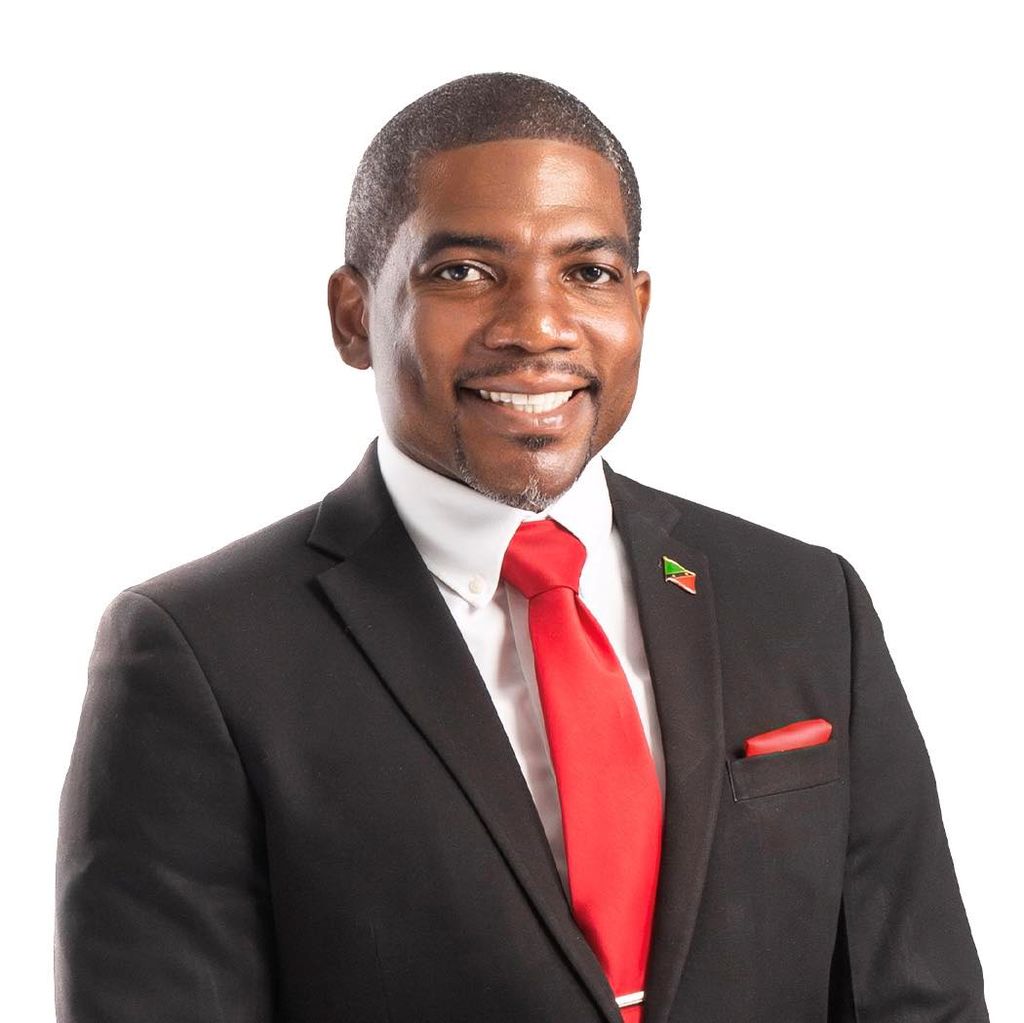
But Caricom chair and St Kitts and Nevis Prime Minister Dr Terrance Drew has moved to rubbish claims of regional suspicion, insisting there is no suggestion within the bloc that T&T was complicit in Venezuela President Nicolas Maduro’s detention by the US on January 3.
In an exclusive interview with Guardian Media, Drew said T&T remains an important Caricom member and that no accusations have been levelled against it by fellow states.
“I can say that that has not been a question that has arisen for discussion among the bloc,” he said.
This country’s Foreign and Caricom Affairs Minister Sean Sobers and Defence Minister Wayne Sturge were adamant that T&T played no role in the US operation to capture Maduro.
Drew also defended Caricom’s initial response to reports of Maduro’s arrest following a US military operation in which at least 75 people were reportedly killed. The Caricom Bureau convened an urgent meeting involving Jamaica, St Kitts and Nevis and Saint Lucia, later issuing a statement reaffirming the bloc’s commitment to “the fundamental principles of international law and multilateralism enshrined in the UN Charter, including sovereignty and territorial integrity of States and respect for human dignity.”
Notably, the statement stopped short of explicitly declaring the operation a breach of international law, instead reiterating calls for peaceful dialogue through diplomatic channels to safeguard Venezuela’s stability, democracy and prosperity. The bloc also signalled its willingness to support such efforts.
That cautious tone drew sharp criticism from former St Vincent and the Grenadines prime minister Dr Ralph Gonsalves, now opposition leader, who described the response as inadequate.
“This statement did not make a judgement of the action of the United States of America. It reaffirmed principles, which I think we all share, but it stopped short of making a judgement that this particular act was a violation of international law. I would have wished if that assessment had been made,” Gonsalves said at a January 5 media conference.
Drew, however, stood firm, stressing that Caricom operates by consensus.
“I will say clearly, I am not the prime minister of Caricom, I’m not the president of Caricom. I am the Chair of Caricom, who at this time coordinates and helps to reach consensus as part of how we function. And therefore, that statement is a statement that was reached by consensus. And I stand by the consensus position of Caricom at this particular time.”
Maduro’s capture has been widely interpreted as part of a broader push for regime change, though US President Donald Trump has framed Washington’s interest as being rooted in Venezuela’s oil reserves. Asked whether Caricom harbours concerns about US interference in the internal affairs of states, particularly elections, Drew said the issue has not arisen at the regional level.
“From a Caricom perspective, that has not been discussed, that has not been brought up, but Caricom is always of the position that democracy should be promoted, should be strengthened, should be assisted where possible. So, I would say the Caricom position would always be that we would like to see democratic governments in countries. That’s one of our principles. However, we adhere to the principle as Caricom of non-interference”
Amid rising rhetoric and strained diplomacy, some observers have raised the spectre of a Brexit-style rupture within Caricom. Drew dismissed the notion, saying he is not aware of any member state seeking to withdraw.
His comments come as an attempt to steady a bloc rattled by Persad-Bissessar’s remarks, which drew public rebuke from Antigua and Barbuda Prime Minister Gaston Browne. Browne argued that Trinidad and Tobago has benefited disproportionately from regional trade arrangements; a point that continues to seethe within smaller economies.
Drew said the bloc’s economic, trade and institutional benefits remain far greater than its flaws, and urged leaders to see the current tensions as an opportunity for renewal rather than retreat.
“Am I worried that there’s a country, a nation who at this time would want to pull out? I am not privy to that information, and I frankly don’t think so at this particular time.”
“So I would say that at this time nobody is threatening to leave Caricom, and while Caricom is not perfect, I want all of us to reflect on how much we benefit from Caricom, and sometimes we benefit and we don’t even recognise that we are benefiting from Caricom.”
Related News
Motor vehicles bill passes with support of 8 independent senators
Iranian state TV issues first official death toll from recent protests, saying 3,117 were ...
Ghany urges PNM introspection after THA loss