
RYAN BACHOO
Lead Editor - Newsgathering
ryan.ba[email protected]
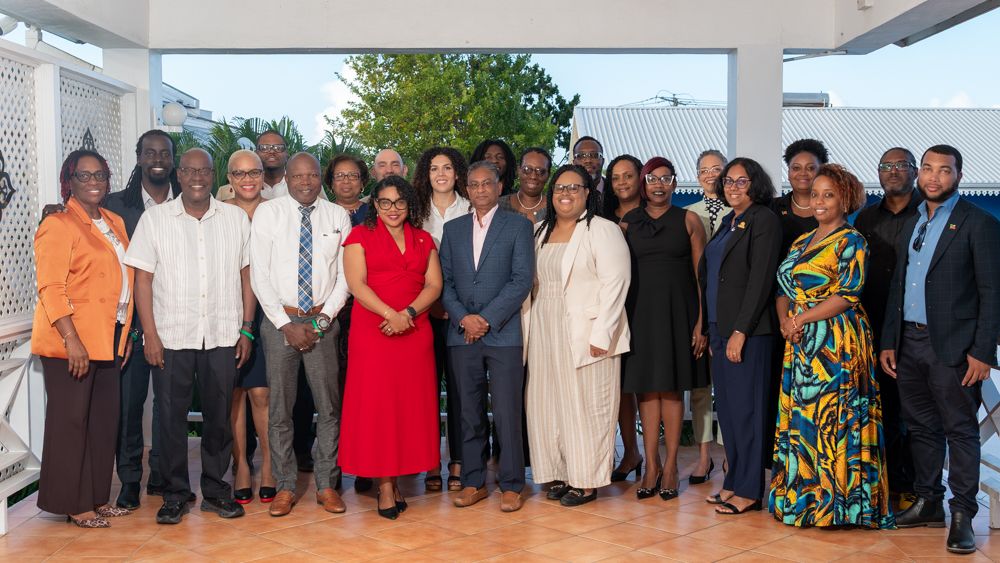
Senior government officials and civil society leaders met in Gros-Islet, Saint Lucia, on March 2 and 3 for the Caribbean Convening on a Global Just Transition from Fossil Fuels.
The meeting addressed regional coordination ahead of the First International Conference on Transitioning Away from Fossil Fuels, scheduled for April 24 to 29 in Santa Marta. The conference will be co-hosted by Colombia and the Netherlands and was announced at COP30 in Belém, Brazil.
Participants discussed governance, finance and implementation issues linked to a global phase-out of oil, gas and coal. The 2025 UNEP Production Gap Report projects governments will produce 120 per cent more fossil fuels by 2030 than is consistent with limiting warming to 1.5°C.
Caribbean countries were part of negotiations that secured the 1.5°C limit under the Paris Agreement and are among 18 countries in discussions on a proposed Fossil Fuel Treaty.
Executive Director Dr James Fletcher, Caribbean Community Climate Change Centre, said Caribbean states have advocated for the 1.5°C goal and Loss and Damage. He said a transition must include concessional finance, debt reform, energy access, renewable energy expansion and social protection.
Meanwhile, Executive Director of the Fossil Fuel Treaty Initiative, Alex Rafalowicz, said the 1.5°C limit is at risk and cited coal, oil and gas expansion as drivers of emissions, public health impacts and pollution.
The meeting served as a preparatory session for Santa Marta. Day one included civil society representatives reviewing scientific, legal and multilateral issues and defining priorities. Day two brought senior government officials together to outline elements of a regional position.
Chief Executive Officer of the Jamaica Environment Trust, Dr Theresa Rodriguez-Moodie, referred to impacts from Hurricane Melissa in Jamaica, including displacement, infrastructure damage and disruption of utilities.
Caribbean Centre for Renewable Energy and Energy Efficiency's Chief Technical Advisor Ms Charlin Bodlee, said Caribbean states face a climate finance gap and rely on loan-based funding. She called for grant finance, debt-sensitive mechanisms and structures to support the transition.
Participants said any global framework must reflect equity and support for small island developing states.