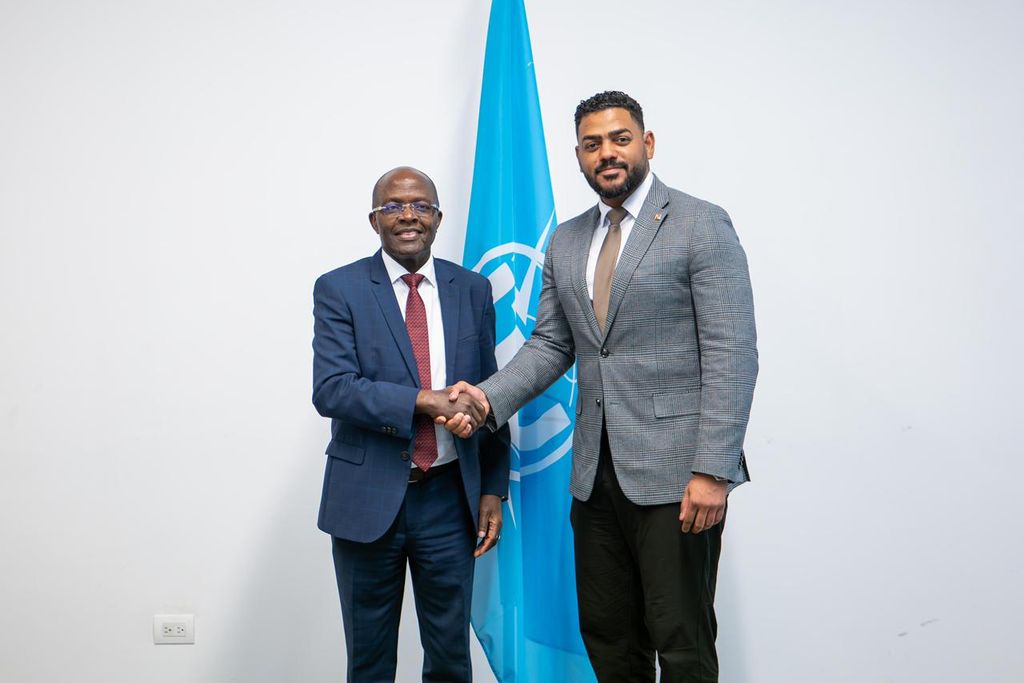

PNM deputy political leader Sanjiv Boodhu is questioning whether businessman Dominic Hadeed's recent detention was linked to his public criticism of the Government's taxation policies.
Speaking at a People's National Movement (PNM) meeting at the Marabella Community Centre on Thursday night, Boodhu warned that the United National Congress (UNC) administration was creating the impression that it was dangerous to oppose the Government.
Boodhu pointed to the sequence of events surrounding Hadeed's detention and argued that it sent a troubling message to the wider public.
"Certain business people have been arrested," Boodhu said. "This is shortly after the same person who's been arrested, now in custody, criticised the Government's taxation policy."
"He has criticised the Government's taxation policy and next thing you know, he's jailed. Locked up."
Boodhu said that as far as he was aware, no charges had yet been laid against Hadeed.
The PNM deputy leader was referring to businessman Dominic Hadeed, who was detained along with his wife this week as part of an ongoing police investigation. Police have not publicly disclosed details of the investigation and, up to Thursday evening, no charges had been announced.
Boodhu argued that regardless of the facts of the investigation, the perception being created was that critics of the Government risked becoming targets.
"The message that the public receives is very, very simple," he said.
"It is dangerous to disagree with this UNC Government."
He claimed the message extended beyond politicians and business leaders.
"If you have a different view, if you have a different opinion, if you are a reporter and you report something that is different to what they want you to report, it is dangerous for you."
"It is dangerous not to support everything that they say or they do."
Boodhu said that perception was particularly damaging because it undermined confidence in the independence of the Trinidad and Tobago Police Service (TTPS).
"The message that the public receives is that the Government is directing the Trinidad and Tobago Police Service," he said.
"And let me be clear, I have no evidence that that is the case. But the perception that the Government builds in the minds of the public is very, very dangerous."
He argued that both the reality and public perception of an independent police service were essential to maintaining confidence in law enforcement.
"The perception can never be, should never be, that the Cabinet is controlling or directing the police to do anything at all," Boodhu said.
"Otherwise, the Government is setting up the police to fail. They are setting up the police to be mistrusted by the people of this country."
Turning to the Constitution, Boodhu maintained that operational policing rests solely with the Commissioner of Police and not the political executive.
"The TTPS is not constitutionally designed to be the enforcement arm of the political party that occupies Government," he said.
"It is constitutionally designed to protect and serve all of us, regardless of which political party is in office."
He noted that Section 123A of the Constitution gives the Commissioner of Police exclusive authority over operational matters, including investigations, arrests, deployment of officers and the allocation of investigative resources.
"It is the Commissioner of Police that must decide whether to investigate, who to investigate, whether to arrest, how to allocate investigative manpower and resources, how and when to deploy police officers," Boodhu said.
"All of those things are under the sole remit and control of the Commissioner of Police, not any political party that temporarily occupies the majority of the seats in Parliament."
Boodhu said the framers of the Constitution deliberately insulated the police service from political influence because history had shown the dangers of governments controlling operational policing.
He also criticised recent comments by Attorney General John Jeremie during the parliamentary debate on the extension of the State of Emergency, saying they contributed to the perception that certain sections of the population were being singled out.
Boodhu questioned the Attorney General's references to a particular "percentage" of the population in relation to revoked United States visas, arguing that people from "every race, class, colour and creed" had reportedly lost their visas.
He said the combination of those public statements and Hadeed's detention was fuelling public concern, even though he stopped short of alleging political interference.
"I have no evidence that that is the case," he repeated.
"But the perception that the Government builds in the minds of the public is very, very dangerous."
Related News
Guyana Government plans national mining consortium to expand citizen ownership
Cudjoe: PM creating distractions
Chaos in the House: Padarath rejects intimidation claims after row erupts over mic muting ...