
Senior Reporter
dareece.po[email protected]
One year ago today, on April 28, 2025, the citizens of Trinidad and Tobago went to the polls and delivered a mandate that would do more than just change a domestic agenda.
For years, the nation’s foreign policy was characterised as a left-leaning stance centred on non-interference, often positioning T&T as a sovereign actor distinct from the influence of global powers.
Since the 2025 mandate, however, the administration of Prime Minister Kamla Persad-Bissessar has shifted this trajectory, moving toward a security-based alliance with the United States under the framework of the “Donroe Doctrine.”
This departure from traditional policy is framed by a statement from former prime minister Dr Keith Rowley, who had emphasised a strict adherence to autonomy during a Parliamentary sitting on January 25, 2019: “We in Trinidad and Tobago, under all our governments, all our governments, we have preserved the sovereign position of the people of Trinidad and Tobago. If today there are people in the opposition who believe they have to take instructions from somebody else and the US Embassy on Marli Street, then you’re on your own. Leave the PNM out of that.”
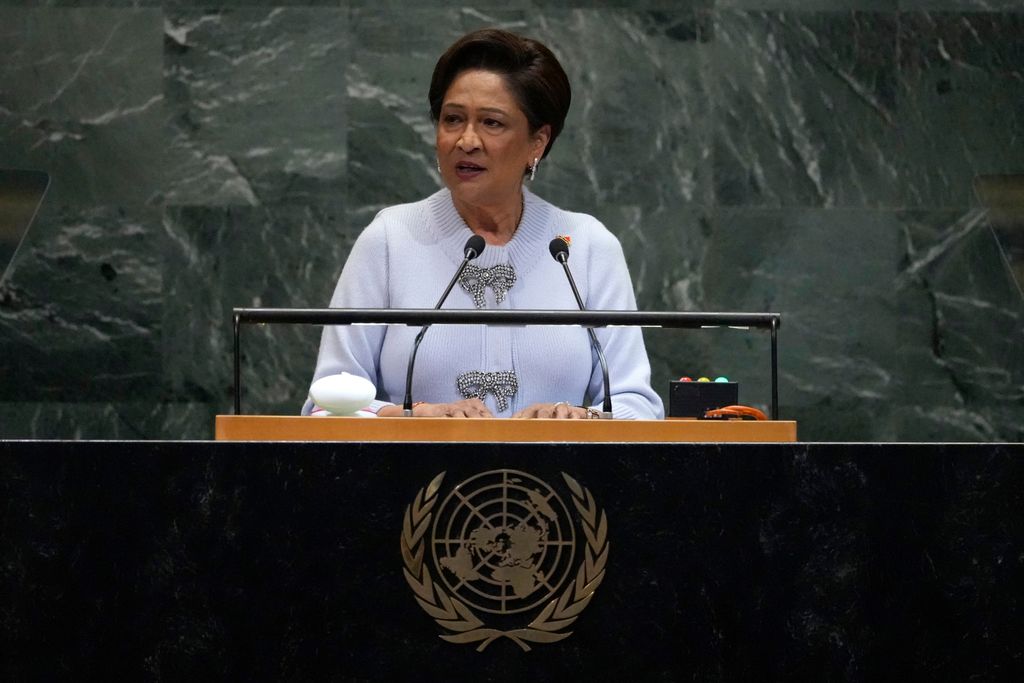
Following the 2025 election, though, the United National Congress (UNC) has recalibrated this position, a change articulated by Prime Minister Kamla Persad-Bissessar at the United Nations General Assembly in September 2025.
Addressing the international community, she stated that “Trinidad and Tobago reminds the international community that unless forceful and aggressive actions are taken, these evil drug cartels will continue their societal destruction. Because they believe affected nations will always unreservedly subscribe to morals and ethics and human rights and values, which they themselves blatantly flout. And therefore we will fight fire with fire within the law.”
That tougher stance has also reshaped regional relations and strained ties with Venezuela.
In October last year, Venezuela’s National Assembly declared the Prime Minister persona non grata, effectively banning her from the country amid accusations of alignment with Donald Trump’s policy.
But Persad-Bissessar has been unapologetic.
Moreover, she has since called for democratic change in Cuba, which regional analyst Peter Wickham labels peculiar.
“It was interesting when she spoke of the lack of democracy in Cuba and the problems this has created. And this is a country (Trinidad) that is well in bed with the Chinese, and I don’t remember them having an election anytime recently. So I found it an odd comparison,” he said, questioning if this was a clear policy or meandering to the United States.
“One often has to adopt positions like that when one wants to essentially stand behind Uncle Trump and also appear progressive in the context of a country that has actually been quite good to Trinidad and Tobago in the past, and the rest of the Caribbean,” he said.
At the UNGA, Persad-Bissessar reaffirmed support for the US war against “evil cartels” and rejected talks by Caricom leaders that the region was a “zone of peace.”
This policy shift was formalised on March 7, 2026, when T&T joined the US-led Americas Counter-Cartel Coalition (ACCC) and signed the Doral Charter, pledging military and intelligence cooperation to combat transnational crime. This realignment has coincided with increased friction within Caricom.
The Government has described the regional bloc as “dysfunctional,” “dishonest,” and plagued by “rot,” specifically citing the Caricom Secretariat’s silence following the 2022 Brent Thomas affair, where the Trinidadian national was removed from Barbados and returned to Trinidad by members of the T&T Police service in a move that court has ruled was illegal.
At the 50th Heads of Government meeting in February, the Prime Minister raised issue over the lack of communication to her when she raised the Thomas matter then as Opposition leader, saying, “That response, non-response, it may be the result of poor management, lax accountability or most concerning, that one ceases to be recognised by the secretariat as a member citizen of Caricom when not in government.”
Addressing the regional response to her administration’s positions, she remarked, “You know in Trinidad there is a saying, who vexed loss!”
Tensions further escalated when Foreign Affairs Minister Sean Sobers was reportedly excluded from a heads-only retreat to Nevis, leading to the Government’s refusal to recognise the reappointment of Dr Carla Barnett as Secretary General.
The diplomatic rift spilled into the public domain as a digital proxy war, following the unprecedented leak of internal correspondence and sensitive documents online. This breach catalysed a sharp public spat between T&T and Caricom Chairman, Dr Terrence Drew.
A war of words also erupted between Sobers and St Vincent and the Grenadines Opposition leader Ralph Gonsalves.
The Foreign and Caricom Affairs Minister accused Gonsalves of telling “bold-faced lies,” after he (Gonsalves) suggested Sobers had failed to make the trip to Nevis due to an issue with seasickness.
While regional fractures deepened, the administration simultaneously strengthened ties with Washington, accepting the installation of a radar in Tobago and supporting deadly US military strikes against alleged drug traffickers in the Caribbean Sea.
These decisions have had regional and domestic consequences.
International relations lecturer at the University of the West Indies, Dr Michał Pawiński, noted that Trinidad was conspicuously skipped during recent regional visits by Venezuela’s Delcy Rodriguez, who was in Barbados yesterday. He described the move as “symptomatic of the tensions that were created by the current Government in the past three to four months while supporting the US foreign policy in the region.”
He raised concerns about T&T’s foreign policy, as President Trump will demit office in a few years. Furthermore, he believes T&T’s ongoing rift with Caricom could hinder its bid for a non-permanent seat on the UN Security Council.
“Considering the detachment or isolation of Trinidad from Caricom, while at the same time aligning itself strongly with the US, it might question the legitimacy and potential support of Caricom for this bid. This is, of course, very difficult to determine. Nonetheless, this discussion alone is highlighting the tensions that are existing between Trinidad and Caricom.”
Pawinski added that T&T’s current foreign policy position could have long-term effects for successive administrations.
“History doesn’t forget. The statements made in the past will not be forgotten, and they will always have some sort of impact on the future foreign policy and the fate of nations, including small nations in the Caribbean.”
Domestically, the application of the Anti-Terrorism Act on April 13 to blacklist Hezbollah, Hamas and the Iranian Revolutionary Guard prompted internal debate.
Government Senator David Nakhid, a devout Muslim, when questioned on the administration’s Middle East stance when the war had just started, said, “On those I keep to myself. My sympathy, my support are with my Muslim brothers and sisters. And the views of the party is the view of the party and we follow our leader. But my views on those are with the Islamic resistance.”
Meanwhile, Wickham argues that T&T’s reliance on the US is based on a transactional relationship, which he deems “unwise.”
“Frankly, I am a bit surprised that people seriously thought that Trump would be losing sleep at night over Trinidad and Tobago’s future. He’s transactional. He wanted something,” he said.
“What we’re seeing is that a year in, you know, the gas has not started to flow. No further conversation has been held in relation to that. And interestingly, Delcy Rodriguez seems more interested in visiting Grenada and Barbados than she is visiting Port-of-Spain to, you know, sign a deal. I haven’t heard Kamla-Persad-Bissessar venturing to Caracas to sign a deal there.”
Congress of the People founder and former foreign affairs minister, Winston Dookeran, recently penned a note for an international journal that stands in stark contrast to the current “fire with fire” trajectory.
“The goal is not to choose sides in the competition among great powers, but to choose wisely the instruments through which to shape their own future,” Dookeran wrote.
He argued for a diplomacy “that sustains growth, deepens sovereignty and secures the region’s strategic place in an evolving global order.”
The Government has also failed to fill key diplomatic posts, including in Venezuela.
Foreign Affairs Minister Sean Sobers was contacted for comment but did not respond up to the time of publication.