
Senior Political Reporter
Protect law-abiding citizens residing in “hotspots’’ from becoming collateral damage and being stigmatised by the Special Zones law.
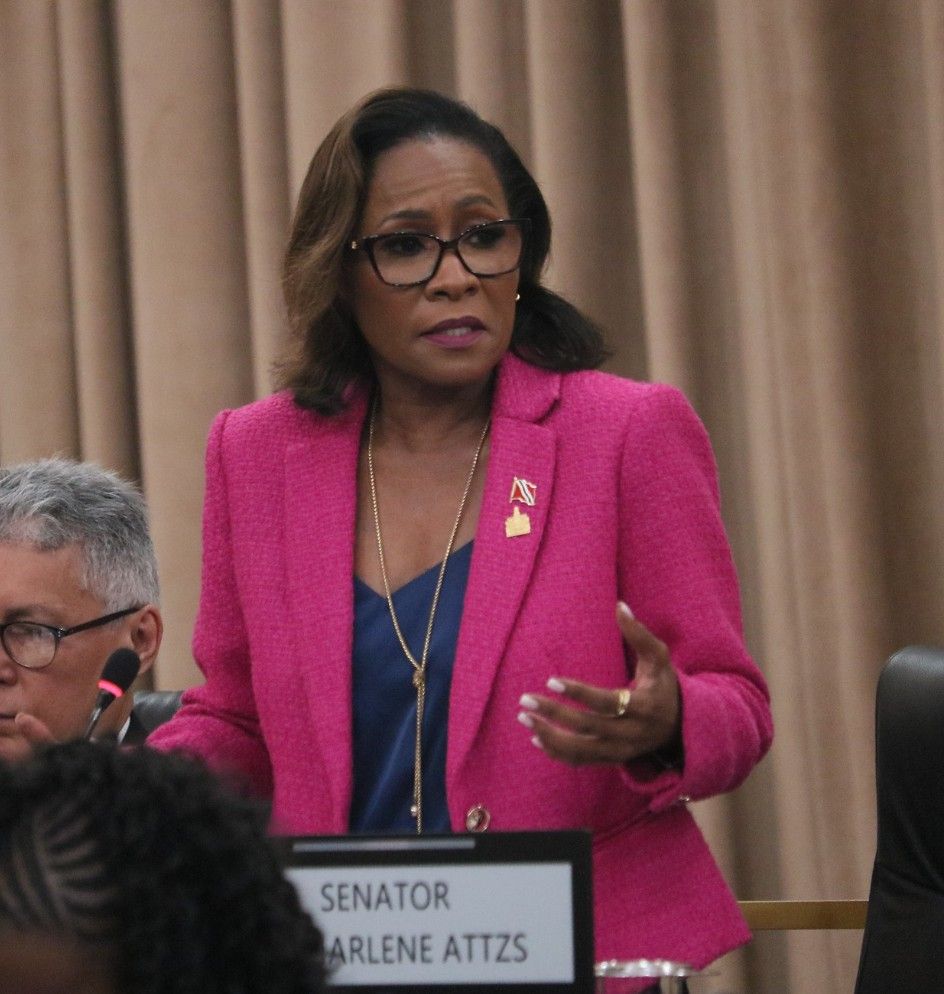
That was the call from Independent Senator Dr Marlene Attzs during yesterday’s Senate debate on Government’s Zones of Special Operations (ZOSOS) Bill.
Attzs said it was a bill which proposes the use of extraordinary measures to confront an extraordinary challenge: T&T’s persistent and deeply troubling levels of violent crime.
She noted the 2024 T&T Criminal Dynamics Study by UWI’s Dr Randy Seepersad, which included an estimation that T&T has over 180 active gangs, involving approximately 1,700 individuals, and that nearly 40 per cent of all murders are gang related.
Attzs said the fear of crime is real.
“Citizens’ suffering is real. The urgency for action, very real. Families are traumatised. Businesses close early. Communities retreat behind gates and fear. A concern is that young people grow up believing that violence is normal,” she said, adding crime becomes an invisible tax paid by every citizen and the State.
“But urgency must not give way to short-term thinking. Fear must never override reason. And decisive action must never displace constitutional care,” Attzs stressed.
“The power to declare a community a zone is an extraordinary one. It must therefore rest on extraordinary justification: credible crime data, verified intelligence, patterns of violent activity, and demonstrable threats to public safety.”
Attzs said no administration has been immune from crime’s effects, and no government has found a perfect solution.
“This is a new administration/I believe it deserves the opportunity to craft and implement policies they believe can restore order and address the crime scourge, but that opportunity must be located in the context of a coherent crime strategy.”
Attzs said Jamaica’s ZOSO model and other regional/international bodies’ research illustrate the potential and limitations of such interventions.
“Evidence consistently shows enhanced security measures may suppress violence in the short term, but rarely address the underlying drivers of criminality. Criminal networks adapt, reorganise, relocate. Emergency powers may cool hotspots temporarily, but rarely dismantle criminal systems.”
One of the most important issues in the bill, Attzs warned, is the danger of stigmatising communities.
“We must be careful that in our determination to confront criminality, we do not inadvertently stigmatise entire communities. There is a danger that law-abiding citizens residing in some so-called “hotspots’’—hardworking parents, students with ambition, elderly residents who have endured decades of hardship—that they become collateral damage to any policy we implement.
“Our objective must be to isolate criminals, not to label communities; we need to protect residents, not to turn them into silent victims of discrimination. This concern becomes particularly acute when we examine the bill’s clause empowering joint forces to require persons within a zone to disclose their personal information.”
Attzs continued, “While operationally understandable, repeated and indiscriminate use of such powers risks embedding a perception that entire neighbourhoods are under permanent suspicion. Research from other jurisdictions shows that once a community is branded a ‘special zone’, the stigma often lingers long after the operation ends.
“Employers hesitate. Banks hesitate. Schools hesitate. Children begin to internalise the belief that where they come from defines who they can become.”
Attzs cited situations where parents/guardians of SEA examination students use somebody else’s address for fear of the child being “zoned” in the exam.
“It’s uncanny, it’s the same terminology we’re using here ... a citizen’s address must never become a mark of suspicion that limits their access to dignity or opportunity.”
The operational pressures facing protective services was also noted.
“As we approach the season that we call the Greatest Show on Earth, a period that traditionally requires an intensified police presence to manage large crowds, increased mobility, and heightened public safety risks, it’s important we remain realistic about what is being asked of our officers,” she said.
Nor can officers simply be taken from routine patrol and given expanded zone powers, she added, warning of heightened community tensions and potential confrontations with residents.
Citing Law Association cautions on the bill, Attzs said, “As a civic-minded person, I support any decisive action against crime, but I do so in the firm belief that lasting security and justice can only be achieved when justice, accountability, and social investment move forward together.”