
Senior Multimedia Reporter
radhi[email protected]
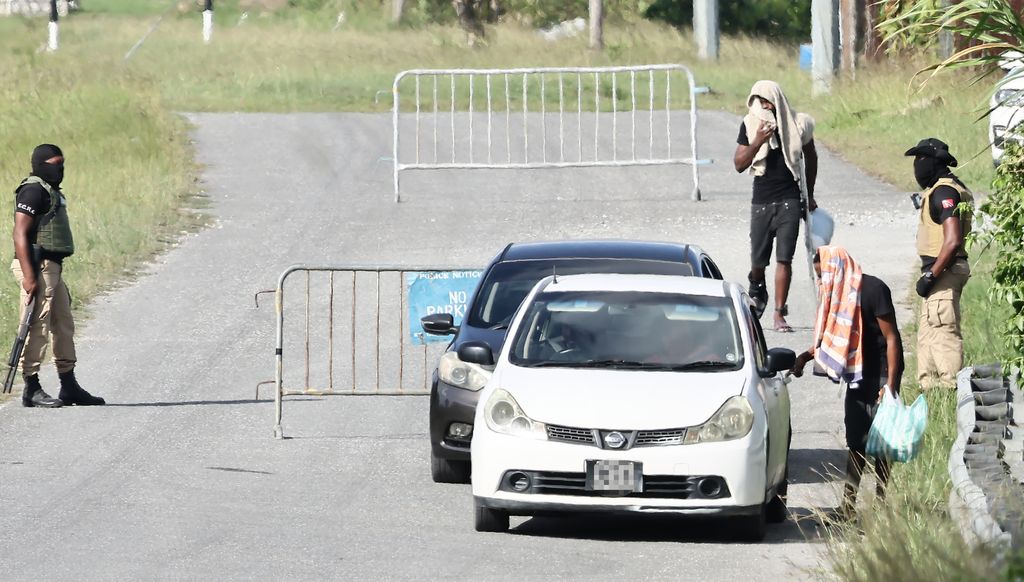
As the State of Emergency (SoE) comes to an end on January 31, several detainees who have been held for months under detention orders without charge are anxiously awaiting their freedom.
For 89 families, the expiry of the SoE will mean either release or formal charges.
Speaking to Guardian Media, the wife of a detainee, said she remains alarmed that her husband has been incarcerated for several months without facing a single charge. She said he was detained after assisting someone of questionable character and that the prolonged uncertainty has taken a heavy toll on the family. According to her, once the SoE expires, her husband will finally learn whether he will be charged or released. His attorney has advised that if charges are laid, he would be eligible for bail as a first-time offender.
However, while families cling to hope, concerns are mounting about the proposed Zones of Special Operations Bill, which the Government said was intended to combat crime. The bill will be brought to Parliament today.
However, former Chief Staff Officer Operations at the T&T Defence Force Headquarters, Commander Norman Dindial, said the bill would allow for the declaration of Special Zones where security forces could impose curfews, conduct searches without warrants, and detain individuals without due process—powers similar to those exercised under a state of emergency.
Dindial, a retired Coast Guard officer, strongly criticised the proposed legislation, warning that it opens the door to continued abuse of state power and risks transforming Trinidad and Tobago into what he describes as a “police state.”
“There are key constitutional concerns and an inherent risk of becoming a police state. The bill’s provisions, allowing search without warrant, curfews, and detention without due process, contravene the Constitution of Trinidad and Tobago, specifically Sections 4 and 5, which protect the right to liberty and security of the person. Furthermore, granting the Prime Minister, as head of the National Security Council, sweeping powers to declare zones and impose restrictions undermines the principles of democracy and the rule of law,” Dindial said.
He noted that the bill’s focus on security force occupation and enforcement measures (by merely giving a ‘reason’) may lead to a police state, “where citizens are treated as suspects rather than citizens with rights.”
He also expressed concern about the potential social fallout of designating communities as Special Zones.
“There are also the risks of arbitrary labelling, which come with a plethora of negative consequences,” he said.
“Labelling an area a ‘Special Zone’ can lead to stigmatisation, driving crime further underground and making it harder to address.”
Dindial argued that the bill could disproportionately affect marginalised communities, particularly in the absence of clear data explaining how such zones would be selected or assessed. He pointed to international examples that, he said, should serve as cautionary tales.
“In the Jamaican context where we want to frame our use of the Zones of Special Operations (ZOSO), there have been examples of human rights abuses and a failure to reduce crime. Also, the US’s ‘stop-and-frisk’ policies have also been ruled inherently unconstitutional and have led to widespread protests,” he said.
According to Dindial, the proposed legislation reflects a broader failure to learn from past crime-fighting strategies, including previous states of emergency.
“The State of Emergency (SOE) previously declared by successive administrations to combat crime failed and also did not address the root causes of violence. Moreover, they led to human rights abuse cases being filed against the State. Declaring ‘Special Zones’ can be seen as a repeat of the same failed approach, prioritising enforcement over addressing social and economic issues,” he said.
He further warned that the bill’s provisions echo colonial-era laws that allowed authorities to detain individuals without due process.
“The bill’s provisions evoke memories of colonial-era laws, where authorities imposed restrictions and detained individuals without due process,” Dindial said, adding that granting such extensive authority to the Prime Minister risks undermining democratic principles and edging the country toward dictatorship.
Dindial also cautioned that the legislation could harm T&T’s regional reputation.
“There are also implications for Trinidad and Tobago’s regional reputation and relationships, potentially undermining our commitment to democracy and human rights. The Organization of American States (OAS) and other regional bodies have emphasised the importance of upholding human rights and democratic principles in addressing security challenges,” he added.
Outlining the bill’s framework, Dindial explained that it establishes a Joint Command and Joint Force made up of senior members of the Defence Force and Police Service. These units would be responsible for law enforcement within Special Zones, including setting up cordons, imposing curfews, conducting searches without warrants, seizing property, and detaining individuals. Although the bill states that detainees would retain certain rights and that normal criminal procedures should apply, Dindial questioned whether the safeguards are adequate.
He raised concerns about the militarisation of policing, weak oversight, and the risk of executive overreach, including the potential targeting of political opponents.
“The bill’s provisions can be used to target individuals or groups perceived as threats to the Government. It can lead to a culture of fear, silencing dissent and opposition,” he said.
Dindial concluded that if standard criminal law procedures are meant to be followed, the justification for Special Zones is unclear.
“How can you justify the overreach of executive power requested by the state? The bill’s provisions suggest a desire to bypass normal procedures and grant extraordinary powers to the JF, which can lead to a culture of impunity and undermine the rule of law,” he said.
He warned that the proposed Zones of Special Operations Bill poses serious risks to democracy, human rights, and the constitutional order of Trinidad and Tobago.
“The bill’s provisions, granting sweeping powers to the Prime Minister and law enforcement agencies, threaten to create a police state, undermining the Constitution, rule of law, democratic principles, and citizens’ rights,” Dindial said.
Related News

Patrice gives back with free Carnival concert amid economic struggles
Russia calls for Maduro release; denies housing Rodriguez
Citizenship application fees rise from January 1