
Senior Reporter
dareece.po[email protected]
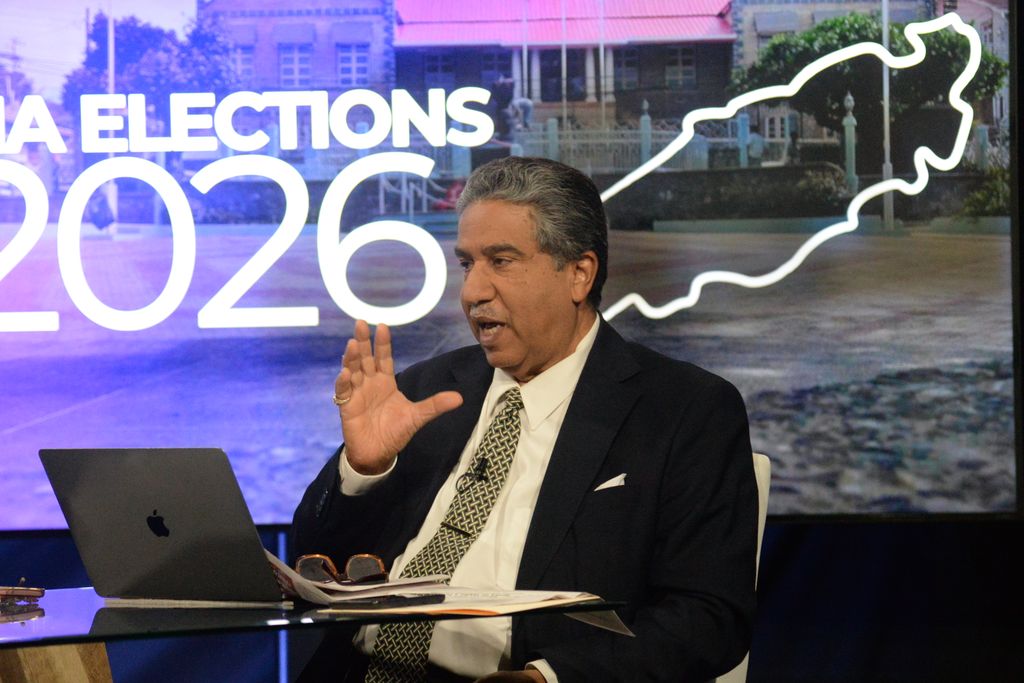
The Tobago People’s Party (TPP) could face significant governance challenges in managing the Tobago House of Assembly (THA) in the absence of a formal opposition, according to political scientist Prof Hamid Ghany.
Speaking on CNC3’s election programme Tobago Decides on Monday evening, Ghany said the election outcome underscored the winner-take-all nature of the first-past-the-post electoral system, particularly in small Caribbean legislatures. He noted that such a clean sweep would have been far less likely under a proportional representation system, in which seats are allocated based on the percentage of votes cast.
While the result strengthens the TPP’s position numerically, Ghany said it also presents an uphill task for effective governance.
“In 2013, the THA was 12–0 and there was no opposition for the entire term. Now you’re going to have no opposition again, so we’ll see how this is going to go,” he said. “It’s a challenge to govern without an opposition in the House, because sometimes you need the opposition to say things that you can respond to. When you’re listening to yourself in the House, it’s very different. You really depend on an opposition to raise issues that force a response.”
Ghany also pointed to internal difficulties within the People’s National Movement (PNM), referencing Tobago Council leader Ancil Dennis’ concession speech, in which he suggested his resignation would “make a lot of people more happier”.
“That indicates something else was going on in the party,” Ghany said.
Political scientist Dr Indira Rampersad echoed concerns about leadership challenges within the PNM.
“I think there are issues in the PNM. As we know, there were divisions and concerns about leadership,” Rampersad said. “I don’t think they were able to pull it together in such a short space of time. While it has been more than six months, it was still too short for them to regroup, especially since the players are pretty much the same ones who have been in the PNM for the last ten years.”
Rampersad said the appointment of independent members to the THA could help preserve checks and balances in the absence of an elected opposition.
She recalled a similar episode in 1971, when a no-vote campaign resulted in the PNM winning all parliamentary seats, prompting MP Roy Richardson to resign as a junior minister in order to become Leader of the Opposition.
Rampersad also attributed Monday’s election outcome to voter disillusionment with the PNM after ten years in government under former prime minister Dr Keith Rowley.
She cited what she described as the party’s “hubris, arrogance, treatment of the labour movement, mismanagement of the economy and crime” as key factors influencing Tobagonian voters, reflecting patterns seen in the April 28 general election.
She further criticised the PNM’s campaign strategy, particularly its focus on the radar installation issue, which she described as a non-issue that was blown out of proportion.
“They really needed to focus on the issues — youth unemployment, declining tourism, diversification, corruption and autonomy,” Rampersad said.
In contrast, she said Chief Secretary-elect Farley Augustine’s emphasis on autonomy resonated strongly with voters and contributed to his decisive victory.
Looking ahead, Rampersad said it remains to be seen whether the PNM — which she described as a formidable political institution — can regroup and rebound strongly enough to unseat the TPP and reclaim control of the THA.
Related News
Family of Charlieville crash victim call for proactive policing, not just higher fines
Foreign Affairs Minister defends government’s stance on Venezuela

Police shoot wanted man in Point Fortin