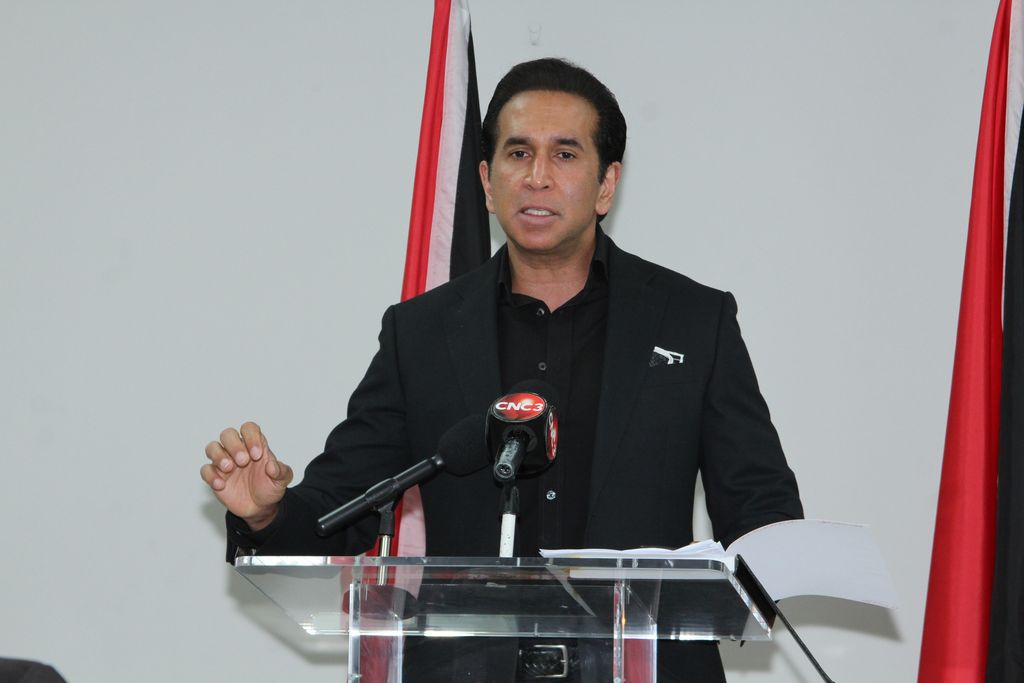

Opposition Leader Pennelope Beckles has rejected the Prime Minister’s claims of a “political pact” with the independent bench, arguing that recent voting patterns in the Senate show lawmakers acting on conscience and the merits of legislation rather than under opposition direction.
Speaking during a media conference at the Office of the Leader of the Opposition on Charles Street, Port-of-Spain, yesterday, Beckles pointed to the voting record of independent senators on a dozen pieces of legislation debated between June 2025 and January, noting wide variation since the Government took office in April. Measures ranged from the outright rejection of the Revenue Authority Bill to unanimous support for the Administration of Justice Act.
“Now you tell me, based on that evidence, how could the Prime Minister conclude and make those statements about the independent senators,” she said in justifying why the Zones of Special Operations (ZOSO) Bill was defeated in the Upper House.
“But we must take this in context, that this has been the pattern of this Government since they came into office. And what is the pattern? The pattern is governance by bullying, threatening and intimidation, with the expectation that people are going to just give up and do exactly what they want. And they are not only doing that to these institutions, but they are doing that to members of the public.”
She accused Prime Minister Kamla Persad-Bissessar of adopting a confrontational approach, including in the Senate.
“The strategy, even in the Senate, was to bully both the independents and the opposition,” she said.
While acknowledging public concern about crime, Beckles said the Opposition could not support flawed legislation.
“I have said it from day one, and I am going to say it again—if you bring good legislation, we will support the legislation. And if you bring bad legislation, we will not support that legislation.”
She further criticised Government for what she described as an unwillingness to engage with alternative views.
“That is the problem. If you bring legislation before the Parliament, at least demonstrate a willingness to listen, to consult, to negotiate. And demonstrate to the public that you are governing, understanding that you are serving the people of Trinidad and Tobago and you’re not serving yourself.”
She said the administration attempted to rush the ZOSO Bill through Parliament without accepting amendments.
“The Government was not prepared, at all, to consider one single amendment. Now we suspect that because of the lateness of the legislation, because of their incompetence and because of the fact that the SoE ends on Saturday, they found themselves in a predicament and they were prepared to rush the legislation and not listen to Opposition, not listen to independent senators and not listen to the people of Trinidad and Tobago. Because at no time can they say to anyone that they consulted with anybody.”
She added that the Government appeared to believe its parliamentary numbers guaranteed passage.
“They believe because they have 26 seats, plus two Tobago seats held by the TPP, that they can have their way,” she said.
Opposition Senator Faris Al-Rawi also criticised Government’s handling of the bill, saying more than 100 proposed amendments were rejected before the legislation failed in the Senate.
Al-Rawi said the People’s National Movement submitted 63 amendments, with a total of 106 proposals coming from opposition and independent senators combined. He said the changes were aimed at removing what he described as unconstitutional police powers from the army, strengthening safeguards and improving transparency.
He said amendments were also proposed to ensure oversight by the Police Complaints Authority and to address provisions in the Defence Act. Al-Rawi identified Clause 13 as particularly contentious, noting the Opposition sought a clear mechanism to identify joint security forces operating within ZOSOs.
He warned that crime could escalate once the State of Emergency expires on Saturday and detainees are released.
“We put in the safeguards because as murder and crime will escalate, as the State of Emergency comes to an end on the 31st of January and as everybody is going to walk out of detention, the vast majority of them are going to go not having had an interview by the police. So, you just lock them up for the State of Emergency. What are you going to do?”
Al-Rawi argued that the Government anticipated the bill’s failure.
“The Government, I believe, really wanted this law to fail. Because they knew it was unconstitutional, they refused to accept amendments and their intention will be to blame the Opposition and the independents for the lack of passage of the law when crime starts to escalate. So, I want to mark the spot today on behalf of the Opposition—look to the amendments that we put forward. You will see how we intended to assist in constitutionality. Look to our deep concerns that you cannot just go into zones and create a division in society of the type that that bill proposed.”
Al-Rawi explained that the special majority requirement reflected deep legal concerns, particularly around granting police powers to the Defence Force and the potential social consequences of declaring zones of special operation.
He noted that it was only on July 31, 2025, that the Court of Appeal addressed the scope of military authority, referencing the Wayne Kublalsingh case, which confirmed that the army operates under the general direction of the Minister of National Security.
By contrast, he said, the police are governed by the independent Police Service Commission, a distinction he argues makes the granting of police powers to soldiers constitutionally unsafe without strict safeguards.
He also referenced the House of Representatives (Privileges) Act, which addresses attempts to influence how parliamentarians vote, suggesting that public criticism of independent senators by the Prime Minister could fall within the scope of review by the Director of Public Prosecutions.