
The Office of the Attorney General will have to defend a lawsuit seeking to declare the controversial Special Operations Act 2026 unconstitutional.
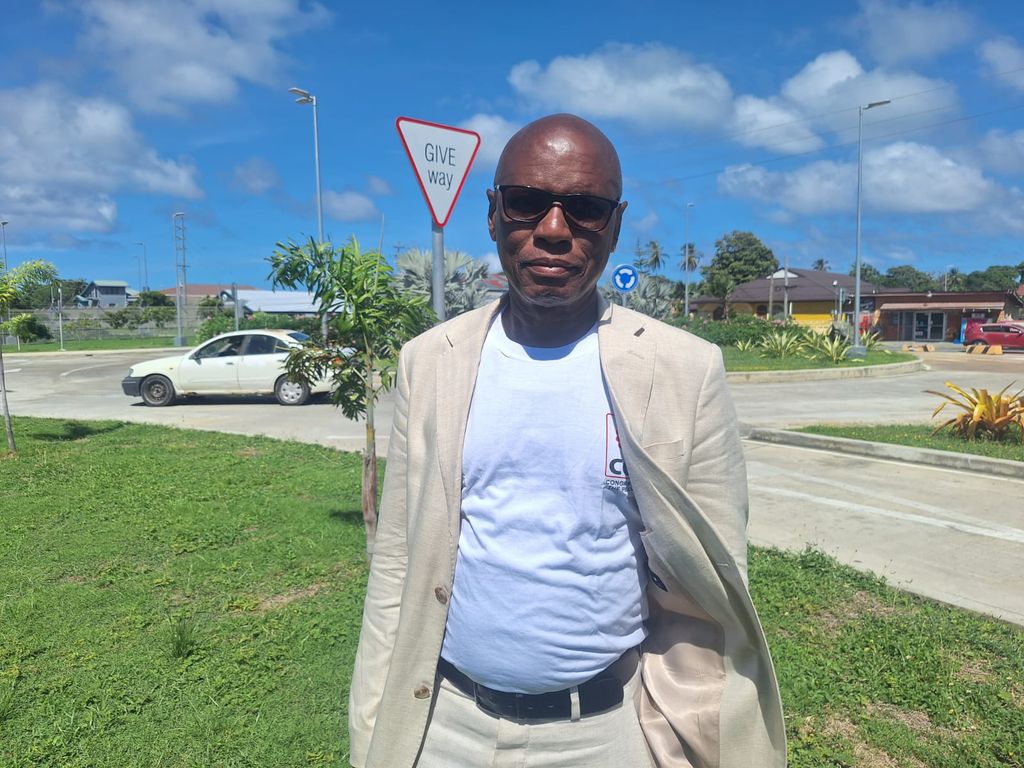
Lawyers for social activist Wendell Eversley, led by former prime minister and current Port-of-Spain North/St Ann’s West MP Stuart Young, SC, yesterday filed the case challenging the anti-crime legislation.
The legal action came days after Maloney Gardens, D’Abadie, was declared a closed area and a nightly 9 pm to 5 am curfew was implemented.
The legislation, proclaimed on October 6, divides the country into policing districts and empowers the police and, if necessary, the T&T Defence Force (TTDF), to conduct special crime-fighting operations.
Once a community is declared closed by the President under the Act, the police may implement measures, including curfews, cordons and checkpoints, road closures, entry/exit permit requirements and warrant-less searches.
In Eversley’s fixed-date claim form, obtained by Guardian Media, his lawyer Richard Rojas admitted that his client, who lives in Bon Air West, Arouca, is not currently directly affected by the legislation.
However, he claimed that there was substantial risk of his client’s neighbouring community being similarly classified.
“The claimant brings these proceedings in the public interest for the purpose of vindicating the supremacy of the Constitution, upholding the rule of law, and security, a determination as to the constitutional validity of the Special Operations Act 2026,” Rojas said.
Rojas noted that Eversley was questioning the decision to pass the legislation in both the House of Representatives and the Senate by a simple majority.
He noted that a vote in the Senate on September 24 initially resulted in a 15-15 deadlock, which was broken by Senate President Wade Mark, who cast a vote in favour of the legislation.
He suggested that a special majority should have been required, as the legislation unjustifiably infringes on the fundamental constitutional rights of citizens.
“These provisions confer broad and insufficiently circumscribed discretionary powers, without adequate criteria governing their exercise, reasonable limits upon their duration or sufficient safeguards against arbitrary and disproportionate interference with constitutional rights,” Rojas said.
“The practical implementation of the Act in the Maloney Gardens Housing Development demonstrates the adverse consequences of these powers upon law-abiding citizens, including restrictions upon their ordinary movements, employment, access to their homes, and enjoyment of constitutionally protected freedoms,” he added.
Rojas also claimed that the legislation also interfered with and undermined the constitutionally protected independence of the Commissioner of Police.
“In particular, the Act confers upon the Prime Minister an effective veto over the designation of Heads of Special Operations, subjects aspects of the Commissioner’s operational management to political executive involvement, and imposes mandatory requirements concerning operational reporting, appointments and procedures,” he said.
Through the lawsuit, Eversley is seeking a series of declarations over the legislation, including one that it is unconstitutional, null and void.
Guardian Media understands that the case has been assigned to Justice Nirala Bansee-Sookhai, who is yet to set a first date of hearing.
In his affidavit attached to the lawsuit, Eversley claimed he was concerned after the Government, led by Prime Minister Kamla Persad-Bissessar, passed the legislation after two consecutive States of Emergency.
Eversley questioned the Government’s use of Preventive Detention Orders (PDOs) during the past SoEs.
While he acknowledged the scourge of serious violent crime in T&T and the State’s responsibility to protect the public, he suggested that the legislation overly infringed on citizens’ rights.
“I have read the Act and my concern is not with its objective, but with the breadth of the powers conferred on the Executive by the Act, the interference with the independence of the Commissioner of Police to manage the Police Service and the absence of sufficiently defined limits and safeguards to Executive power,” Eversley said.
He referred to numerous segments of the legislation which he considered offensive.
Referring to the application of the legislation in Maloney based on media reports, Eversley said he was concerned with the effect on the lives of residents.
“It is also worth mentioning that the said reports indicate that the application of these restrictions have been inconsistent and arbitrary which effectively creates ample opportunity for persons, who may be of interest to the police, to escape the closed area,” Eversley said.
“This leaves the law-abiding citizens as being the ones who are negatively affected,” he added.
Eversley is also being represented Anthony Bullock, Christophe Rodriguez, Thane Pierre, Celeste St Louis and Adam Fernandez.
In piloting the Special Operations Bill in the House of Representatives on September 18, 2026, Attorney General John Jeremie acknowledged that the legislation could infringe upon several constitutional rights but maintained that a special majority was not necessary for its passage.
Among the rights Jeremie identified were the right to liberty and the enjoyment of property, the right to respect for private and family life, and freedom of movement.
“Our view is that any such infringement is reasonable and proportionate in light of the cases of Suraj and Suratt,” Jeremie said.
Citing Privy Council judgments, the Attorney General explained that constitutional rights were not absolute and that legislation infringing upon those rights could be upheld if it pursued a legitimate aim and satisfied a proportionality test.
However, Jeremie acknowledged that the Government would face a greater burden in justifying those restrictions before the courts.
“Where legislation infringes fundamental rights and they are enacted by a simple majority, as we shall do today, the threshold for justifying the limitation is higher on the State,” he said.
He explained that legislation passed with a special majority would be afforded greater judicial deference.
Jeremie, however, maintained that the Bill contained “numerous safeguards to ensure that it is both reasonable and proportionate.”
Related News

T&T faces calls for stronger human rights protections at UN review
Teen injured by dad during cutlass attack
United Airlines says it has a widespread system outage just days after nationwide ground stop