Killer drones face a reckoning as UN conference of nations considers rules on lethal AI weapons
 16 November 2026
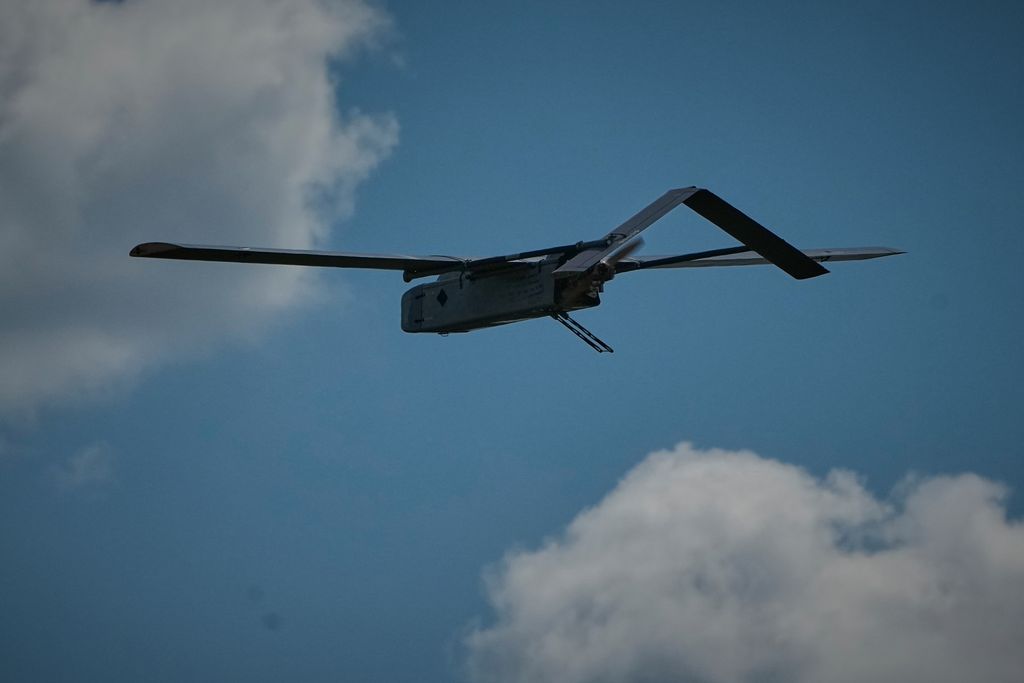

Killer robots and drones are coming up for a reckoning this week as government envoys on Monday revved up a discussion and could decide this week whether to launch negotiations toward setting rules for use of the deadly machines — or not.
Pope Leo XIV, the U.N. chief and advocacy groups have framed the issue as an existential debate: Whether robots can be allowed to kill and whether humans must maintain some control of and accountability for use of lethal autonomous weapon systems.
Activists say armed drones that can independently strike targets have already been deployed in some select instances in conflict zones like Ukraine and the Middle East, but widespread rollout hasn’t happened.
Scary would-be scenarios, like armed drones flying amok and gunning down civilians with pinpoint precision, have peppered years of discussions about killer robots. But those talks haven’t produced any international restrictions.
The United States and Russia, longtime rivals, want to limit any curbs on their ability to develop and deploy powerful new tools in the high-tech arms race — just as AI is gaining steam and changing battle plans.
Proponents of an AI weaponry rulebook say time is of the essence.
“We’re at a pivotal point now, where it’s an experimentation phase. We’re seeing some cases here, some cases there, but not full operationalization,” said Anna Hehir, head of military AI governance at the Future of Life Institute, an advocacy group. “It will be a lot harder to regulate and create rules when these systems have already been in use for many years.”
UN meeting comes after 7 countries seek negotiations
The issue comes to a head at U.N. offices in Geneva, where the seventh review conference about the awkwardly named Convention on Certain Conventional Weapons will consider whether to start talks on regulation of killer robots.
Supporters of an accord acknowledge powerful forces are in the way, but point to precedent: Governments have already struck a deal to regulate blinding lasers.
Most countries support reining them in. U.N. Secretary-General Antonio Guterres’ deadline this year for the launch of talks toward regulation has given the issue urgency, but some top military powers are hesitant.
Last month, seven countries -- Austria, Belgium, Brazil, Ireland, Mexico, New Zealand and Panama -- submitted a proposal to launch negotiations of a new legally binding agreement on autonomous weapons at the conference.
The various sides have been gearing up for the diplomatic standoff.
On Friday, International Committee of the Red Cross President Mirjana Spoljaric said in a statement: “States must act to ensure the future of warfare is not handed over to machines.”
Stop Killer Robots, an advocacy group, says 130 countries support new international rules on the weapons systems.
Activists began running advertisements on the streets and in the subways of Berlin, London and Paris touting public support for reining in killer robots.
Russia says talks on restrictions are ‘premature’
In his first encyclical in May, the pope denounced a “culture of power” driving the AI race, especially in developing ever more sophisticated methods of remote warfare, and said it’s not permissible to entrust decisions about life and death to remote AI systems.
Under the convention’s rules, decisions must be made by consensus. That means that any single country can thwart an agreement, and that any such deal is likely to be based on a low common denominator. Another sticking point is how long negotiators might be given to try to agree on language.
In the run-up to the conference, humanitarians and activist groups said Russia looked ready to deploy tactics to slow or even stall progress toward launching formal negotiations.
“Russia attaches great importance to the successful outcome of the conference and to reaching mutually acceptable agreements that will help strengthen the Inhumane Weapons Convention and further its universalization,” Russian Foreign Ministry spokeswoman Maria Zakharova told reporters on Wednesday.
Moscow wants “organizational matters” to be ironed out first and see a process “free from politicization,” she said.
Most tellingly, Zakharova said: “We consider it premature to argue that the time has supposedly come to develop restrictive or prohibitive measures concerning such systems.” —GENEVA (AP)
_________
Story by JAMEY KEATEN | Associated Press
Related News

Morvant residents demand answers after ‘weeks with no water’

Privy Council rules 2011 State of Emergency was constitutional legal

CCJ allows appeal in Guyana land dispute case