
By Ryan Bachoo
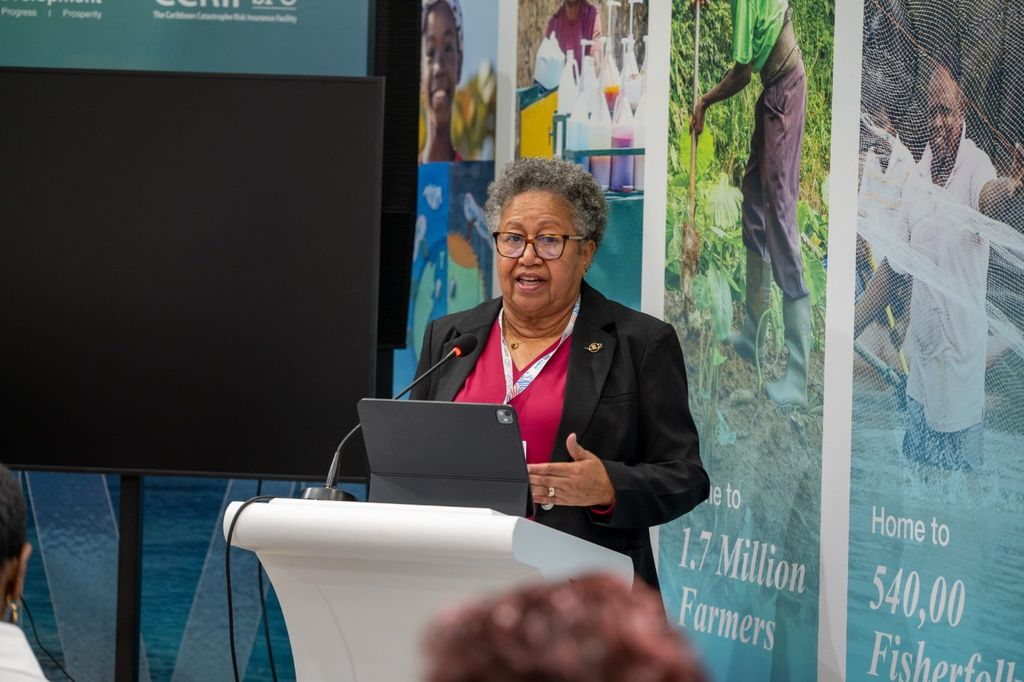
Caribbean countries must continue to fight to keep the global 1.5-degree Celsius warming target within reach, with Caricom Secretary General Dr Carla Barnett warning that abandoning the ambition would leave small island and low-lying coastal states increasingly exposed to rising sea levels and extreme weather events.
Speaking to Guardian Media on the sidelines of COP31 in Antalya, Türkiye, Barnett said while the first week of negotiations had been marked by encouraging discussions and a willingness among countries to engage, the region was looking for concrete action on emissions reductions and climate financing.
She said the Caribbean’s vulnerability made the 1.5-degree target a matter of survival, particularly as island states continued to experience the consequences of climate change despite contributing relatively little to global greenhouse gas emissions.
“We are all watching the water rise,” Barnett said, pointing to the shared exposure of Caribbean and Pacific island states.
“For me, the most important thing is to ensure that that 1.5 is not lost forever. Because if that is lost forever, that means the water will rise around all of us. And as the small islands and the smaller coastal states, we pay that price first.”
Barnett said the region was also bearing the cost of stronger and more frequent hurricanes, despite not being responsible for the emissions driving the climate crisis.
She acknowledged that some leaders had questioned whether the 1.5-degree threshold could still be salvaged, but said this did not contradict the position of countries and organisations, including the Alliance of Small Island States (AOSIS), which continue to insist that the ambition must be maintained.
Explaining the distinction, Barnett said the target was measured as a global average over time, meaning temporary overshoots did not necessarily mean it had been permanently lost.
“What the scientists say is that we’re overshooting it every now and again. But the 1.5, remember, is an average over time. So it has not been lost forever,” she said.
However, she warned that bringing temperatures back within the target would become increasingly difficult the longer countries delayed reducing emissions.
“The longer we take to do that, the more difficult it is to bring it back,” she said, adding that major emitting countries had to take responsibility and make the necessary changes to their economies and lifestyles.
Beyond emissions reductions, Barnett identified climate financing as another major priority for the Caribbean at COP31.
She said the region needed developed countries to honour previous financial pledges while making funding more accessible to vulnerable nations.
Barnett said the process of preparing projects and qualifying for financing remained complicated, while the proportion of funding provided as grants was often too small compared with loans.
She also expressed cautious optimism about discussions surrounding immediate disaster recovery financing, particularly the expansion of the Caribbean Catastrophe Risk Insurance Facility (CCRIF) and the inclusion of disaster clauses in loan agreements.
Such provisions could allow countries to suspend debt repayments following a hurricane or other major disaster, freeing up resources to provide food and shelter, restore homes and respond to urgent humanitarian needs.
However, she said international financial institutions and private sector lenders would have to move beyond discussions and formally incorporate these arrangements into their financing structures.
Barnett distinguished between immediate disaster recovery and longer-term investments in infrastructure, including roads, bridges and hospitals damaged by hurricanes.
Reflecting on the first week of COP31, she described the atmosphere as hopeful, with considerable activity and constructive discussions, but said the real test would be whether those conversations translated into action.
She also urged Caribbean citizens to pay closer attention to the negotiations, stressing that climate change was not simply an issue for governments or international policymakers.
“We have to listen to our scientific studies, the people who tell us what is likely to happen, because it will affect our lives,” she said.
“For me, this is about the next generation. This is about the kind of world that our children, your children, grandchildren eventually will live in.”
Barnett said the decisions being made at COP31 would have consequences far beyond the present generation, making it essential for Caribbean people to remain informed and engaged.
Related News
Netanyahu is pressing Trump to attack Iran after the midterms, officials tell AP
ICE nabs more Caribbean nationals for allegedly voting illegally
Maloney Buildings declared first closed area under Special Operations Act