Mottley: Global financial system driving vulnerable nations back into poverty
 12 November 2026

Seigonie Mohammed
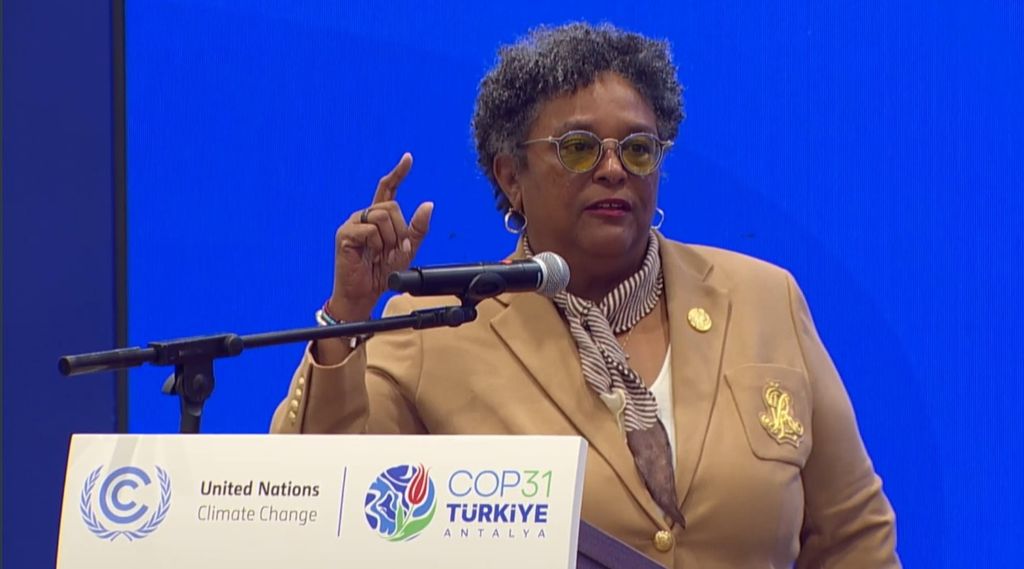
Barbados Prime Minister Mia Mottley has launched a blistering attack on the international financial system, accusing global lenders of exploiting climate-vulnerable countries and warning that existing financial rules are effectively pushing developing nations back into poverty.
In strongly worded interventions on climate finance and international trade, Mottley condemned a system in which countries facing devastating disasters are forced to pay higher interest rates precisely when they can least afford them.
“If you see a country falling, do you now want to exploit them by charging them higher interest rates or by denying them access to a fair and level playing field for international trade transactions? That is what we are doing,” she declared.
The Barbadian leader argued that middle-income countries, including vulnerable Caribbean states, are being punished for their economic progress because international financing arrangements fail to recognise their exposure to climate disasters.
“We do not do anything for middle income countries that are vulnerable,” she said.
“And therefore, we penalise them by saying that you have done a good job to lift yourself out of poverty. So now go on a treadmill that will return you to poverty.”
Mottley said the situation demands urgent reforms to the rules governing international lending, including how debt sustainability is assessed and how credit rating agencies evaluate vulnerable economies.
She argued that countries cannot realistically invest in climate resilience if existing borrowing restrictions prevent them from accessing the financing required.
“You can offer me as much money as I want,” she said, before warning that restrictive debt sustainability assessments could still force governments to sacrifice essential investments.
Mottley, who chairs the V20 grouping of climate-vulnerable countries, also called for stronger international solidarity to force changes in global lending practices.
Among her proposals is the wider adoption of natural disaster and pandemic clauses in government borrowing arrangements.
Such provisions, she explained, would allow countries to suspend principal and interest payments for two years after catastrophic events, freeing resources to rebuild communities and restore livelihoods.
She cited Barbados' experience issuing bonds with disaster and pandemic clauses as evidence that international investors can accept those protections.
Mottley also challenged development banks to offer loans lasting 40 to 50 years, with repayment moratoriums of 15 to 20 years, particularly for essential infrastructure.
She identified water, healthcare and education as immediate priorities for climate-vulnerable economies.
“We can't build and do everything at once. We can't boil the ocean,” she said.
But beyond the technical reforms, Mottley framed the issue as a fundamental question of justice.
“This is a moment for course correction. Because we have to start first and foremost with what is fair and what is moral.”
Her message underscores the stakes for Caribbean countries confronting increasingly destructive climate events while struggling to finance recovery and long-term development.
For Mottley, the central question is no longer whether the international financial system needs reform, but how much longer vulnerable nations must suffer before meaningful change arrives.