
In the past 25 years, different administrations in Government have set up special purpose companies- according to their statements- to shutter debt, to facilitate and fast-track investment or to create vehicles for delivery during their tenure.
But several have been closed, and some saddled with billions in debt because of corruption and mismanagement, in addition to associated costs of audits, legal fees and liquidation.
Taxpayers have borne the cost and debt of these ventures and the state still pays loans tied to some.
After decades of being on the budget books, some still require state funds for legacy issues.
For fiscal 2027, Caroni (1975) Limited was allocated a little over $14 million for settlement of claims and sums to its pension plans.
In fiscal 2026, that allocation was $2.2 million.
Yet, the company has been closed for the past 23 years. And according to the State Enterprise Investment Programme 2027 document, it’s undergoing pre-liquidation activities.
In 2019, former Caroni (1975) chairman Jerry Hospedales had said that since the state-owned company closed down in 2003, the government has spent $10 billion in “wrapping” it up.
Hospedales had said that a large chunk of this money was spent on pensions, training courses, monetary benefits and residential and agricultural lands for former employees. Its successor, the Sugar Manufacturing Company Limited, has been allocated $3,816,400 for fiscal 2027.
So why is it taking the State more than 23 years to wind up the company and settle outstanding land issues with former workers?
Caroni is not an isolated case.
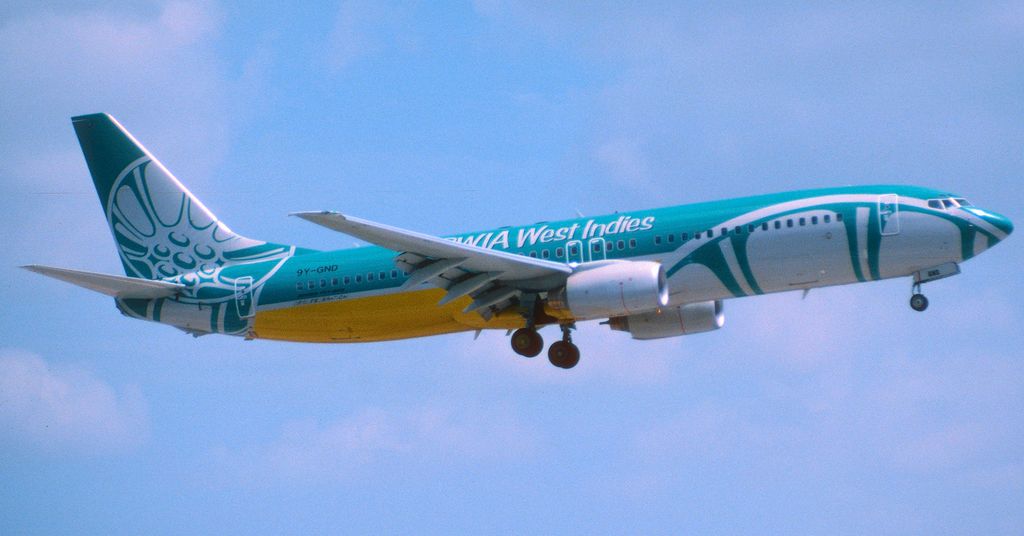
The sum of $450,000 was allocated to British West Indies Airways (BWIA) for fiscal 2027.
BWIA was shut down in 2016 and CAL was created and began operations in 2017. This sum for BWIA is separate from sums allocated to its successor, Caribbean Airlines (CAL), to maintain for fiscal 2027.
CAL is expected to receive a subvention of $75,618,581 from the Ministry of Transport and Civil Aviation for the fiscal year, and around $236 million to cover two loan payments- $165.5 million as a principal repayment and $72 million as an interest payment.
State enterprises were closed for inefficiencies, with the common theme among them that, instead of generating profits and contributing to the country’s coffers with taxes, they were a drain on the Treasury.
In 2024, two years after it was established, the Dr Keith Rowley administration took the decision to shut down the Secondary Roads Rehabilitation and Improvement Company Limited (SRRIC). The government fired the existing board and appointed public servants from the Ministry of Finance.
SRRIC, established in June 2022 with a $100 million capitalisation, was first placed under the Ministry of Local Government and then moved to the Ministry of Works and Transport (MOWT) and finally under the Ministry of Finance for winding up.
Its closure followed the resignation of former chairman Herbert George, two audits being conducted into the company amid tensions between its chief executive officer Antonio Ross and MOWT and a complaint lodged to the Office of the Procurement Regulator (OPR) on allegations of collusion, price-fixing and bid-rigging.
There was little public accountability for the sum spent apart from a hearing by Parliament’s Public Administration and Appropriations Committee (PAAC), chaired by former Speaker of the House Bridgid Annisette-George.
In the case of Petrotrin, the Government followed the route it had taken with BWIA, to close it down and re-operationalise it into three companies with new balance sheets.
It cost just under $2 billion to close its refinery. The bulk of that sum, estimated at over $1.8 billion, went to severance packages for its 2,500 permanent employees. That cost excluded the $12 billion bond payment guaranteed by the Government and $3 billion in taxes and royalties owed to the state over the years. The Government still has to service the bond payments.
For fiscal 2027, the Government has allocated $7 million for CEPEP.
The Trinidad and Tobago Revenue Authority (TTRA) was scrapped by the United National Congress (UNC) Government last year after more than $10 million was spent to operationalise it. The top management posts were also filled. The TTRA never started operations. The former administration said it had spent close to a decade of technical work and stakeholder consultations before the passage of the Trinidad and Tobago Revenue Authority Act in 2021.
In the past 25 years, several state enterprises have been closed down- Caroni Green, Government Information Services (GISL), the Education Facilities Company Limited (EFCL) and in 2024, the Secondary Roads Rehabilitation and Improvement Company Limited (SRRIC) while others such as SportTT and the Estate Management Business Development Company Limited (EMBD) haemorrhaged millions in bad investments.
The State Enterprise Investment Programme 2027 identified 20 companies in different states of dissolution, with four being dissolved.
And according to the Draft Estimates of Recurrent Expenditure for fiscal 2027, sums have been earmarked for state entities that have been winding down for years:
For fiscal 2027, the Government will spend about $60 million on state enterprises which have already been closed:
1. Alutrint, which is undergoing pre-liquidation activities, has been allocated a sum of $20,950,000.
2. The Trinidad and Tobago Oil Company Limited (a legacy company) has also been allocated $450,000.
3. The Tourism and Industrial Development Company Limited (TIDCO), which was closed in 2005, was allocated a sum of $200,000.
4. The sum of $400,000 has been allocated to the Community Improvement Services Limited (CISL). The State company was closed in 2017. In fiscal 2025, it was also allocated $34.4 million.
5. The Government Information Services Limited (GISL), which was closed in 2017, has been allocated the sum of $1.5 million in fiscal 2027 after receiving no transfer or allocation in fiscal 2025.
In addition to making transfers to former state enterprises to meet legacy issues, the Government has also been servicing debt for loans that entities would have taken out during their operations.
The Golden Grove- Buccoo Limited, which was set up to facilitate the Sandals resort in Tobago but has remained fairly inactive, was allocated $1.2 million.
Several entities established, such as the Trinidad and Tobago Upstream Downstream Energy Operations Company Limited, in the Ministry of Energy and Energy Industries are still operational on paper because of ongoing litigation with NiQuan.
Last week, Prime Minister Kamla Persad-Bissessar announced her Government’s plan to divest National Quarries Limited, the Hilton Trinidad Limited, the Magdalena Grand Beach in Tobago, Lake Asphalt and the La Brea Industrial Development Company Limited (Labidco).
In the face of criticism, Persad-Bissessar said that public funds should be directed towards improving citizens’ lives rather than sustaining businesses that consistently incur losses.
Dissolution of Companies
The following companies have ceased operations and are at various stages of being wound up:
1. Alutrint Limited (majority-owned joint venture) – undergoing pre-liquidation activities;
2. Caroni (1975) Limited (wholly owned) – undergoing pre-liquidation activities;
3. Caroni GREEN Limited (wholly owned) – a liquidator was appointed;
4. Community Improvement Services Limited (wholly owned) – a liquidator was appointed;
5. Clico Trust Corporation Limited (Clico Investment Fund) (wholly owned) – undergoing pre-liquidation activities;
6. Education Facilities Company Limited (wholly owned) – The Chief State Solicitor was appointed Official Receiver by the High Court;
7. Government Human Resource Services Company Limited (wholly owned) – a new liquidator is to be appointed;
8. Government Information Services Limited (wholly owned) – undergoing pre-liquidation activities;
9. Portfolio Management Company Limited (wholly owned) – a liquidator was appointed;
10. Secondary Road Rehabilitation and Improvement Company Limited (wholly owned) – a liquidator was appointed;
11. Sugar Manufacturing Company Limited (wholly owned) – undergoing pre-liquidation activities;
12. Taurus Services Limited (wholly owned) – undergoing pre-liquidation activities;
13. The CEPEP Company Limited – pre-liquidation activities to commence;
14. Tourism Development Company Limited (wholly owned) – a liquidator was appointed;
15. Tourism and Industrial Development Company Limited (wholly owned) – undergoing pre-liquidation activities;
16. Trinidad and Tobago Free Zones Company Limited (wholly owned) – undergoing pre-liquidation activities;
17. Trinidad and Tobago Oil Company Limited (wholly owned) – undergoing pre-liquidation activities;
18. Trinidad and Tobago Petroleum Company Limited (wholly owned) – undergoing pre-liquidation activities;
19. Trinidad and Tobago Tourism Business Development Limited (wholly owned) – undergoing pre-liquidation activities; and
20. Union Estate Electricity Generation Company Limited (wholly owned) – a liquidator was appointed.
The Liquidation of the following non-operational State Enterprises was completed and the Ministry of Finance is awaiting Dissolution Certificates from the Companies Registry:
1. Seafood Industry Development Company Limited;
2. Trinidad and Tobago Export Trading Company Limited;
3. Trinidad and Tobago Forest Products Company Limited; and
4. Human Capital Development Facilitation Company Limited.