
Governor of the Central Bank is warning that climate change is no longer simply an environmental concern but a growing threat to economic and financial stability that policymakers and regulators must prepare for now.
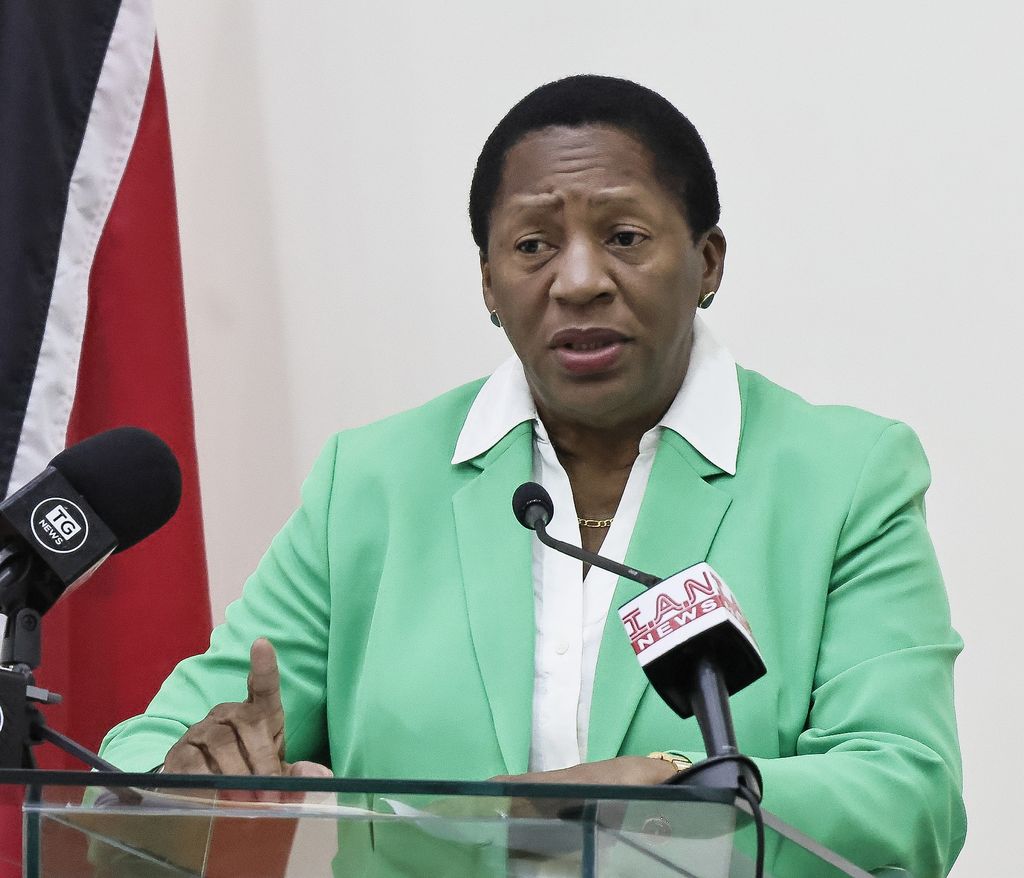
Speaking at the Global Green Swan Conference in Manila, Philippines, Governor Larry Howai said small and vulnerable economies, particularly in the Caribbean, are increasingly exposed to severe weather events that can disrupt agriculture, damage infrastructure, fuel inflation and place pressure on financial systems.
He addressed the conference alongside the Governor of the Central Bank of the Philippines and the Chief Executive of the Hong Kong Monetary Authority.
"In the Caribbean and Central America, the weather is part of the economy. The question is whether we plan for it or pay for it afterwards," Howai said.
Drawing on recent regional experiences, he noted that climate-related disasters carry significant economic costs.
Howai pointed to the impact of Hurricane Melissa on Jamaica, where damage estimates from the World Bank and the Inter-American Development Bank reached US$8.8 billion, equivalent to 41 per cent of the country's 2024 gross domestic product.
The disaster also contributed to a sharp rise in consumer prices, with food inflation accelerating in the months following the storm.
He also referenced the devastation caused by Hurricane Beryl in Carriacou and Petite Martinique in 2024, where about 98 per cent of buildings were damaged or destroyed, arguing that such events demonstrate why climate change must be regarded as both an environmental and financial stability issue.
According to Howai, central banks must now focus on understanding how climate-related shocks are transmitted through economies, affecting inflation, growth and the stability of financial institutions saying,
“For central banks, the question is not whether climate change matters. The question is how climate-related shocks are transmitted into inflation, growth, financial stability and ultimately the institutions we supervise,” he said.
He said the Central Bank of T&T has been expanding its work in this area through climate-risk analysis, guidance for regulated financial institutions and collaboration with regional and international partners.
The governor also highlighted that the bank joined the network for greening the financial system in 2021 and continues to participate in regional climate-risk initiatives, including efforts to develop a Caribbean regional green taxonomy.
He added that the bank completed a sector-wide, climate-risk survey in 2025 and is strengthening climate-risk supervision under its 2026-2031 strategic plan through enhanced data collection and climate stress testing.
Howai said the institution is now moving from awareness to implementation, with the aim of ensuring households, farmers and businesses are better protected from climate-related losses.
He stressed that climate resilience should be viewed as an investment in long-term macroeconomic stability, financial stability and sustainable economic growth.