
Lead Editor - Newsgathering
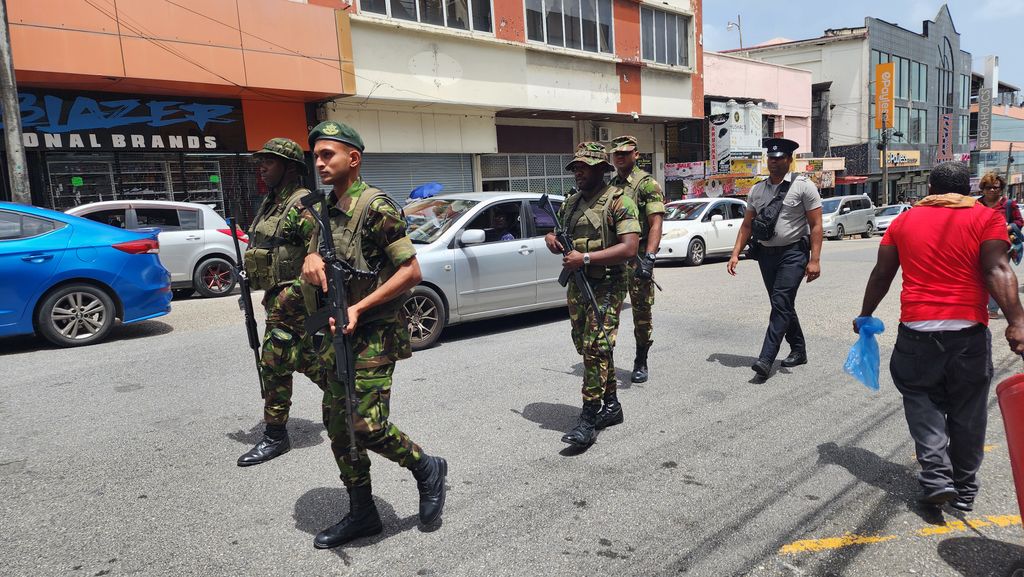
Prime Minister Kamla Persad-Bissessar has announced that 30 joint army-police posts will be established across Trinidad and Tobago over the next four months, as the Government moves to expand its security measures under the ongoing State of Emergency (SoE).
In a Facebook post yesterday, Persad-Bissessar said the initiative is intended to respond to years of requests from communities for a greater security presence.
She said the joint army-police posts would provide “a sense of comfort” and help communities regain the use of their public spaces.
The Prime Minister also called on NGOs, business chambers, community groups and local government councils to adopt and support the posts and work alongside the security services.
The proposed locations include the Tarouba Flyover; Grand Bazaar Interchange; Couva Interchange; Williamsville Junction, Guayaguayare; the junction of Rochard Road and Penal Rock Road; the La Romain intersection of the Southern Main Road and South Trunk Road; Todd’s Road; Tamana Road; Kelly Village; Demerara Road, Aranguez; Eddie Hart Grounds; Carlsen Field; Felicity; Lady Young Road; Acono Road; Malgretoute Junction; Golconda Interchange and Torrib Road in Tabaquite.
Six additional sites are still to be determined, the PM revealed.
Persad-Bissessar thanked Commissioner of Police Allister Guevarro, Strategic Services Agency Director Alicia Henry, Chief of Defence Staff Commodore Don Polo, acting Prison Commissioner Elvin Scanterbury and members of the protective services for their work during the ongoing SoE, saying the Government remained confident in their shared vision of “ending the grip of crime on our nation.”
According to the Trinidad and Tobago Police Service’s latest crime statistics circulated yesterday, the murder toll stood at 222, compared with 232 at the same point last year. The statistics also showed no murders were recorded in July 2026, compared with three in July 2025.
However, in an immediate response, former National Security minister and former commissioner of police Gary Griffith criticised the Government’s plan, calling the move outdated and ineffective.
“The Prime Minister’s announcement of 30 police posts is not a modern crime-fighting strategy. It is an outdated, cosmetic measure that may create the appearance of action but will do little to deter criminals, reduce crime or improve the police response to citizens in distress,” Griffith said in a statement.
“This is what happens when a Prime Minister is guided on national security by persons without the necessary operational experience or senior law-enforcement leadership. Establishing more police posts reflects a 1970s approach to policing, not the intelligence-led, mobile and technology-driven system required to confront present-day criminality.
“A building does not prevent crime. Persons have been murdered immediately outside fully staffed police stations. The mere presence of officers sitting inside a police post will not deter criminals operating elsewhere, nor will it provide the rapid response required when a citizen is under attack.”
He said staffing issues will also affect the plan.
“The more officers assigned to static locations, the fewer officers are available for mobile patrols, high-visibility operations and immediate responses to emergency calls. Criminals will simply operate beyond the limited reach of these posts, knowing that the officers inside cannot respond quickly enough.
“It is comparable to an old-fashioned cricket captain setting a field for bad bowling: whenever something happens in a particular location, another fielder is placed there. But crime is not static. Criminals adapt, move and exploit the spaces where law enforcement is absent. Effective policing must therefore be mobile, responsive and unpredictable.”
Noting once again that the New York City Police Department secures a population of more than eight million people with fewer police stations and posts than T&T has for its population of just 1.4 million, Griffith said, “What Trinidad and Tobago requires is a properly functioning 999 system linked directly to operational vehicles deployed throughout defined areas of responsibility. Every police vehicle should be GPS-tracked, with dispatchers able to identify and send the nearest available unit immediately. Citizens calling 999 should never be placed on hold, told that no one is available or forced to telephone individual police stations in search of assistance. ... That is what gives the public confidence: knowing that when they call for help, a properly equipped police unit will arrive quickly.”
Noting that the United National Congress was the second consecutive administration to misunderstand the distinction between a police building and an effective police response, Griffith said, “Refurbishing necessary stations is one thing. Establishing 30 police posts and presenting them as a major crime-fighting initiative is something entirely different.
The Government should invest in a reliable 999 command-and-control system, properly resourced mobile patrols, GPS-monitored vehicles, intelligence-led deployment, high visibility and response times of under five minutes. Those are the measures that deter criminals, reassure communities and allow the police to intervene while crimes are occurring.
“Thirty police posts may provide 30 locations for press conferences and ribbon-cutting ceremonies. They will not provide the modern, mobile and responsive Police Service that Trinidad and Tobago urgently needs.”