
Lead Editor - Newsgathering
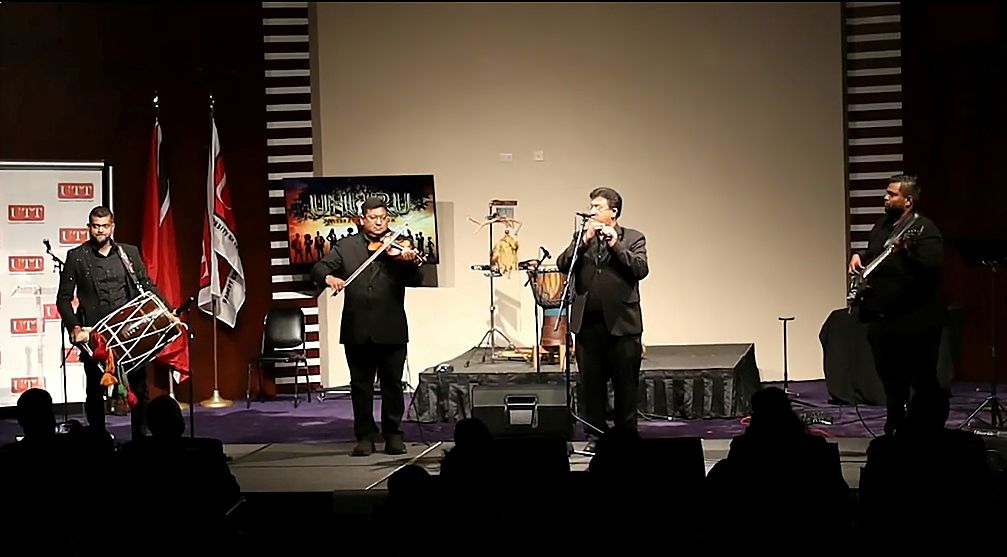
A tassa performance and classical Indian Dance during an African Emancipation Day celebration hosted by the University of Trinidad and Tobago (UTT) has sparked debate on social media, with some people questioning whether it was appropriate for an event commemorating the emancipation of enslaved Africans.
The programme, titled UHURU: Celebrating Freedom, was organised by UTT in collaboration with the Ministry of Tertiary Education and Skills Training, the Ministry of Culture and Community Development and the National Academy for the Performing Arts (NAPA).
Parliamentary Secretary in the Ministry of Tertiary Education and Skills Training Hansen Narinesingh delivered the feature address, in which he said the histories of African emancipation and Indian indentureship had together shaped T&T.
“The journey of our African ancestors who fought for emancipation and our East Indian ancestors who arrived under the indentureship system in a search for better life are extraordinary stories. Together, these experiences have shaped the values of resilience, of solidarity, and of mutual respect that continue to define our national identity,” Narinesingh said.
He said institutions such as the UTT serve not only as centres of academic excellence, research and innovation, but are also spaces where our heritage, creativity and diverse cultural expressions are explored and celebrated.
Narinesingh added: “As we commemorate African Emancipation, we must reaffirm our commitment to building a country where opportunity is open to all, drawing strengths from the legacy of our ancestors. By remembering the struggles of those who came before us, we are challenged to build a society where freedom is matched by inclusion, where diversity is embraced as a source of strength, and where every citizen has the opportunity to realise their full potential.”
Videos from the event later circulated on social media, showing a tassa performance, prompting mixed reactions. While some people defended the inclusion of different cultural traditions, others questioned whether tassa was appropriate for an African Emancipation Day observance. Some also said African drumming would have been more fitting and called for organisers to explain the decision.
In a statement following the event, UTT said UHURU: Celebrating Freedom honoured “the enduring legacy of Emancipation while celebrating the significant contributions of African heritage to the social, cultural and artistic development of T&T.”
The university said the production featured theatrical readings, dance and musical performances that paid tribute to those who fought for freedom while reflecting on the lasting impact of Emancipation on the nation’s identity.
Commenting on the event, Laventille West MP Kareem Marcelle said he believed there had been a growing pattern of what he described as disrespect towards African Emancipation Day and African people in T&T.
Marcelle said the issue was not limited to the UTT event, but reflected what he described as a wider debate around how the day is commemorated.
He criticised what he described as attempts to place other historical experiences alongside slavery during discussions about Emancipation, arguing that African people should be able to commemorate their ancestors and history without comparisons.
However, social activist David Muhammad said he wasn’t surprised by the inclusion.
“Afro-Trinbagonian consciousness in casual conversations tends to be punctuated by apologies and requests for forgiveness for “thinking or being too black’,” he told Guardian Media via WhatsApp.
“I am therefore not surprised by this. To me, it is another one of those desperate attempts coming out of the African community that we are willing to symbolically make racial-cultural integration an even higher priority than the ideological and economic liberation of African minds, even for a celebration like Emancipation Day.”
The controversy comes a week after the Indian High Commission in Port-of-Spain faced widespread criticism for initially scheduling an Indian Diaspora Day open house today (August 1), as T&T observes African Emancipation Day.
The High Commission later postponed the event to August 8 following public backlash. Critics argued that August 1 is not simply a public holiday but a day dedicated to commemorating the abolition of slavery and honouring the struggles and sacrifices of enslaved Africans.
While not directly addressing the controversy surrounding the UTT event, former Prime Minister Dr Keith Rowley also weighed in on African Emancipation Day in a social media post, criticising the Government’s foreign policy.
“So, when T&T voted to support genocide and the destructive embargo against Cuba, we should know that under this UNC government, we have lost our way and have chosen to be a vulgar vassal state instead of the proud post-colonial beacon that we always were,” Rowley wrote.
Rowley’s comments came more than two years after he, as prime minister, announced that Cabinet had approved renaming the August 1 holiday from Emancipation Day to African Emancipation Day.
Announcing the change in April 2024, Rowley said the move was intended to make it clear that the observance commemorates the emancipation of enslaved Africans.
“The time has come for us to make it quite clear what emancipation means; and who is being emancipated,” he said then, adding that he had noticed others were “attempting to climb onto the Emancipation bandwagon and attempting to add appendages to it.”
Rowley said that since T&T was the first country to declare Emancipation Day a public holiday, it had a responsibility to preserve its original meaning.