
Senior Reporter
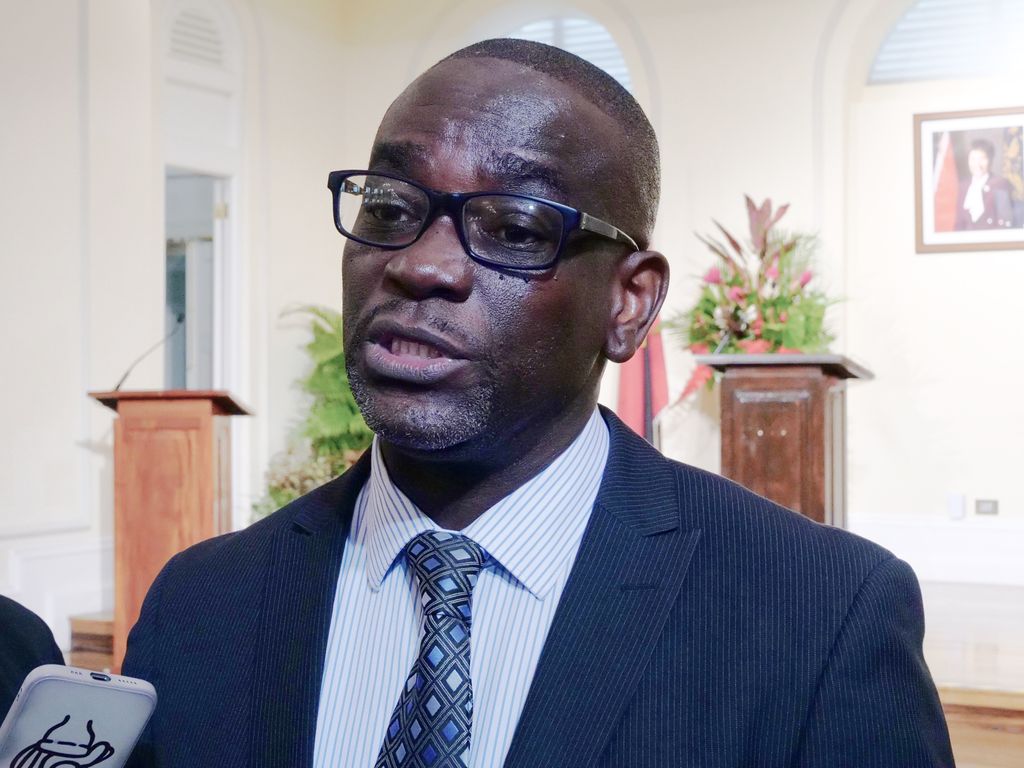
Minister in the Ministry of Housing Phillip Alexander has rejected accusations that his recent social media attack on activist Suzette Louwe was derogatory or amounted to an attack on women, even as criticism of his conduct continues to intensify.
The latest development comes amid an escalating public feud between Alexander and the social media activist, which has now sparked debate over the standards expected of public office holders.
Responding to questions from Guardian Media yesterday, Alexander denied his comments crossed the line from political criticism to personal attacks, or that they were inappropriate for a Government minister.
Addressing concerns over references in his now-deleted Facebook post to alleged intimate photographs and remarks about Louwe’s family and medical circumstances, Alexander said, “That is absolutely untrue. At no point did I say that I was in possession of any such images. If required, I will reveal the names of the persons who made the information aware to me, including a senior state official.
“Suzette Louwe has been attacking persons in public life in the worst way, and my post suggested to her that someone who lives in a house made of glass is the last person to be hurling stones. If anything I said is defamatory, she has redress through the courts and I look forward to responding to any requests for information that may then be triggered.”
When asked directly whether he believed his post was derogatory, Alexander replied, “Absolutely not.”
The controversy stems from a Facebook post made by Alexander earlier this week, which has since been deleted. In it, he made a series of personal allegations against Louwe, including claims regarding alleged intimate photographs, her employment, her marriage and comments referencing the conception of her children.
The post has since drawn widespread criticism online.
Among those condemning Alexander’s remarks was a self-described supporter of Prime Minister Kamla Persad-Bissessar and the UNC, whose Facebook response has been widely circulated on social media.
The individual said she was “fed up and totally disgusted” with Alexander’s conduct, arguing that while she was not a supporter of Louwe, the minister’s comments had “crossed a line and deserve universal condemnation.”
The post accused Alexander of making remarks that appeared to threaten the release of sexually explicit material, targeting Louwe’s children and weaponising what the writer described as private medical matters. It also called on the UNC hierarchy to remove Alexander from office and urged the party’s Women’s League, supporters and members of the public to publicly condemn such behaviour.
The author argued that women should not become “collateral damage in political warfare” and that families and personal medical matters should not be used as political weapons.
Guardian Media has sought a response from Prime Minister Kamla Persad-Bissessar and the UNC Women’s League yesterday but no responses were received up to press time.
Meanwhile, Louwe has also launched an online petition titled “Hold Phillip Edward Alexander accountable for his misconduct.”
The petition alleges that Alexander has, over several years, engaged in racial profiling, targeted various ethnic communities and repeatedly used his social media platforms to demean women. It further claims that despite facing several defamation lawsuits, his conduct has continued unchecked and calls for a review of his suitability to serve as a minister, including appropriate disciplinary action. As yesterday afternoon, the petition had attracted more than 800 signatures.
But Alexander has responded with a petition of his own titled “Tell Suzette mind her business.” In the petition, he accuses Louwe of criticising T&T and its political leaders while living abroad, arguing that she has used her platform to undermine those working for the country’s development rather than offering constructive solutions. The petition urges Louwe to shift “from criticism to collaboration” and “from negativity to positivity.”
By yesterday afternoon, Alexander’s petition had received nearly 300 signatures.
Analyst: Know when to stop
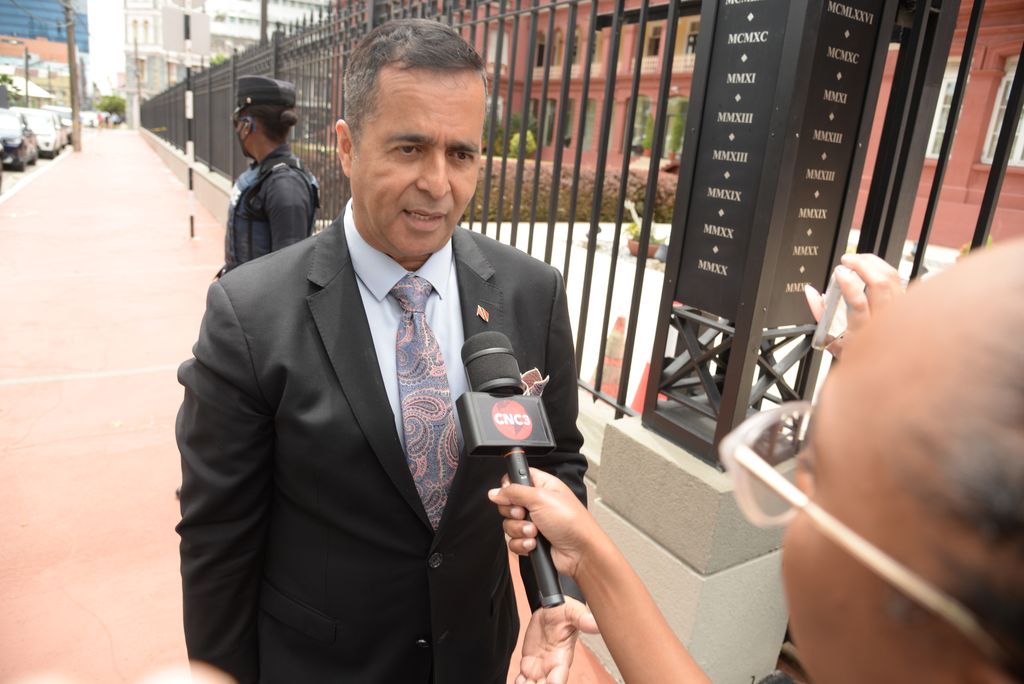
Political analyst Dr Shane Mohammed yesterday said the controversy highlights a broader deterioration in the country’s political discourse, warning that politicians, commentators and activists alike need to recognise when public exchanges have gone too far.
“As a society, putting aside the culture of politics, we have to know when to stop,” Mohammed said.
“There has to be a line that either side, commentator, politician or observer, needs to know when to stop. Sometimes, when someone stops talking or stops responding, that’s also a comment, and sometimes that comment is stronger than the words we say.”
Mohammed said political parties, particularly those in government, must appreciate the emotional investment supporters place in them and recognise that the actions of individual ministers can affect public confidence in the administration as a whole.
“When ministers and MPs make statements that call into question the credibility of the Government, the UNC as a whole or even the leadership of the Prime Minister, that directly affects the emotional well-being of supporters,” he said.
“The ground will carry it, but the ground will also get fed up of the same thing over and over. There has to be a limit.”
While acknowledging the controversy centres on a Government minister, Mohammed stressed his warning was to both major political parties.
“It’s a strong warning to both the Government and the Opposition. Both sides need to understand when to stop.”
Asked whether the Prime Minister should intervene in the latest matter, Mohammed said, “I don’t know how many times the PM must tell big people to shut up and say nothing.”