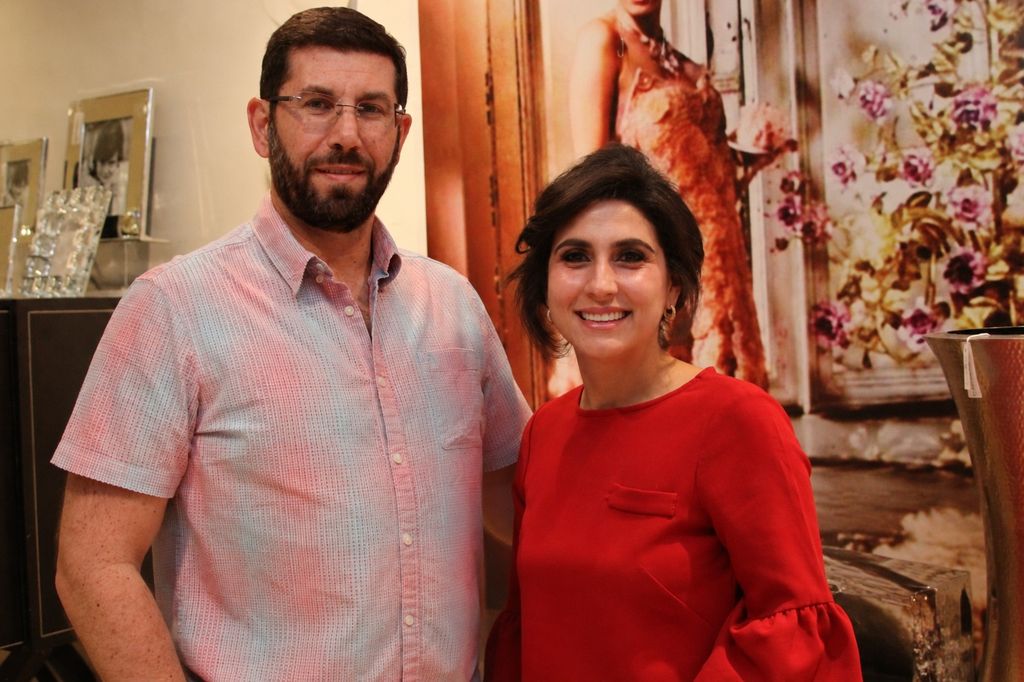

The Trinidad and Tobago Police Service (TTPS) yesterday detained a 69-year-old businesswoman from Westmoorings in the ongoing case involving businessman Dominic Hadeed and his wife Genevieve.
In a release late last night, the TTPS said the woman was assisting them in the ongoing investigation and no charges had been laid.
“The TTPS reiterates that being taken into custody for the purpose of assisting with enquiries is a standard investigative procedure and does not constitute a finding of wrongdoing or adverse inference. The TTPS remains committed to ensuring that all investigative steps are conducted professionally, impartially, and with full respect for the legal and reputational rights of all individuals involved,” the TTPS said, adding no further information could be disclosed.
Guardian Media understands the woman is a relative of the Hadeeds.
But the silence surrounding the arrest of the Hadeeds continued yesterday, as top officials close to the investigation remained mum on the matter, even as no charges were laid against the couple.
Repeated calls to Police Commissioner Allister Guevarro and his trusted deputies went unanswered, while messages and calls to Prime Minister Kamla Persad-Bissessar, Homeland Security Minister Roger Alexander and Defence Minister Wayne Sturge also went unanswered.
Business associates and friends of the couple also remained quiet as they sought to avoid public speculation, former commissioner of police (CoP) Gary Griffith agreed that while the public had a right to know, it was on a “need to know basis” only.
“Right now, they (public) do not need to know anything else,”
Urging the public to remain patient and let the police do their job, Griffith explained that oftentimes when persons of public interest are arrested, it was only after charges are laid that the police release a public statement.
He said the Hadeeds’ attorneys would be the ones to ensure the rights of natural justice and due process were satisfied.
He cautioned, “In a matter as sensitive as this, it is the right of the law enforcement authorities involved in the investigation, not to say too much because it can very well affect the investigation.”
He added, “I would humbly ask that we all need to be calm. Allow the process to continue, let it take its course and before we jump to conclusions and come to speculation, which is what is happening...in a matter of time, the police will eventually state the outcome of the investigation.”
He defended the T&T Police Service (TTPS) as he said, “The police are doing exactly what is required at this time. This is similar to when persons are under a PDO, where they are held and not charged, and if there is not enough evidence to substantiate a charge, those individuals have a right to take legal action against the State.
“So the police must be very careful of what they say, as this can escalate the damages that the taxpayers will have to pay, so I think the police are doing an excellent job in not saying too much until the investigation is complete.”
Regional security expert Dr Garvin Heerah advised the public that the detention of any individual during a criminal investigation must be viewed through two equally important lenses - duty of the state to investigate serious offences thoroughly and the constitutional rights of every individual to due process, dignity and the presumption of innocence.
“It is therefore important that public commentary remains focused on principles rather than speculation regarding any ongoing investigation,” Heerah said.
Responding to the question of just how much should the public be told and when, Heerah said, “Investigators must strike a careful balance between operational effectiveness and public accountability.”
He explained that during the early stages of a sensitive investigation, withholding certain information may be necessary to preserve evidence, protect witnesses, prevent collusion among suspects, or avoid compromising investigative strategies.
However, he indicated that as circumstances permit, “the public should receive timely factual updates that reassure citizens that lawful procedures are being followed.”
Heerah justified the refusal by law enforcement to disclose the location of the Hadeeds up to yesterday.
“There are circumstances where investigators may temporarily limit public disclosure regarding the location of detainees for legitimate operational or security reasons. This should never translate into secret or unlawful detention,” he said.
“The appropriate legal authorities, legal representatives where applicable, and family members should be afforded access in accordance with the law and established procedures.”
But he acknowledged, “The public should be assured that investigations are being conducted lawfully, professionally and within the limits prescribed by the Constitution and the laws of T&T.”
Related News

Vendor threatens case against mayor over ”dump potatoes” allegation
2 killed as fire rips through PoS apartment building
NPTA criticises MPs’ behaviour: Children are watching