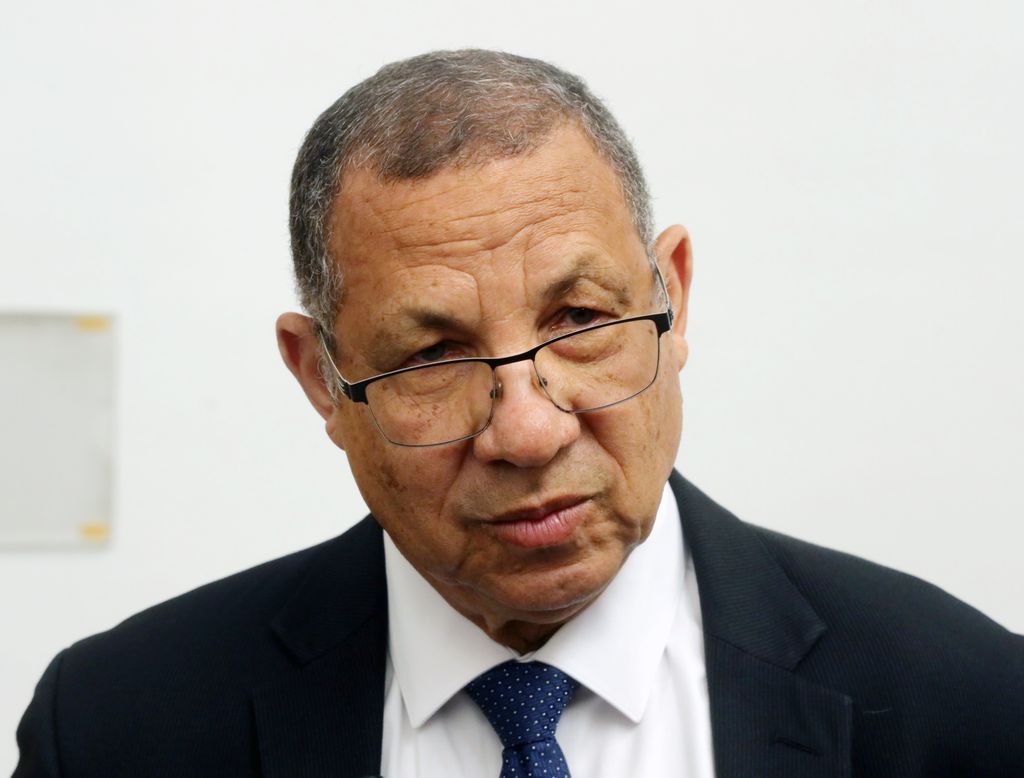

Former finance minister Mariano Browne says Tobago’s $4.12 billion budget request for fiscal 2027 may be ambitious, but warned the final allocation will depend on the country’s fiscal constraints and the Finance Minister Davendranath Tancoo’s ability to balance competing priorities.
Following the THA’s budget presentation on Monday, Browne told Guardian Media yesterday that while Tobago can request what it believes is necessary, the reality is the Central Government is already under pressure.
“I’m only looking at the size of the budget relative to the Minister of Finance and the difficulties. I think he doesn’t have the cash to give them all that they want,” Browne said.
He said politics may influence discussions, especially given Tobago’s role in the current Parliament, but economic realities will ultimately determine the outcome.
“This is a matter of, one, politics on one side and political bargaining in terms of the number of votes that they have in Parliament. And on the other side, it has to do with the financial realities. As much as Mr Tancoo has said that things are different, the financial reality is, he is in exactly the same position that Mr Imbert was. So, the only issue here is how much are you going to pay? Not if he can meet all of the demands, he can’t,” he said.
According to Browne, the Government is already grappling with unmet commitments and growing pressure to deliver on promises made to the public.
Browne said cuts may be necessary as Government works to balance spending priorities.
Asked whether reduced funding for Tobago could alter the political relationship between Tobago representatives and the Central Government, Browne said that while difficult decisions lie ahead, managing competing demands is an unavoidable part of public finance.
And while questions emerge over whether this record-breaking budget request could hurt the relationship between the Tobago People’s Party (TPP) and United National Congress (UNC), political scientist Dr Shane Mohammed expressed his view that this is an unlikely outcome.
He said, “I don’t think it’s a ‘if they don’t get it, it’s going to cause contention’. But I do think, you have to remember, that when you’re thinking from a money perspective, there has to be, if we give you such and such, there needs to be a return on the investment, and that’s been a conversation that we’re not having only because it’s a TPP/UNC in power government and THA relationship.”
Mohammed was also particularly critical of the THA’s decision to allocate $10 million towards advancing Tobago’s autonomy agenda, including the establishment of a Commission on Constitutional Autonomy and a Self-government Transition Commission. He argued that the expenditure is difficult to justify.
On the URP and CEPEP programmes, which the THA hopes to continue to the tune of $43.35 million, Mohammed praised the initiative.
Unlike in Trinidad, where the UNC administration disbanded the projects, claiming abuse and corruption, Mohammed said the Tobago faction operated largely unblemished.
However, he recommended that skills training be included to encourage employees to become independent agricultural entrepreneurs and not just operate on mega farms.