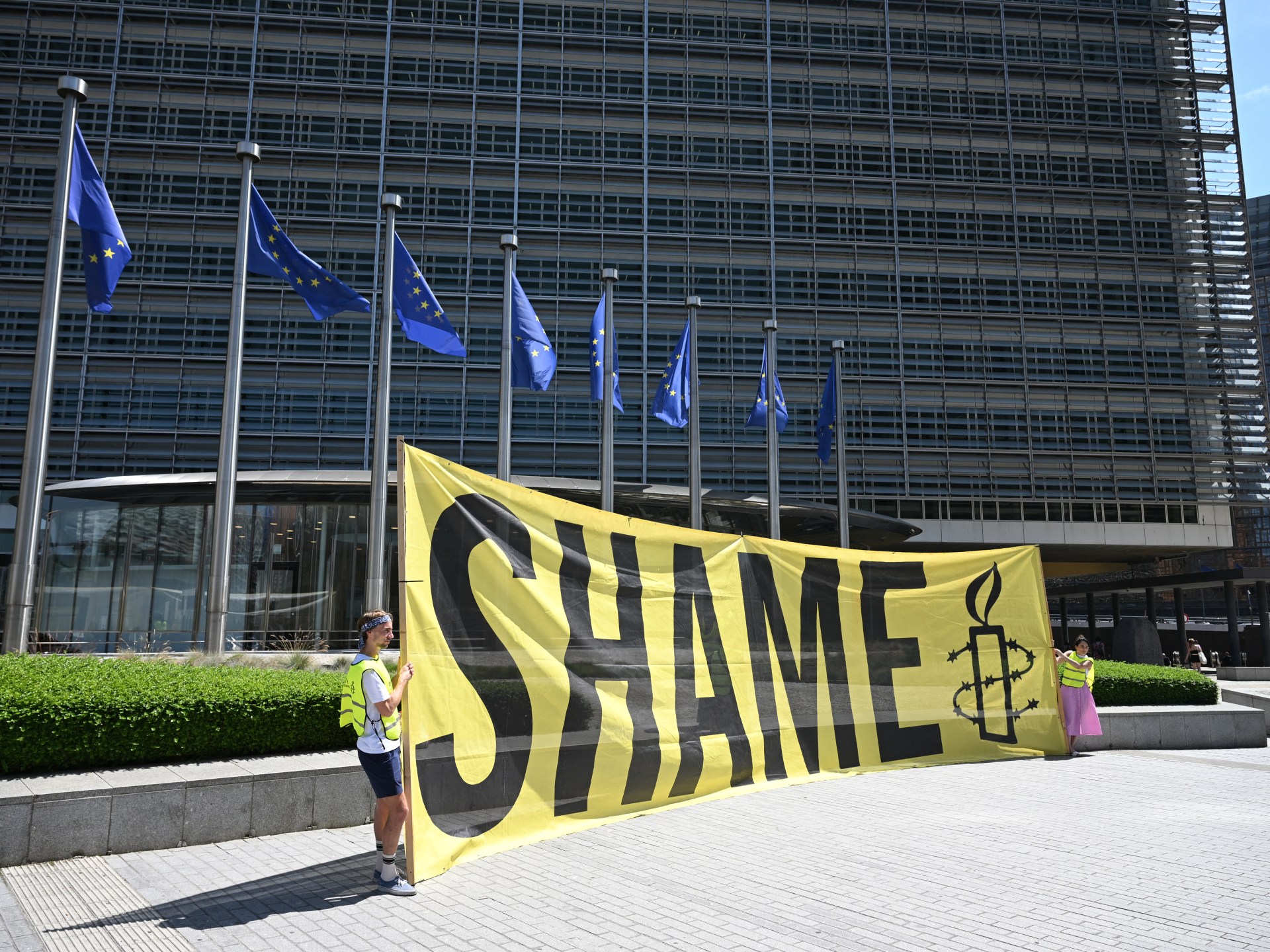

A Taliban delegation has held talks with the European Union in Brussels for the first time, in a visit fiercely criticised by rights activists.
The meeting on Tuesday focused on diplomatic services and providing “dignified returns” for Afghans in Europe, a Taliban official said. Abdul Qahar Balkhi, a spokesperson for the Taliban Ministry of Foreign Affairs, called the visit “historic,” noting it was the first time a delegation from the Afghan government had held talks with the European Commission and EU nations in Brussels.
- list 1 of 4Geneva to host Iran-US deal event: What other pacts have been signed there?
- list 2 of 4Afghanistan strikes targets in Pakistan, raising cross-border tension
- list 3 of 4Two roadside bombs kill at least seven in northwestern Pakistan
- list 4 of 4EU to hold migration meeting with Taliban officials in Brussels
end of list
The EU and its member countries have not recognised the Taliban government since the group returned to power in 2021 after 20 years of war against a US-backed government.
Brussels has said its decision to hold limited talks with Afghanistan’s “de facto authorities” are necessary to deport asylum seekers who commit crimes or are deemed dangerous.
A spokesperson for the European Commission said that EU officials and 15 EU member states attended the Brussels meeting at an undisclosed location as a follow-up to a previous meeting held in Kabul in January.
“The Commission services and Sweden co-chaired a technical-level meeting today in Brussels with technical-level representatives of the de facto authorities of Afghanistan responsible for return and readmission,” the spokesperson said.
A spokesman for Afghanistan’s Foreign Ministry described a broader agenda, saying it included a possible consular presence in the EU, resumption of consular services for Afghans there, and “the need for trust-building measures”.
Advertisement
Afghans are one of the largest groups of migrants seeking asylum in the EU, but an increasing number of governments want to speed up and increase deportations for those whose claims are rejected or who commit crimes in their host countries.
Rights groups have denounced the meeting as legitimising the Taliban and say it goes against the EU’s human rights obligations and could endanger people in Europe and Afghanistan.
“Any engagement with the Taliban needs to prioritise protecting human rights and accountability – not deporting people to danger there,” said Fereshta Abbasi, a researcher at Human Rights Watch. “EU countries are undermining their credibility by condemning Taliban abuses and pursuing accountability on one hand, while cooperating with the Taliban to forcibly return Afghans on the other.”
As not a single EU nation recognises the Taliban, the meeting in Brussels symbolises a possible opening for the group, which seized power five years ago. Since then, the Taliban has restricted women’s rights and freedom of movement, banned girls from education beyond primary school and enforced morality laws that limit free expression and access to employment.
Afghan activist and Nobel Peace Prize laureate Malala Yousafzai said Monday that she was “deeply shaken” that the EU was in talks with the Taliban.
“Europe must not legitimise a regime responsible for one of the worst human rights crises in the world. Any engagement with the Taliban must begin and end with the rights of Afghan women and girls,” she wrote on X.
Related News
UN human rights leader calls for Cuba sanctions to be ‘lifted immediately’

Fire at animation studio in India’s Lucknow kills at least 14
Tehran says considering plan for Iran, US presidents to sign deal