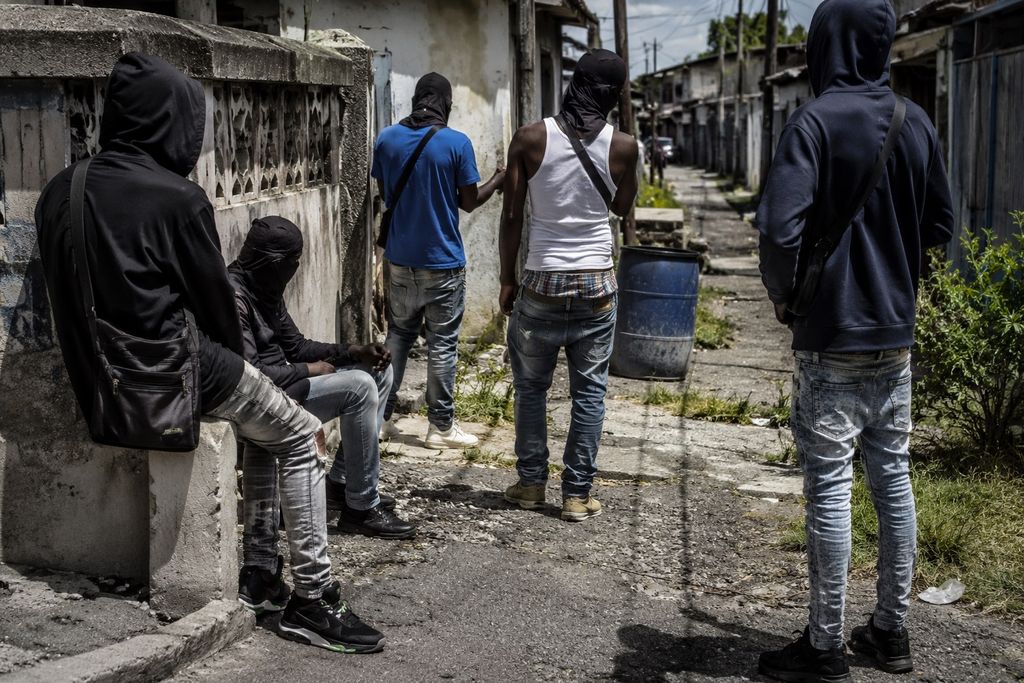

A newly released United Kingdom Government assessment has painted a sobering picture of the extent of gang activity in Trinidad and Tobago, estimating that more than 180 gangs operate across the country and linking organised criminal groups to roughly one-third of all murders.
The report, published this month by UK Visas and Immigration as part of its Country Policy and Information Note series, provides one of the most comprehensive recent international assessments of gangs in Trinidad and Tobago. While designed primarily to assist British officials in evaluating asylum applications, the document offers an extensive examination of the country's criminal landscape and the challenges facing law enforcement agencies.
According to the report, criminal gangs remain heavily concentrated in economically disadvantaged urban communities, particularly in and around Port of Spain and along the East-West Corridor. However, the document notes that gang-related violence has also spread into other areas, extending southward towards Chaguanas and San Fernando and increasingly affecting Tobago.
The assessment estimates that approximately 186 gangs were operating in Trinidad and Tobago as of 2023, with a combined membership of around 1,750 individuals. Among the most influential groups identified are the Muslims and Rasta City gangs, which reportedly serve as major power centres around which smaller gangs often align.
While the report notes that Trinidad and Tobago's gangs are smaller and less dominant than notorious transnational groups such as El Salvador's MS-13, it nevertheless describes them as major drivers of violent crime.
Researchers found that gangs are involved in a wide range of criminal activities, including murders, kidnappings, armed robberies, extortion, human trafficking and the illegal firearms trade. Small business owners operating within gang-controlled communities were identified as particularly vulnerable to extortion demands and threats of violence.
One of the report's more troubling findings concerns youth recruitment. It states that gang membership is largely composed of young men from disadvantaged communities, many with limited educational opportunities and unstable family backgrounds. Sources cited in the document reported recruitment occurring among children between the ages of 12 and 16, including within schools. Gangs were also reported to recruit members from within the prison system.
The report further notes that individuals who refuse to join gangs, attempt to leave gang life, or openly challenge gang authority can become targets for violence. Family members of gang-affiliated persons, as well as police officers, prison officers, members of the judiciary and prosecutors, were also identified as potential targets.
Although the UK assessment acknowledges that Trinidad and Tobago possesses anti-gang legislation and specialised police units dedicated to combating organised crime, it raises concerns about the capacity of law enforcement agencies to effectively contain the threat.
Citing information from the United Nations Office on Drugs and Crime, the report says senior police officials have admitted being overwhelmed by the scale of gang activity. Investigators reportedly face difficulties identifying suspects, gathering intelligence and securing prosecutions, particularly in tightly knit communities where gangs exert significant influence and where officers may fear reprisals against themselves or their families.
The document also highlights concerns over criminal infiltration into public projects. It notes that in October 2025 the Trinidad and Tobago Government suspended several public contracts in gang-controlled areas as part of efforts to address allegations of corruption and criminal influence.
Despite these challenges, the UK assessment stops short of describing Trinidad and Tobago as a state overwhelmed by organised crime. It concludes that while gangs maintain influence in specific communities, their power is not considered widespread enough to dominate the national political system or exercise systematic control beyond the areas in which they operate.
The report comes at a time when international scrutiny of Trinidad and Tobago's security environment has intensified, particularly following rising asylum claims by Trinidad and Tobago nationals in the United Kingdom. It provides a stark reminder that despite ongoing law enforcement efforts, gang violence remains one of the country's most persistent and complex national security challenges.
Related News

Earthquake with 6.1 magnitude hits offshore Cuba, shaking buildings in Havana
Opposition, Panday raise alarm as Government seeks SoE extension

Eight-hour ferry ordeal leaves passengers frustrated aboard Galleons Passage