
Senior Reporter
sascha.wil[email protected]
Anglican Archbishop of the West Indies, Philip Wright, has stressed that a healing church extends beyond its walls and reaches people and communities grappling with social ills, including poverty, addiction and other hardships.
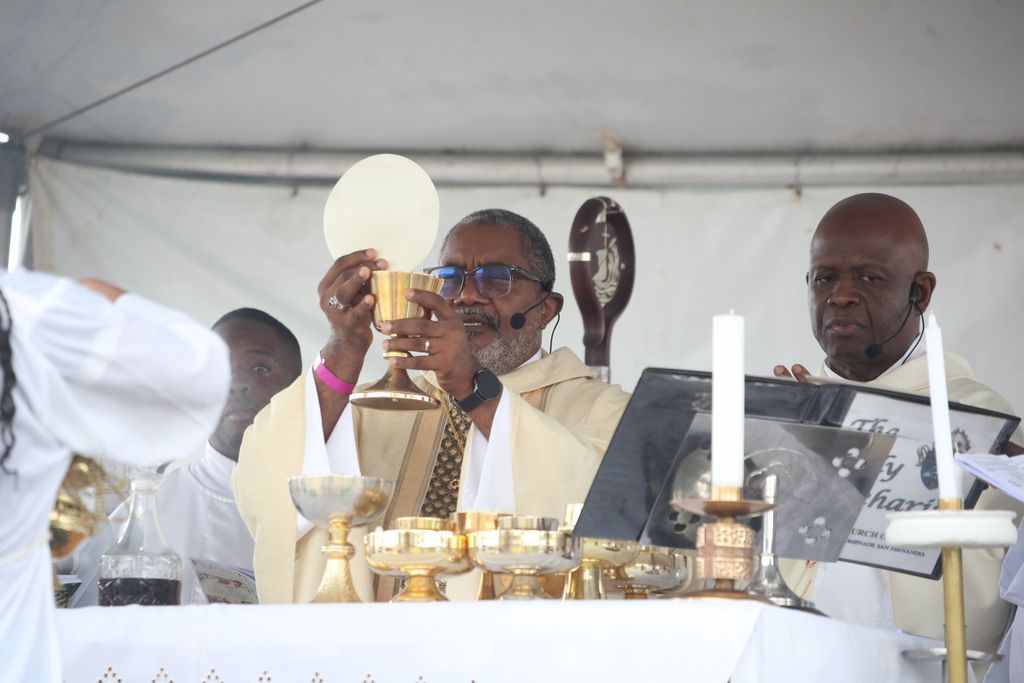
Wright made the comment while addressing the Anglican Diocese of Trinidad and Tobago’s annual Family Day celebration at Skinner Park, San Fernando, yesterday, as part of his first official provincial visit to T&T since his appointment.
Speaking on the theme “The Body of Christ: A Healing Church in a Hurting Society,” Wright urged believers to embrace their role as the hands and feet of Christ in a world facing growing challenges.
“The world is hurting. People are hurting,” he said.
“The question the gospel puts to us is, will the church rise up and be what it was always meant to be? Not a club for the comfortable. Not a refuge from the world. But a sign and instrument of God’s Kingdom.”
Drawing from St Paul’s First Letter to the Corinthians, Wright said Christians are called to be part of one body, with each member contributing unique gifts for the benefit of the whole community. He cautioned against attitudes that diminish the value of others, noting that every individual has an important role to play.
“The ones who appear weakest, who carry the least visible gift, who occupy the least celebrated role, these must not be seen as decoration. They are load-bearing walls without which things can easily collapse.”
Wright said a healing church must be willing to meet people where they are, rather than waiting for them to come through its doors. “A healing church shows up,” he said.
“It does not wait for the broken to find their way to a Sunday service. It goes into hospital rooms, prison cells, refugee camps, onto the doorstep of the isolated neighbour, and into the forgotten corners of struggle and pain.”
He also stressed the importance of listening to people’s needs before offering solutions, saying meaningful ministry begins with understanding the experiences of those who are suffering.
“One of the great failures of well-meaning religious communities is rushing to Bible verses and advice before truly hearing the question.”
Wright said a healing church must address root causes, not just symptoms.
“Yes, we feed the hungry, but we must also ask, why are people hungry? Yes, we shelter the homeless, but we ask, why is housing inaccessible for so many?” he said.
He added, “We are the feet that carry good news to broken places. We are the voice of comfort speaking for the voiceless. And we are the arms that hold those who are falling.”
The archbishop also expressed gratitude for the warm welcome he received during his visit, describing T&T as “a bit like coming home” because of the relationships he has built over many years of visiting the country. He is expected to continue his visit this week with engagements across the diocese, including a trip to Tobago.