
Lead Editors – Newsgathering
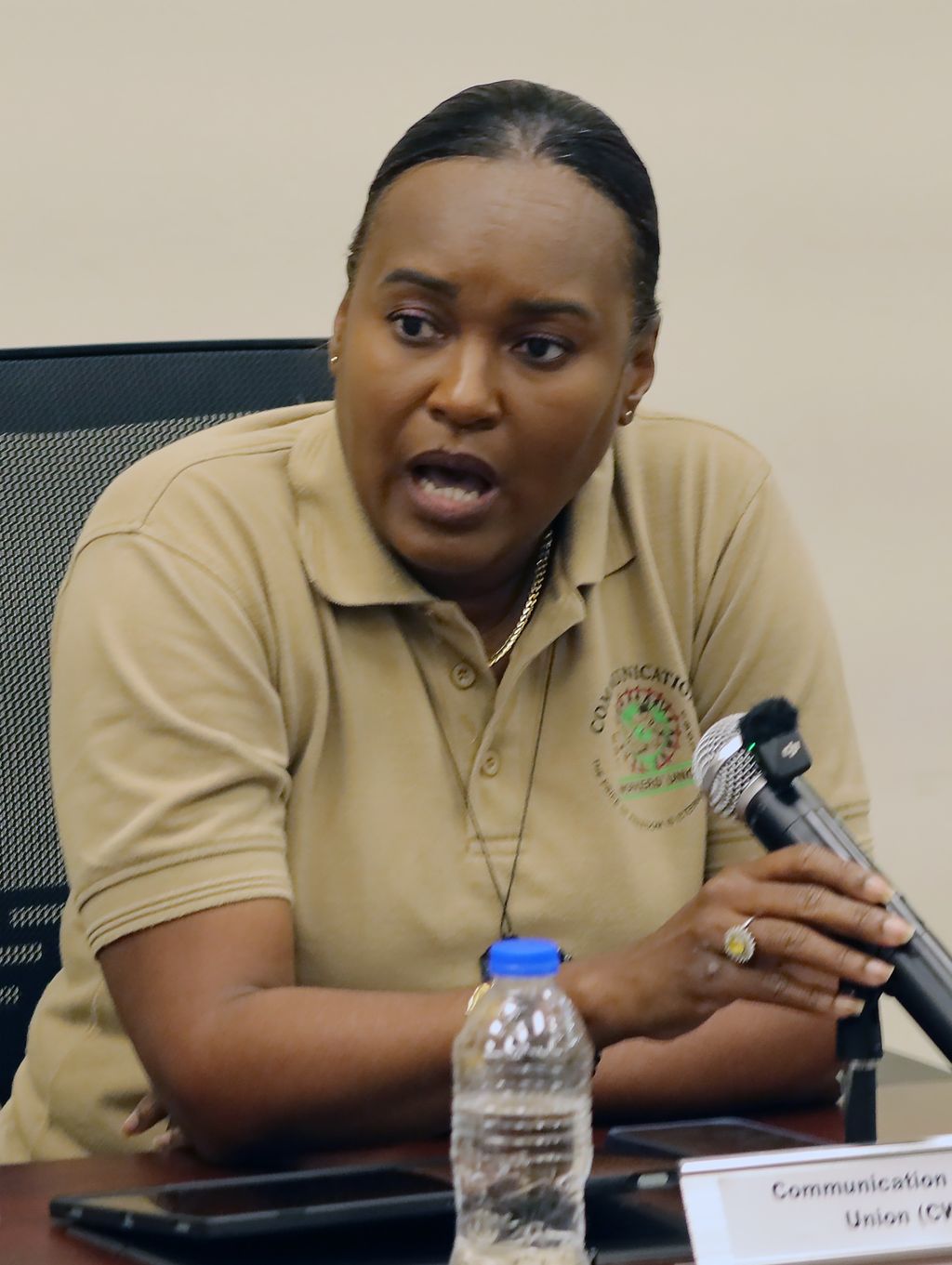
Communication Workers’ Union (CWU) Secretary General Joanne Ogeer has described the Government’s decision to maintain restrictions on protests at 15 designated locations during the State of Emergency (SOE) as a “galloping dictatorship” and is calling on Prime Minister Kamla Persad-Bissessar to rethink the measure.
Speaking a day after joining representatives from more than a dozen trade unions at a joint media conference, Ogeer said the unions remain firmly opposed to the restrictions, which prohibit protests within 500 metres of key State facilities.
“We are asking the Prime Minister to rethink the position of these 15 zones,” Ogeer said.
She argued that the 500-metre exclusion zones effectively push demonstrators far away from the institutions they are seeking to engage.
Ogeer said the CWU views the restrictions as “very draconian” and warned against limiting the right to peaceful protest.
“Dissent is not disloyalty. This is a galloping dictatorship,” she said.
She argued that trade unions have historically had to defend workers’ rights regardless of which political party is in government and pointed to protections contained in the Trade Disputes and Protection of Property Act.
“What does that act say? It speaks to peaceful protests where you live, where you go to church, anywhere,” Ogeer said.
She added that governments should not remove rights traditionally exercised by the labour movement simply because they hold office.
Ogeer also sought to clarify reports suggesting trade unions had already decided to launch a legal challenge against the regulations.
She said no announcement was made at Tuesday’s news conference that legal action would be taken.
Ogeer explained that the unions had consulted attorneys before making public statements on the issue, but said any future legal action would depend on whether unions believed their constitutional rights had been infringed.
Meanwhile, Trinidad and Tobago Registered Nurses Association (TTRNA) president Idi Stuart said several independent trade unions remained deeply concerned about the restrictions and were seeking a meeting with the Prime Minister.
Speaking on behalf of the unions, Stuart said they viewed Persad-Bissessar’s position with “great concern” and described it as a departure from positions traditionally associated with support for trade union activity and democratic freedoms.
Stuart argued that those principles appeared to be “eroding on a daily basis” and urged the Prime Minister to reconsider her stance.
Despite the Government’s insistence that it will not reverse the regulations, Stuart said the unions remained committed to dialogue.
“We will continue to reach out to our Honourable Prime Minister to secure a meeting and to see if there would be some movement with this particular position,” he said.
He also contended that the 500-metre exclusion zones would severely limit opportunities for demonstrations in the capital.
“Basically, nowhere in Port-of-Spain that you can hold protests or, for that matter, a march,” he said.
The comments came after Prime Minister Kamla Persad-Bissessar dismissed criticism from the Progressive Independent Trade Unions, a coalition of 13 unions, and defended the restrictions.
Speaking with Guardian Media on Tuesday, Persad-Bissessar rejected claims that the regulations undermine constitutional freedoms and labour rights.
“I suggest that the unions should focus on working with the Government on issues that would actually benefit their members. Every citizen can protest anywhere in the country besides these 15 places. The DPP’s office, the two airports, the port, Defence Force headquarters, TTPS headquarters, Ministry of Finance, President’s House, etc, are high security areas, so you can’t have large gatherings in front these places that gangs may infiltrate. It’s just common sense,” the Prime Minister said.
The restrictions form part of regulations enacted under the SoE and prohibit protests near the Parliament, the Office of the President, the Office of the Prime Minister, the Diplomatic Centre, the Office of the Attorney General, the Ministry of Finance, the Ministry of Defence, the Ministry of Homeland Security, the Trinidad and Tobago Police Service Headquarters, the Trinidad and Tobago Defence Force Headquarters, the Trinidad and Tobago Prison Service Headquarters, the Office of the Director of Public Prosecutions, Piarco International Airport, ANR Robinson International Airport and the Port Authority.
Related News

Mexico’s president sees ‘no issue’ with her country hosting Iran’s World Cup team ...
Protest over Samaroo case ends in arrests, stand-off with police
Beckles calls for end to SoE amid protest arrests