Beyond the Forecast: Caribbean agencies rethink how weather warnings reach the public
 29 May 2026

SEIGONIE MOHAMMED
Climate Change Editor
As another Atlantic hurricane season approaches, meteorologists and disaster managers across the Caribbean are working on a fundamental shift in the way warnings are issued to the public.
The goal is simple but potentially life-saving: move beyond telling people what the weather will be and start telling them what the weather will do.
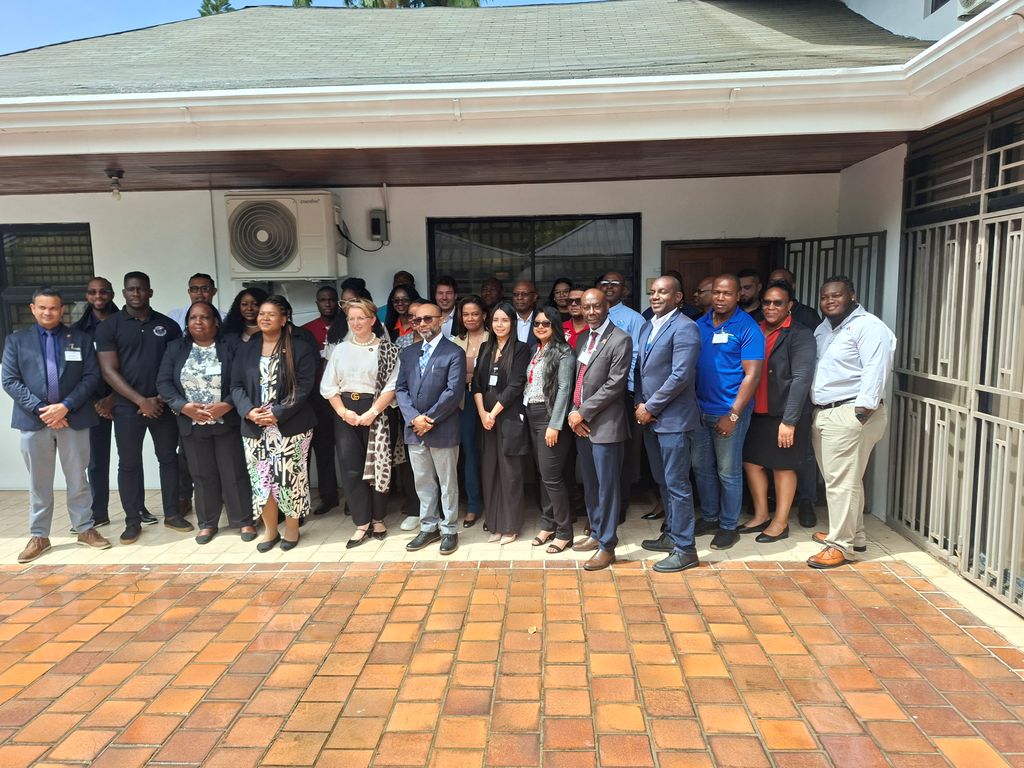
That concept known as Impact-Based Forecasting, is at the heart of a regional workshop recently held in Trinidad and Tobago, where representatives from more than 20 Caribbean countries and territories gathered to strengthen early warning systems ahead of the 2026 hurricane season.
For most Caribbean citizens, weather forecasts have traditionally focused on meteorological conditions: rainfall amounts, wind speeds, storm tracks and sea conditions. But according to Adanna Robertson-Quimby, Programme Officer with the World Meteorological Organization's Early Warning Services Section, that information alone may not always help people understand the risks they face.
"We have spent a lot of time really drilling into the key concepts and ideas," Robertson-Quimby explained. "What we were talking about is impact-based forecasting. This is where you focus on what the weather will do instead of what the weather is."
In practical terms, that means shifting from a warning that simply states heavy rainfall is expected to one that explains the consequences: roads may become impassable, homes could flood, businesses may be disrupted and communities may need to evacuate.
Turning Forecasts into Action
The workshop brought together meteorological services and disaster management agencies from across the Caribbean to examine how weather information can be translated into meaningful public warnings.
Participants exchanged case studies, best practices and operational experiences while exploring how impact-based forecasting can be integrated into national warning systems.
A major component of the discussions centred on the Common Alerting Protocol (CAP), an international standard that helps authorities distribute warning messages across multiple communication platforms.
Robertson-Quimby described CAP as the framework that delivers warnings, while impact-based forecasting provides the information people need to act.
"Think about CAP more or less as the format authority mechanism," she said. "Impact-based forecasting provides that actionable intelligence or advice for people to follow."
Together, the two approaches aim to ensure that emergency alerts are not only delivered quickly but also provide clear guidance about what actions people should take.
Different Countries, Different Journeys
While some Caribbean territories have already advanced significantly in developing modern warning systems, others are still in earlier stages of implementation.
Rather than viewing these differences as weaknesses, Robertson-Quimby said the workshop demonstrated the value of regional collaboration.
"Countries are at different stages in their early warning services and system development process," she noted.
One of the workshop's outcomes was the creation of a regional community of practice where countries can continue sharing expertise and supporting one another after the event concludes.
For smaller islands with limited technical resources, the opportunity to learn from neighbouring countries could accelerate progress and avoid costly mistakes.
"There are a number of countries which are further along with their journey," she said. "They are doing a lot of different things, different methodologies, different approaches for their early warning systems, and they were able to share that with counterparts in the Caribbean."
Climate Change Raises the Stakes
The discussions come at a time when Caribbean countries are facing increasing exposure to climate-related hazards, including stronger hurricanes, more intense flooding, droughts and coastal impacts.
Yet Robertson-Quimby stresses that the move toward impact-based forecasting should not be seen as replacing traditional weather forecasting.
Instead, it represents the next stage in the evolution of warning systems.
"Traditional forecasts and warning systems created a foundation for where we are today," she said. "Only with those traditional mechanisms are we now able to do impact-based forecasting."
The challenge now is ensuring that scientific advances are matched by stronger cooperation among meteorological agencies, disaster managers, governments, telecommunications providers, media organisations and communities.
"Early warning service delivery depends on people," she said. "It depends on coordination, collaboration and partnerships to make it happen."
One Region, Shared Risks
Perhaps the strongest message emerging from the workshop is that no Caribbean nation can strengthen resilience alone.
Weather systems do not respect national borders. A storm affecting one territory today may threaten another tomorrow.
For that reason, participants repeatedly stressed the importance of regional cooperation in both forecasting and disaster management.
"We are in one region," Robertson-Quimby said. "The planet is dynamic. Whatever affects one country may affect another."
As Caribbean countries continue investing in stronger early warning systems, officials hope the public will ultimately receive clearer, more timely and more useful information when disaster threatens.
The objective, Robertson-Quimby said, remains straightforward.
"We work together to enhance these early warning systems and promote saving lives," she said. "It's the business of everyone to help save lives."