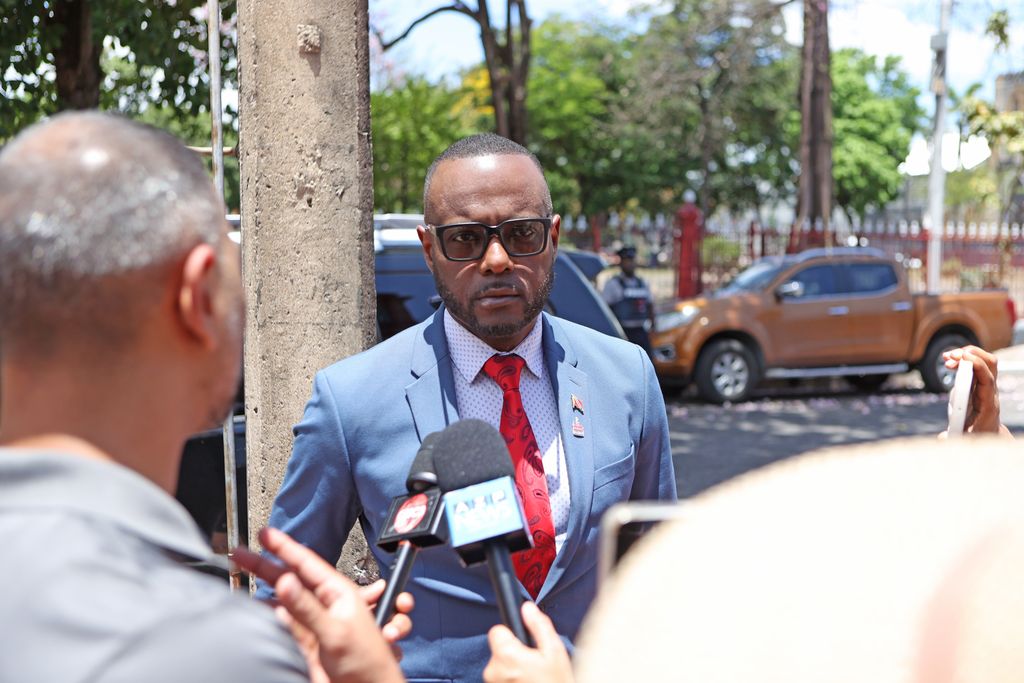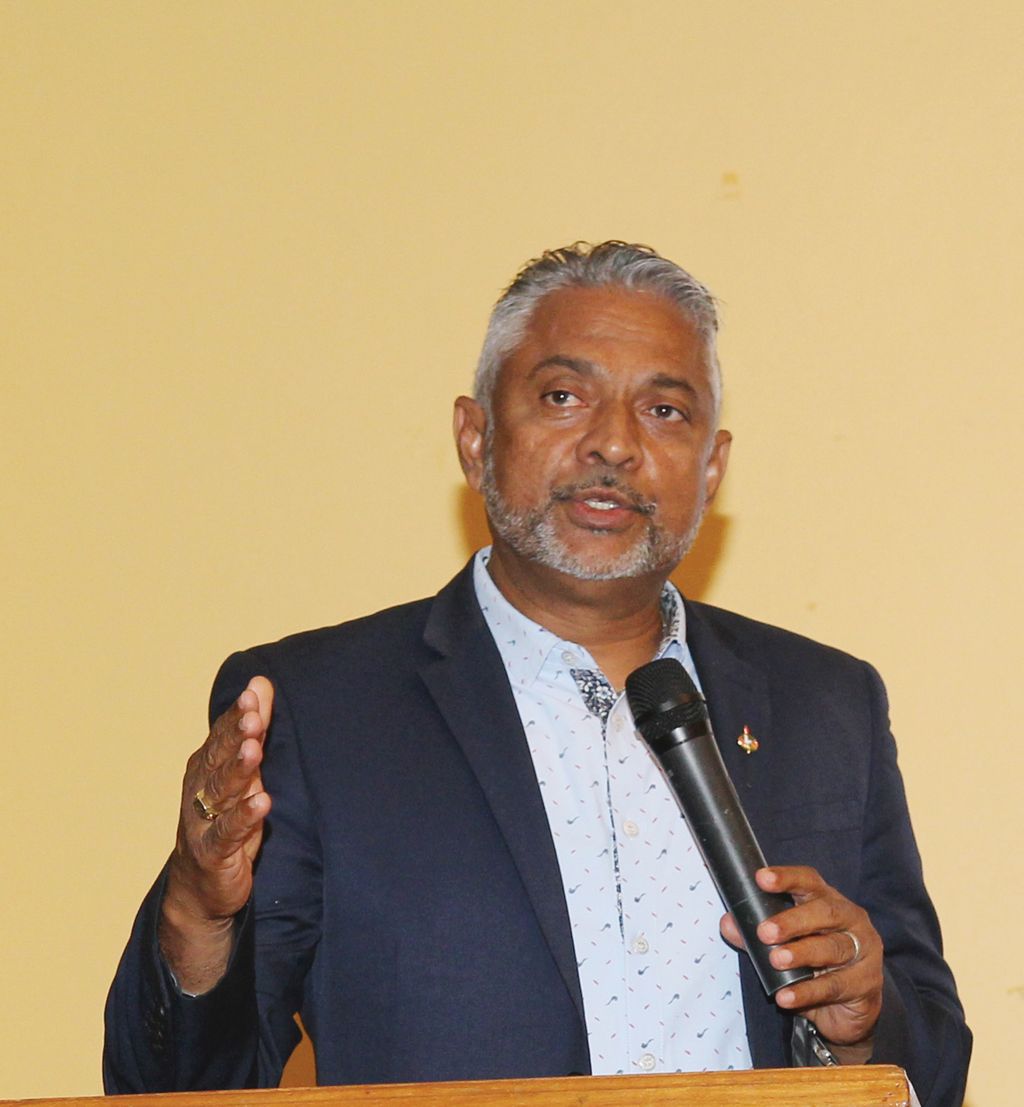

Strategic security consultant Dr Garvin Heerah is urging national leaders to “empathise first, legislate second,” amid growing debate over the Government’s response to Wednesday’s protest linked to the police-issued warrants for the arrest of Kaia Sealy over the death of her common-law husband Joshua Samaroo.
Speaking with Guardian Media yesterday, Heerah cautioned against dismissing public demonstrations as mere “publicity farming,” after Prime Minister Kamla Persad-Bissessar criticised those who gathered in Port- of-Spain on Wednesday in support of Sealy.
The Prime Minister described the demonstrations as attempts to provoke the police and questioned why similar outrage had not been displayed over the more than 5,000 murders committed in T&T over the past decade.
Persad-Bissessar maintained that while citizens are free to protest, those who breach the law will face legal consequences. She also referenced the Emergency Powers (Prohibition of Public Protests and Demonstrations) Order 2026, which prohibits protests within 500 metres of the Office of the Director of Public Prosecutions.
Heerah acknowledged the Prime Minister’s concerns over violent crime but warned against rhetoric that could alienate citizens exercising their democratic rights.
“While I acknowledge the Prime Minister’s valid concerns regarding the staggering loss of over 5,000 lives to violent crime over the past decade, what seems like a crisis that demanded our collective outrage, I must respectfully caution against language that dismisses legitimate public expression,” Heerah said.
He stressed, however, that public trust remains central to effective governance and law enforcement.
“As security professionals across the spectrum, we understand that public trust is the cornerstone of effective governance and, more importantly, law enforcement. When citizens take to the streets, they are sending a signal, and leaders must read that signal carefully and not categorise it,” he stated.
Heerah also questioned the use of emergency powers to restrict public protests, saying such measures must be exercised carefully and transparently.
“The invocation of emergency powers legislation to restrict protest rights is a measure that must always be applied with precision and transparency, because the moment the public feels that law is being used as a tool of suppression rather than protection, we risk a far greater security challenge than any single protest,” he said.
Offering advice to the country’s leadership, Heerah added, “Empathise first, legislate second. The people are not the enemy. Engage them, represent them and bring them into the solution. That is how we build the social contract that ultimately makes all communities safer.”
Meanwhile, political analyst Dr Winford James said the Prime Minister was responding from both a political and governance standpoint, while noting many details surrounding the matter remain unclear.
“It may or may not be a publicity stunt. So far as Kamla is concerned, it is,” Dr James said, adding that neither the public nor the Prime Minister may yet have all the facts surrounding the issue.
He argued that Persad-Bissessar had a responsibility to respond publicly because protesters were directly appealing to her office.
“The Prime Minister did come out and speak. Part of her response was to protect her Government, and the second part is that the police have their work to do and they will have to enforce the law, so long as they don’t break the law,” James said.
He noted that Persad-Bissessar appeared reluctant to make any determination on the actions of the police without all the available information, but said she may still raise the matter within the National Security Council.
James also suggested that protesters may believe they possess sufficient information to judge the situation.
“She is signalling that people must do things in a certain way, which she is not seeing. I don’t think she wants to get herself twisted up with whether the police are guilty or not,” he said.
However, James maintained that the Prime Minister had, in fact, responded to public calls for comment.
“The protesters wanted the Prime Minister to respond. She has responded,” he added.