
Seigonie Mohammed
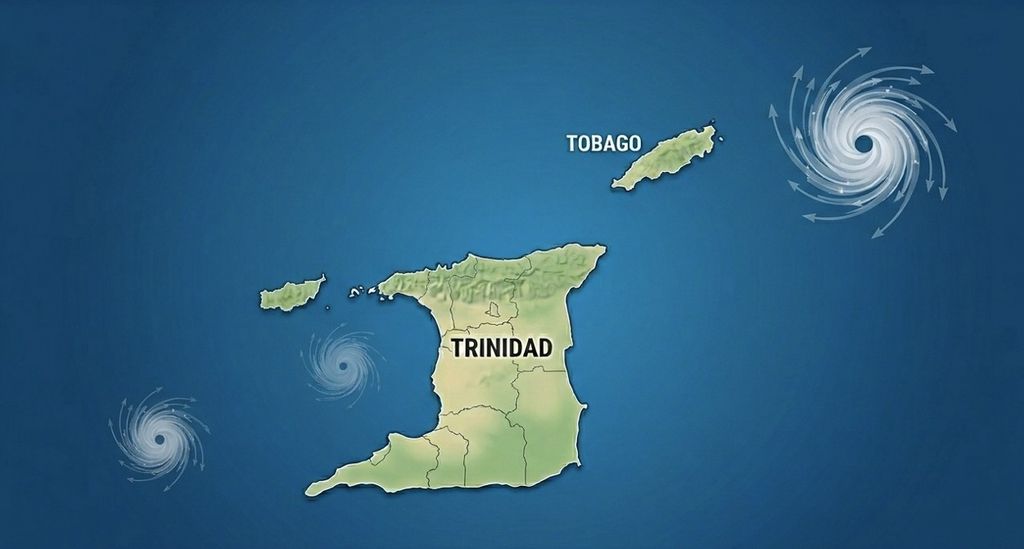
The Trinidad and Tobago Meteorological Service says there is a 49% chance of below normal hurricane activity and a 37% chance of below normal tropical storm activity for Trinidad and Tobago’s area of interest during the 2026 Atlantic Hurricane Season.
The forecast was presented during the 20th National Climate Outlook Forum (NCOF), ahead of the official start of the North Atlantic Hurricane Season on June 1. The season runs through November 30.
According to TTMS Acting Climatologist Kaidar Kissoon, “the most likely number of named tropical storms expected within Trinidad and Tobago’s area of interest between June and November is three.” The service also predicts one hurricane could form within the area during the same period.
The TTMS defines Trinidad and Tobago’s area of interest as the region south of 15°N latitude, stretching between the eastern Caribbean and the west coast of Africa within the North Atlantic Ocean. Kissoon said only tropical cyclones forming within this zone have historically posed a direct threat to Trinidad and Tobago.
Based on the 1991-2020 climatological average, four named storms typically form within the area, with one becoming a hurricane.
The TTMS said its seasonal forecast is based on three primary climate drivers linked to sea surface temperature (SST) patterns across the Atlantic and Pacific oceans.
These include the El Niño-Southern Oscillation (ENSO), SSTs surrounding Trinidad and Tobago, and the Atlantic Meridional Mode (AMM), which measures north-south SST gradients near the Inter-Tropical Convergence Zone (ITCZ).
The TTMS said a strong El Niño is expected to develop in the eastern-central Pacific Ocean later this year. Forecasters said El Niño conditions generally suppress rainfall and cloud development over Trinidad and Tobago and can influence tropical cyclone activity across the Atlantic basin.
The service added that the AMM is currently in a negative phase but is expected to shift to a neutral phase during the August to October period. Positive AMM conditions are associated with enhanced ITCZ activity shifting further north and reduced upper-level westerly winds across the Atlantic Main Development Region.
Despite the forecast, the TTMS warned that Trinidad and Tobago remains vulnerable to flooding from tropical waves, troughs and ITCZ activity, even without direct tropical storm or hurricane impacts.
Related News

New details: Woman, daughter also shot in Belmont triple murder

India eyes expanded digital and pharmaceutical partnerships with T&T

Man City beats Chelsea in FA Cup final after ‘1 in 100′ Antoine Semenyo goal