
RADHICA DE SILVA
Senior Multimedia Reporter
radhi[email protected]
ARIZONA — Even as the Caribbean continues to grapple with illegal migration, United States senior adviser and former journalist CJ Karamargin has confirmed the US is strengthening and expanding sections of its border wall to curb illegal migration, while also maintaining systems to care for migrants and address humanitarian needs.
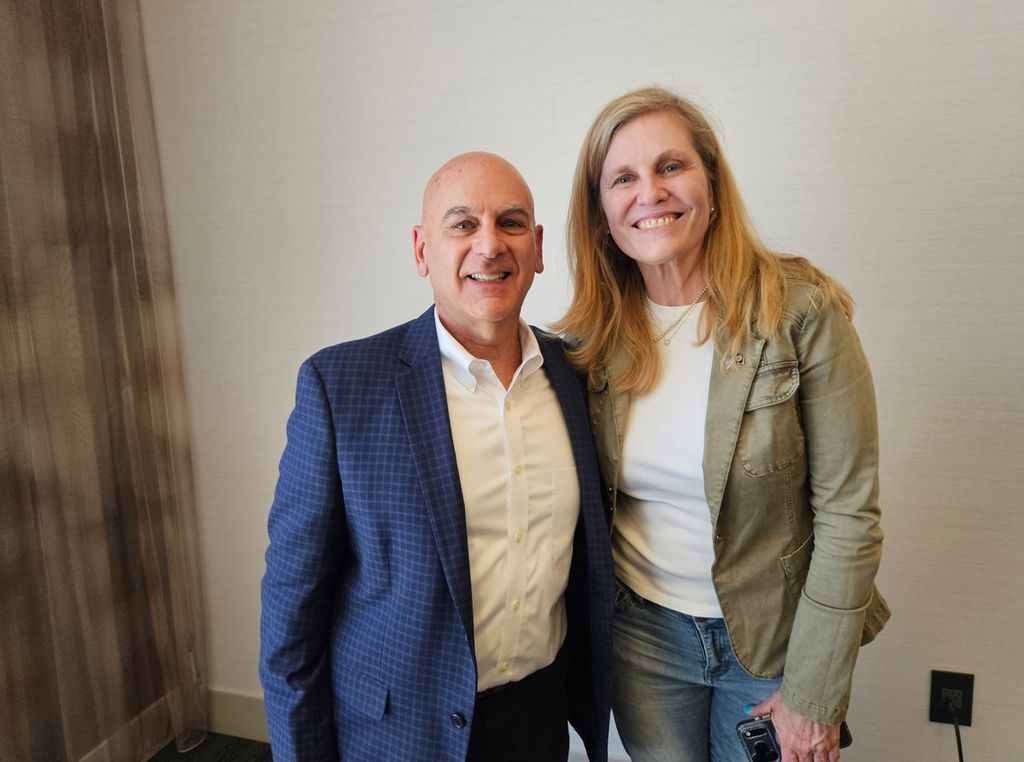
Karamargin, a senior adviser to Republican Congressman Juan Ciscomani for Arizona’s 6th Congressional District, spoke to reporters at a Foreign Press Centre briefing held in Arizona, where a team of 13 journalists are participating in a reporting tour organised by the US Department of State.
Karamargin spoke on the role of Congress in securing the US southern border. He said the administration of President Donald Trump had significantly altered conditions along the U.S.-Mexico border, adding stricter policies had changed behaviour among criminal networks involved in migration.
“Donald Trump came in promising a new approach to the border,” Karamargin said. “Just the promise of it was enough to change the behaviour of cartels. They knew it wasn’t going to be easy any longer.”
Karamargin said border security had improved substantially in recent years, noting the border “is now far safer than it has been in recent times.”
He attributed much of the political momentum behind stronger border enforcement to public frustration over migration levels under the previous administration, saying the issue extended far beyond communities directly along the southern border.
“A porous border didn’t affect just a border community like ours,” he said. “Migrants would come in, usually not stay in Arizona… they would transit through Arizona, so it would have an impact in other states.”
Arizona, which shares a long border with Mexico, has often been at the centre of national immigration debates. Karamargin recalled accompanying former Arizona Governor Doug Ducey to an area near Yuma where unfinished sections of wall had become crossing points for migrants.
He described migrants walking through visible gaps in the barrier and said large numbers of people camped in nearby agricultural areas while awaiting assistance from aid groups.
Karamargin said the situation had economic consequences for farming communities in Yuma, a region known for winter agricultural production.
He described farmland becoming overwhelmed by makeshift camps and said local residents experienced firsthand the impact of unmanaged migration flows.
While emphasising the need for stronger border enforcement, Karamargin also acknowledged the humanitarian dimension of migration and noted extensive support systems exist to assist migrants once they arrive.
Responding to a question from Guardian Media about migration pressures affecting Trinidad and Tobago, particularly those involving Venezuelan migrants, Karamargin said the United States had developed organisations dedicated to helping migrants in ways that did not exist generations ago.
“One of the remarkable things about America is there are a lot of organisations that care for migrants,” he said.
He noted when his own grandfather immigrated to the US in the 1920s, there were few formal systems available to help newcomers. Today, he said, migrant assistance organisations provide food, clothing, shelter and transportation.
Still, Karamargin stressed migrants should enter through legal pathways.
“The overall point is that people should not be sneaking across the border,” he said. “They should be coming through legal mechanisms.”
He also acknowledged broader challenges in migration policy, noting it remains difficult to create long-term consistency, not only within the United States but internationally.
“It can be a challenge,” he said, referring to policymaking and differing approaches among governments.
This, he said, has made it difficult to achieve common migration policies or coordinated responses across borders.