
RADHICA DE SILVA
Senior Multimedia Reporter
radhi[email protected]
The death of Steve Ghany Junior has sparked a movement involving a former Justice Minister, a clinical psychologist and an attorney aimed at taking back society, by empowering abused women, building stronger men and pushing for greater police protection for victims.
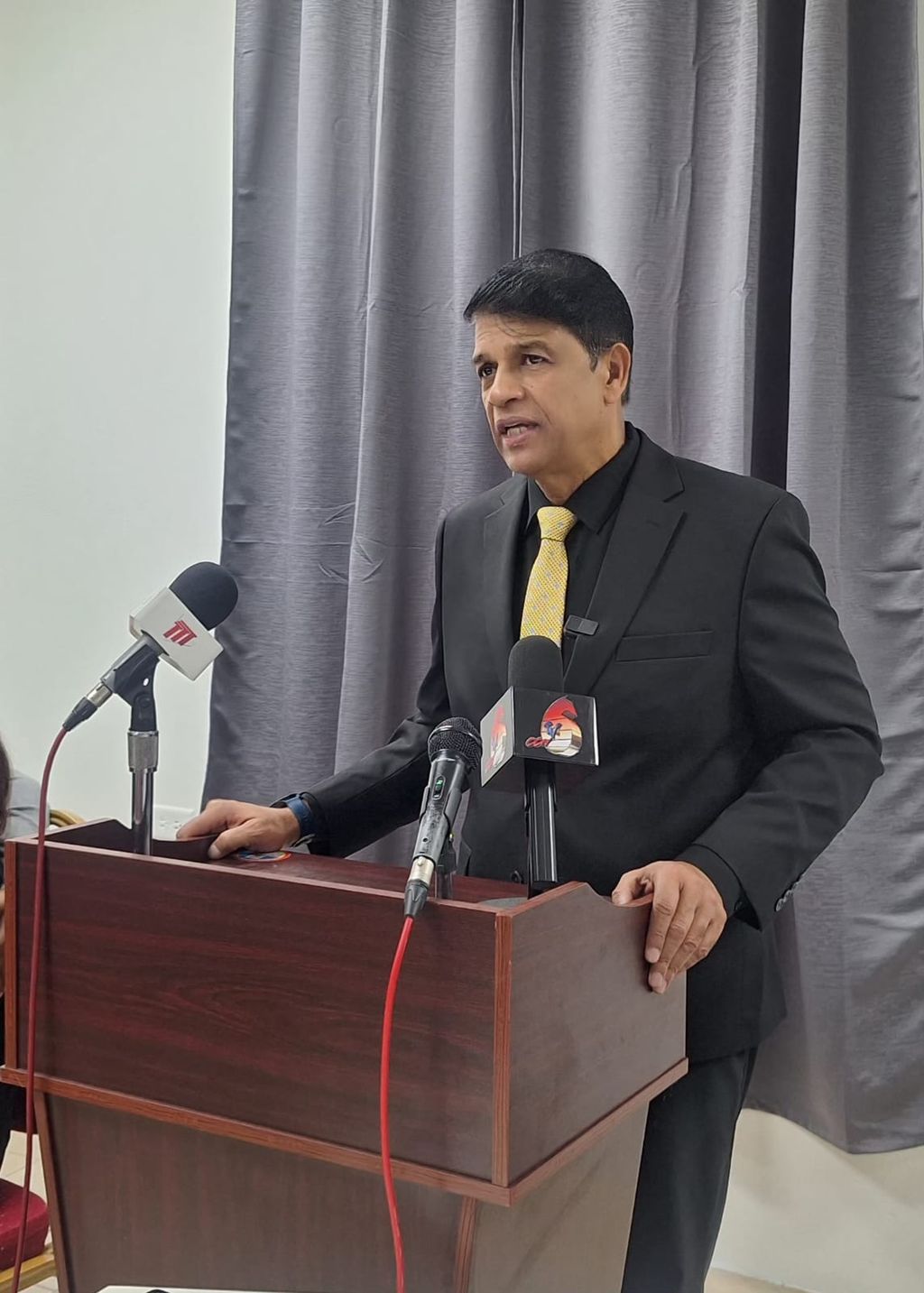
Speaking at a press conference on Friday, a day after Ghany’s funeral, former Justice Minister Prakash Ramadhar said the initiative goes beyond the high profile case involving his client, the woman who confessed to fatally shooting Ghany.
“This is not a spontaneous response,” Ramadhar said. “We have a duty to ensure we do things that make this country safer and happier. Domestic violence is at the core of one of the most important issues we speak about, but never truly deal with.”
While declining to discuss details of the case, he described his client as having endured “the most horrible of agonies”, adding that she now needs time to heal with her family.
Ramadhar stressed the broader national crisis, warning that domestic violence is often misunderstood and rooted in deeper societal failures.
“Real men love, Real men protect, Real men care,” he said. “We have to redefine masculinity. This idea of being brutish and controlling, that is not manhood, that is failure.”
He added that many perpetrators are themselves products of violent and unstable homes. “Some of the abusers I have defended regret everything. But they grew up in environments of violence, of no love. If we fix that, we fix much of this problem.”
Clinical psychologist Dr Valini Pandit said public discourse continues to fail victims by asking the wrong questions.
“The question is not ‘why didn’t she leave?’” Pandit said. “The question is ‘what made it unsafe for her to leave?’ Leaving is often the most dangerous moment in an abusive relationship.”
She described domestic violence as a pattern of control, not only physical abuse but also emotional, financial and psychological domination.
“Victims are not simply choosing to stay,” she explained. “They are experiencing trauma bonding, a psychological survival response where fear and relief become intertwined.”
Pandit warned that without proper understanding, society risks further harm. “Understanding saves lives, Judgment costs them.”
She called for expanded mental health support, public education and early intervention, adding that domestic violence must be treated as a public health and societal crisis.
President of the Southern Assembly of Lawyers, Saira Lakhan, brought a legal perspective, highlighting systemic failures in enforcement.
“A protection order can become a decorative piece of paper if it is not enforced,” Lakhan said. “Victims go to police stations and are turned away, ignored or not taken seriously.”
Citing data, she said there were over 33,000 domestic violence reports between 2010 and 2024, including more than 400 domestic related murders.
“That tells us this is not isolated, it is entrenched,” she said. “And when victims are more comfortable telling doctors than police, we have a serious confidence problem.”
Lakhan also pointed to cultural norms that normalise abuse. “We condone too much, jealousy, control, verbal abuse, until it becomes criminal.”
The trio said their initiative will focus on schools, targeting preteen and teenage children before harmful behaviours become ingrained.
“We are volunteering ourselves,” Ramadhar said. “We will go into schools, communities, religious institutions, wherever we are needed, to teach values, to teach respect, to teach what a healthy relationship looks like.”
He added that the movement would also address perpetrators, not only victims.
“If we fix the abuser, we prevent the abuse,” he said. “This requires education, accountability and intervention long before the courts become involved.”
Calling for a national shift, Ramadhar urged citizens to take responsibility within their own circles.
“We are our brother’s keeper, We are our sister’s keeper,” he said. “If we do not restore standards in this society, we will continue to see these tragedies.”
He added: “We cannot fix the past, But today, we can begin building a better tomorrow.”