
Seigonie Mohammed
Trinidad and Tobago is not facing an immediate drought, but drier conditions could develop later this year, according to the Trinidad and Tobago Meteorological Service (TTMS).
In its latest outlook, issued April 10, the TTMS said typical dry season conditions are expected through June 2026, with “little to no concern for agricultural drought” in the short term.
Data from January to March show mostly normal dryness levels across both islands, although borderline dry conditions were observed in parts of central Trinidad, particularly around Piarco. Tobago, by contrast, has experienced no significant dryness concerns, supported by near-normal rainfall patterns.
Mid-Year Shift Expected
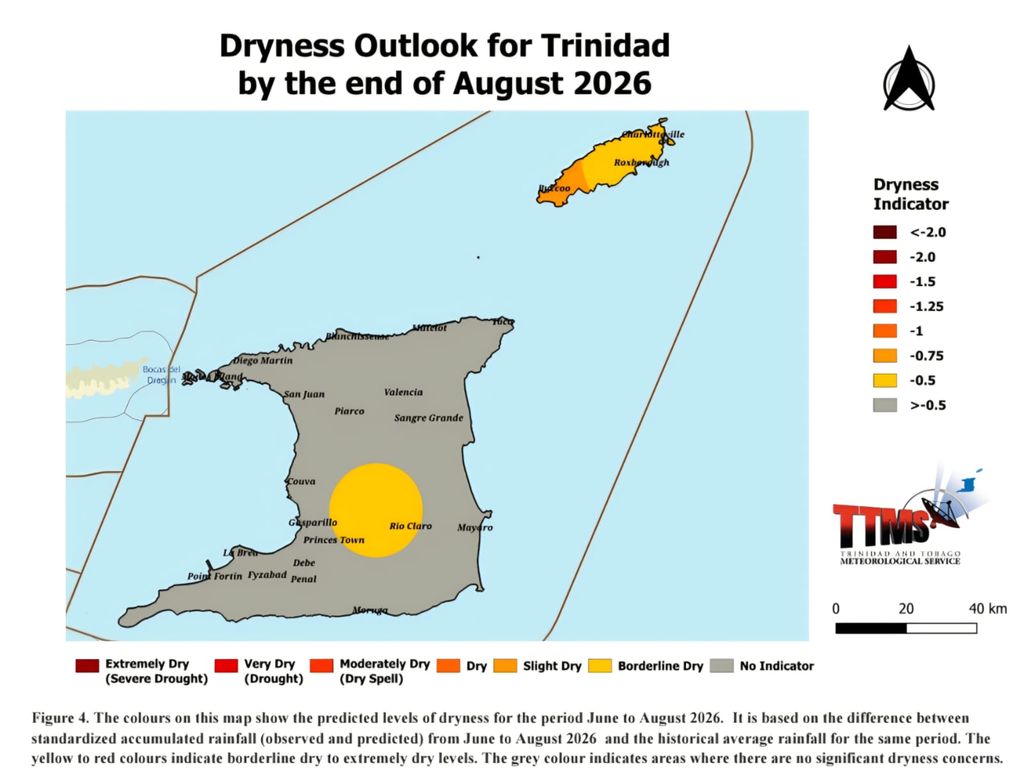
While the short-term outlook remains stable, the TTMS warns that conditions could begin to shift from July onward, especially in central Trinidad and parts of Tobago.
The report cautions that reduced rainfall during this period could lead to lower soil moisture and reduced water availability particularly early in the dry spell.
Although wildfire potential is expected to ease slightly toward June, the early part of the period may still present elevated risks.
Agricultural stakeholders are also being encouraged to take proactive steps to manage the evolving conditions. The service says this can be achieved by monitoring irrigation, conserving water, and avoiding burning activities as a precaution.
Climate Factors at Play
The outlook also points to broader climate influences. With La Niña conditions ending and a possible transition toward El Niño later in 2026, warmer temperatures and increased evaporation could further contribute to drying trends.
Measured Outlook, Not Alarm
Despite the projections, the TTMS emphasizes that the situation does not currently constitute a drought emergency.
Instead, the forecast signals a gradual transition toward drier conditions, underscoring the need for monitoring and preparedness rather than alarm.
As the country moves deeper into the upcoming wet season, updated forecasts will be critical in determining whether these early warning signs develop into more significant dryness later in the year.