US Homeland Security shutdown to stretch on, despite Senate passing funding
 02 April 2026

A partial government shutdown in the United States is set to stretch on, despite the Senate passing a bill to fund the Department of Homeland Security (DHS).
On Thursday, the House of Representatives did not take up the funding bill passed by the Senate, meaning the partial shutdown that began on February 14 will continue until at least Monday, when the lower chamber reconvenes.
- list 1 of 3Why are airlines warning of delays during the US government shutdown?
- list 2 of 3Trump sends US immigration agents to airports as shutdown chaos deepens
- list 3 of 3ICE agents deployed to US airports: Which airports are affected?
end of list
The stalemate centres on whether DHS should reform its immigration procedures, following criticism of President Donald Trump’s mass deportation push.
Democrats have refused to pass funding to Immigration and Customs Enforcement (ICE) and Customs and Border Protection (CBP) without reforms to their practices. Republicans, meanwhile, have called the Democrats’ demands non-starters.
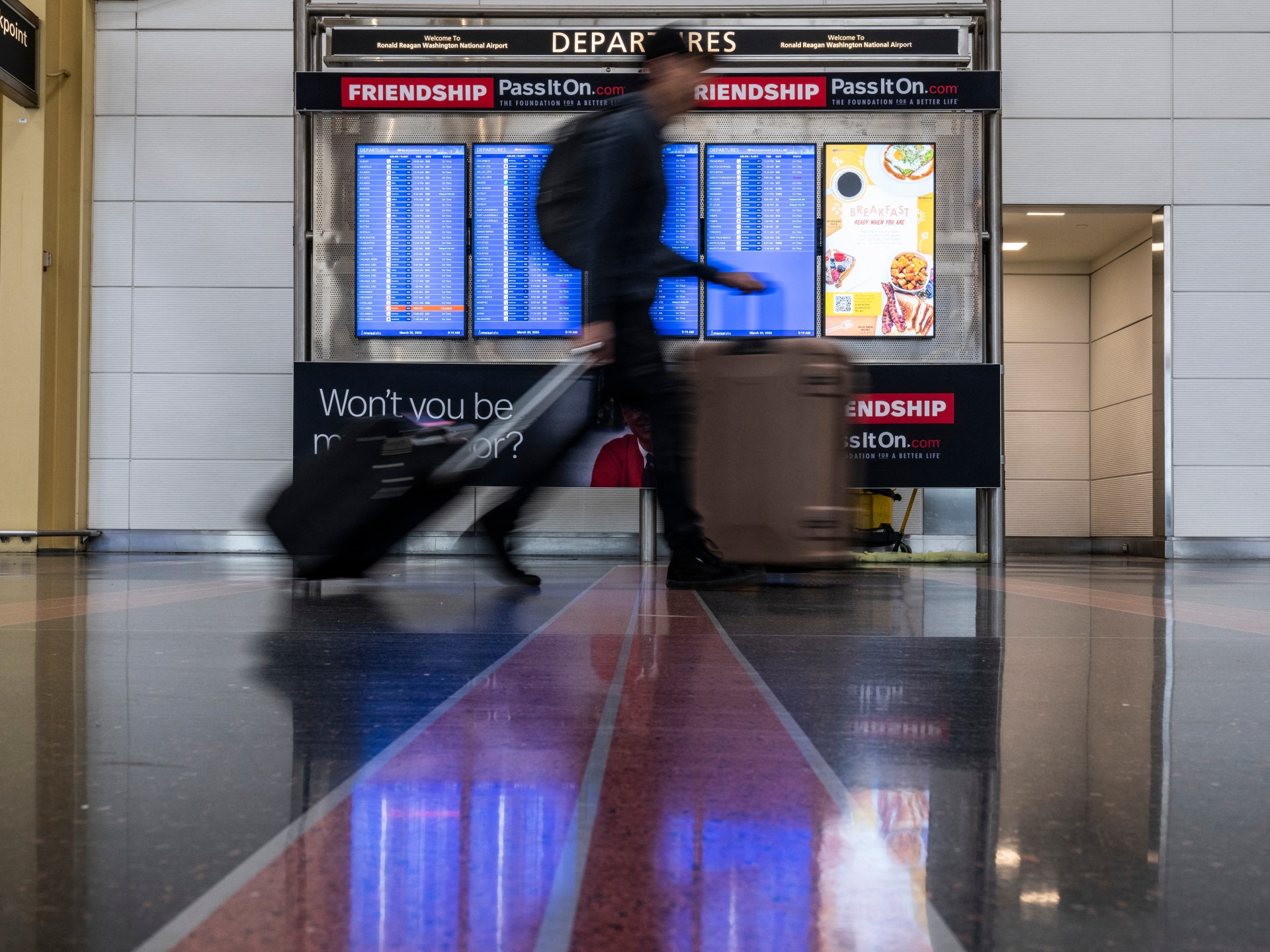
The deadlock has had several knock-on effects. DHS, for example, is in charge of the Transportation Security Administration (TSA), and its airport security agents have gone without pay for the last six weeks.
With agents calling out sick or leaving their jobs altogether, US airports have reported long lines and widespread travel delays.
The bill passed by the Senate last Wednesday would finance TSA and other arms of the DHS, but would not provide further funding to ICE or CBP, which already received major windfalls in last year’s One Big Beautiful Bill Act.
But while Senate Republicans backed the measure last week, Republican leadership in the House has refused to bring the bill to a vote.
On Thursday, Senate Majority Leader Chuck Schumer accused House Republicans of being in disarray.
Advertisement
“House Republicans own the longest government shutdown in history,” he wrote. “The deep division and dysfunction among House Republicans is needlessly extending the DHS shutdown and hurting federal workers who are missing another paycheck.”
The decision not to vote on the Senate bill came despite House Speaker Mike Johnson and Senate Majority Leader John Thune jointly announcing a plan on Wednesday to fully fund the DHS.
The pair presented a two-track approach, with the first step being to pass a bill to fund the department, save for ICE and CBP. The second step would involve funding ICE and CBP through separate spending legislation.
President Trump has endorsed that plan, writing on Truth Social on Thursday that “Republicans are UNIFIED, and moving forward on a plan that will reload funding for our FANTASTIC Border Patrol and Immigration Enforcement Officers”.
He charged Democrats were pursuing a “Radical Left Policy” in their opposition to funding ICE and CBP.
Trump deployed ICE agents to airports last week and signed an executive order to bypass Congress and pay TSA agents.
The funding is slated to come from last year’s One Big Beautiful Bill Act, Trump’s sweeping tax-and-spending law, although the White House has not clarified which funding would be diverted to pay the employees.
On Thursday, Trump went further, writing on Truth Social that he would soon sign an executive order “to pay ALL of the incredible employees at the Department of Homeland Security”. He did not provide further details.
Government shutdowns of any kind remain politically unpopular in the US. Unions and transportation safety groups have roundly slammed the latest funding impasse, criticising the strain it has placed on workers and airport security.
Democrats, however, have sought to leverage the funding bill as a means of pressing for changes to Trump’s immigration policy, particularly in the wake of the killing of two US citizens by federal agents in Minnesota in January.
They have called for DHS to make all immigration agents clearly identifiable and for an end to racial profiling in immigration stops. Other demands include safeguards like the consistent use of agent body cameras.
Public opinion polls have shown that disapproval for Trump’s immigration raids surged after the January killings of Renee Good and Alex Pretti. Analysts believe the backlash may affect the midterm elections in November.
Republicans, meanwhile, have sought to lay the blame for the shutdown at the feet of Democrats, accusing them of putting Americans’ livelihoods in jeopardy for political gains.
Advertisement
Related News
Iran to Lebanon: Four million people displaced by US-Israeli war

In U-turn, UK police say Palestine Action protesters will be arrested again

US-Israel war on Iran: What’s happening on day 30 of attacks?