
Raphael John-Lall
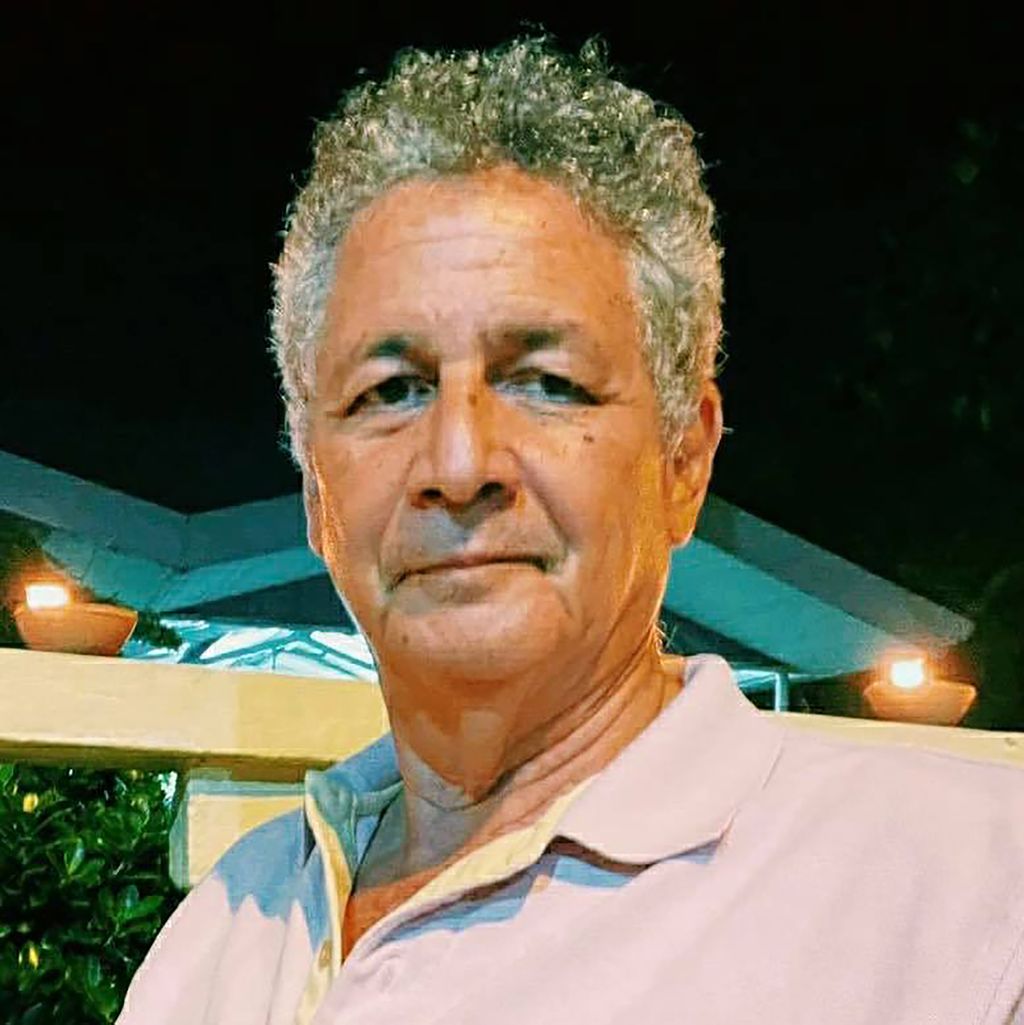
Professor Emeritus at The University of the West Indies (UWI) economist Patrick Watson says he is “frightened” by some of the actions the current administration in Port-of-Spain is taking as he noted that T&T’s Prime Minister Kamla Persad-Bissessar is positioning herself as a faithful “disciple” of US President Donald Trump.
He also made it clear he has little faith that T&T would reap economic benefits from its close alliance with the Donald Trump administration.
In an interview with the Business Guardian, Watson shared his views on the latest decisions the Government is taking both regionally and internationally.
“We are allowing ourselves to be recolonised by the US. That is accounting for a lot of the actions. It is almost as if the Prime Minister is working on instructions on how to deal with countries that don’t appear to be towing the Washington line,” he said.
He was reacting to T&T Prime Minister’s latest threats to reduce funding to Caricom over the reappointment of Dr Carla Barnett as the Secretary-General of Caricom.
T&T currently provides 22 per cent of Caricom Secretariat’s annual budget, according to Minister of Foreign and Caricom Affairs Sean Sobers, who said T&T’s allocation to Caricom and its entities is to $127 million annually.
Watson also does not expect T&T to reap any major economic benefits from its relationship with the US unlike Argentina which is receiving US$40 billion in financial assistance and will see a quadrupling of beef exports from Argentina into the US markets.
“The US has a lot more to gain from its alliance with Argentina, which is a big country, than with T&T. I don’t expect that T&T would be of any great concern to the US. They will treat us with contempt.”
He also said T&T’s economic influence in the region is too important for other Caricom members to boycott its goods.
“I don’t think there will be a boycott of T&T’s goods. I don’t think this will affect the trade because T&T is too important to Caricom for them to do anything about it. T&T is now behaving as the US as those Caricom countries depend on T&T’s exports of goods. It is possible that they may want to take action against T&T but it will not work as T&T is too important to them in the wider scheme of things.”
He blames T&T’s Government close relationship with the administration of US President Donald Trump for the rupture in Caricom.
“Our manufacturers depend on Caricom so we should have no interest in annoying the members of Caricom. T&T may be able to get away with it as the other member states buy a lot of our goods while T&T also buys some of their goods. I think a lot of this is contrived as the T&T Government is committed to towing the line of the United States. There has always been a difference of opinion in Caricom and T&T is trying to put the region under manners much like the style of Trump and the United States’ traditional allies in Europe,” Watson said.
Caricom’s failings
However, he said while some of the Government’a policies are questionable, he agreed with the Government that Caricom has failed to deliver economic and other benefits over the last few decades.
“A lot of what the UNC Government is saying about Caricom is not untrue. There has always been lot of talk and little action from Caricom. They started talking about a Single Market and Economy since 1992. Where are we with that today? A lifetime has already gone. I wrote an economics paper back in the 1980s and I said it back then, there is a lot of talk and no action. Look at the proposed regional monetary system which fell apart. To put simply, Caricom has not delivered on its promises”
He said what the Government is doing now runs counter to some of T&T’s traditional practices in foreign relations. Citing Cuba as an example, he said the North Caribbean, Spanish-speaking ountry is under US sanctions but has developmental co-operation with T&T in the medical arena.
He also is also not optimistic that this country would benefit from the potential Dragon gas field agreement with Venezuela despite T&T’s close relationship with the US.
“There is a lot of bad blood between Venezuela’s acting President Delcy Rodriguez and T&T. Maduro is gone but the fundamental regime remains in place.”
Last week, the Trinidad and Tobago Manufacturers’ Association (TTMA) CEO Ramesh Ramdeen told Guardian Media that the TTMA sees the Caricom market as a very important one, an integral market towards T&T’s economic sustainability and growth as it represents between 70 per cent to 80 per cent of all non-energy manufacturing exports.
However, Minister of Planning, Economic Affairs and Development and Minister in the Ministry of Finance, Kennedy Swaratsingh has taken a different position, telling a TTMA conference last week that T&T should expand beyond traditional markets.
Regional division
Former minister of trade Vasant Bharath, who is now an international consultant, told the Business Guardian that from his perspective, as a long-standing advocate of Caribbean integration, the issue is less about the individual and more about the signal T&T is sending to the region at a difficult and delicate time.
He argued that the reappointment of Barnett should ordinarily have been treated as a routine institutional decision within Caricom and added that when a leading member state like T&T publicly expresses dissatisfaction, especially in Parliament, it elevates what might have been quiet diplomacy into a regional political moment.
“Worse, is the framing around financial contribution of $127 million which introduces a shareholder logic into what has historically been a partnership of sovereign equals. Caricom was never designed to operate on a ‘pay-to-influence’ principle. Raising it publicly risks creating unease among smaller states, who may interpret it as an attempt to leverage economic weight for political outcomes. That perception alone is inflammatory and can strain cohesion.’”
Secondly, he said anyone familiar with diplomacy will understand that, from an integrationist perspective, tone matters as much as substance.
“Caricom’s progress, whether in trade liberalisation, functional cooperation, or coordination of foreign policy, has always depended on consensus-building and quiet negotiation. Public criticism of leadership decisions can erode trust within the Conference of Heads of Government, making it harder to advance already fragile initiatives like the Caricom Single Market and Economy (CSME). This is just common sense.”
He warned of real economic consequences for T&T’s Government’s errors.
He said regional trade and integration are not just legal frameworks, they are underpinned by political goodwill. If tensions escalate, they can slow decision-making on:
* Removal of non-tariff barriers
* Harmonisation of standards
* Movement of labour and capital
“In a region already facing external economic shocks and global uncertainty, any weakening of collective resolve risks undermining competitiveness. We must also bear in mind that Trinidad and Tobago is the single largest beneficiary of trade in the region, with exports to the region topping $9 billion in 2024 and creating thousands of jobs in T&T.”
He also said disagreement within Caricom, however, is not new as member states have always had differing views on leadership, policy direction, and burden-sharing. The issue is how these disagreements are expressed. Constructive dissent, handled through internal mechanisms, can strengthen institutions. Public confrontation, under bright lights, especially when tied to financial contributions, can do the opposite.
“At a time when regional unity is already under strain and the world is in turmoil, public posturing and politicking, especially tied to financial weight, can weaken the very integration movement T&T has historically championed.”