Senior Reporter
andrea.perez-sobers
@guardian.co.tt
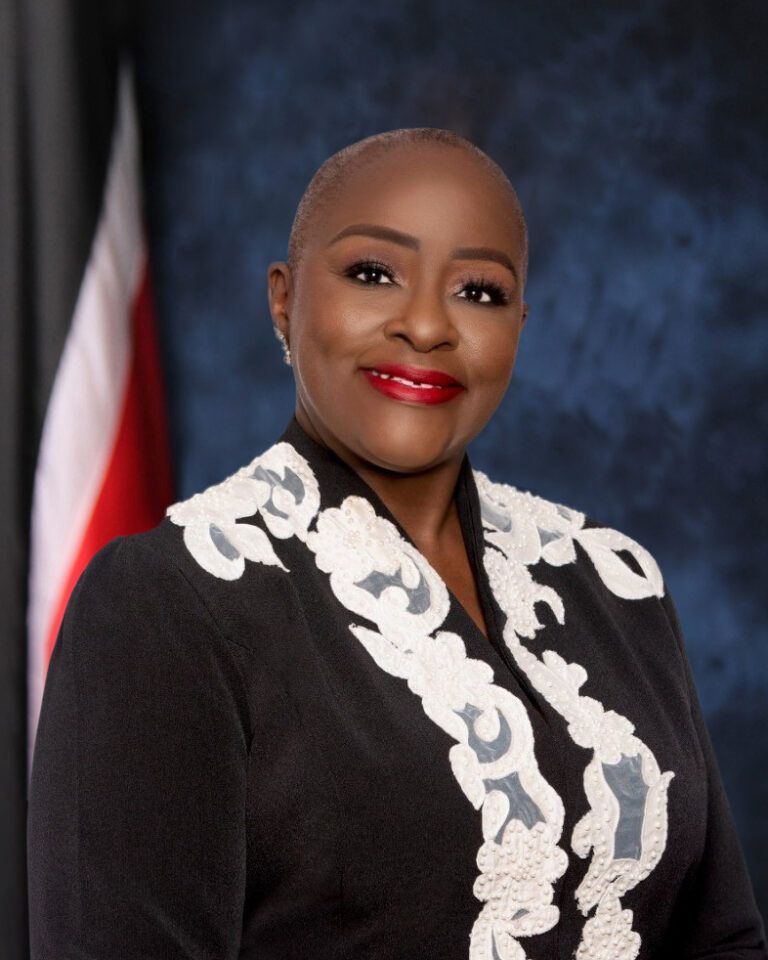
Former Energy Minister Carolyn Seepersad-Bachan has warned that the country cannot afford delays, opacity or conflicting agendas in the effort to restart the Pointe-à-Pierre refinery. She says the nation must move with urgency, guided by a transparent, credible and clearly defined strategy to ensure the refinery’s viability.
“The longer we wait, the greater the risk of irreversible deterioration of critical infrastructure,” Seepersad-Bachan said yesterday.
“We urgently need an independent, reputable engineering and inspection firm to conduct a full asset integrity assessment, anchored within a national framework and overseen by the Government. The process must be transparent and technically credible.”
Her comments come amid reports of a US$50 million study being conducted by the Italian engineering firm Tecnimont Services, in collaboration with the Oilfields Workers’ Trade Union (OWTU) and its company, Patriotic Energies and Technologies Ltd, to assess the refinery.
The Government has distanced itself from the study, stating it is not involved, that no preferred bidder has been selected, and that the financing remains unclear.
Guardian Media understands the study is a detailed engineering exercise designed to develop work packs for all refinery equipment, utilities and vessels, identifying the exact work needed for a phase one restart. This goes far beyond visual inspections or reviewing drawings. It includes hands-on checks of pumps, process units, pipelines, decontamination and catalyst inspections, and may involve the replacement of critical equipment.
“Non-engineering people reading the press release might think it’s just another conceptual study, but this is serious work,” a source familiar with the study said. “Technimont recently revived a mothballed refinery in Harcourt, Australia, down for 20 years, with a configuration similar to Pointe-à-Pierre. They bring technical capability, and if Patriotic Energies wins the bid, they would become a major shareholder.”
Seepersad-Bachan stressed that a successful restart requires discipline as much as urgency.
“This is not just an engineering exercise; it is a national project of strategic importance.”
Sources close to the refinery operations caution that commissioning a comprehensive, independent and detailed inspection at this stage may not be technically or commercially feasible.
“A key objective of such an inspection would ordinarily be to establish the capital cost required for a restart,” one source said.
“But if the financial capacity and readiness to proceed with a turnaround are absent, undertaking this study risks becoming a wasted cost with limited practical value.”
Instead, they argued that prospective investors should assume full commercial risk, supported by a phased inspection and recommissioning strategy tied directly to their restart plans. This approach would ensure that technical assessments are linked to actual execution, rather than being conducted in isolation with no clear path to operation.
The refinery, which has been mothballed for several years, faces the threat of continued asset deterioration, which could erode its economic viability. A separate source emphasised that the immediate priority should be evaluating the credibility and robustness of each bidder’s restart strategy, including technical approach, execution timeline, and financing.
“Technical assessments must be directly tied to execution. Otherwise, it is just an expensive exercise with no clear outcome,” the source said.
Questions of potential conflicts of interest have also arisen.
Individuals linked to the OWTU, which owns stakes in Patriotic Energies and is aligned with the governing United National Congress coalition, reportedly participated in aspects of the review.
Transparency advocates argue that such involvement without independent oversight undermines credibility and public trust.
Energy expert Anthony Paul yesterday highlighted the multifaceted nature of a refinery restart.
“You need technical capability to bring the plant up to speed, operational management to run it, and financing to make it work. Without all three, any inspection or study risks being an expensive exercise with limited value,” he said.
Paul added that a phased, investor-driven approach ensures that technical assessments, management plans and financing align with real execution timelines.
However, the US$50 million Tecnimont study paints a different picture. Funded and overseen by Patriotic, its financing and purpose remain opaque.
The Government’s own Refinery Restart Committee reportedly had no knowledge of the study.
Combined with the OWTU and Patriotic Energies’ previous High Court judgment requiring repayment of millions tied to prior financing for the refinery bid, the situation raises serious questions about financial transparency and capacity.
Meanwhile, Patriotic Front leader Mickela Panday said the lack of clarity on the matter is unacceptable.
“We support a responsible and sustainable restart, but support cannot mean silence in the face of confusion, contradiction, and a lack of direction. What is happening is a patchwork of disconnected actions, conflicting signals, and unanswered questions,” she said.
A 12-member Refinery Restart Committee, chaired by former Energy Minister Kevin Ramnarine, was officially appointed. The committee was tasked with assessing the feasibility of restarting the refinery and submitting its report to Cabinet within four months.