
Andrea Perez Sobers
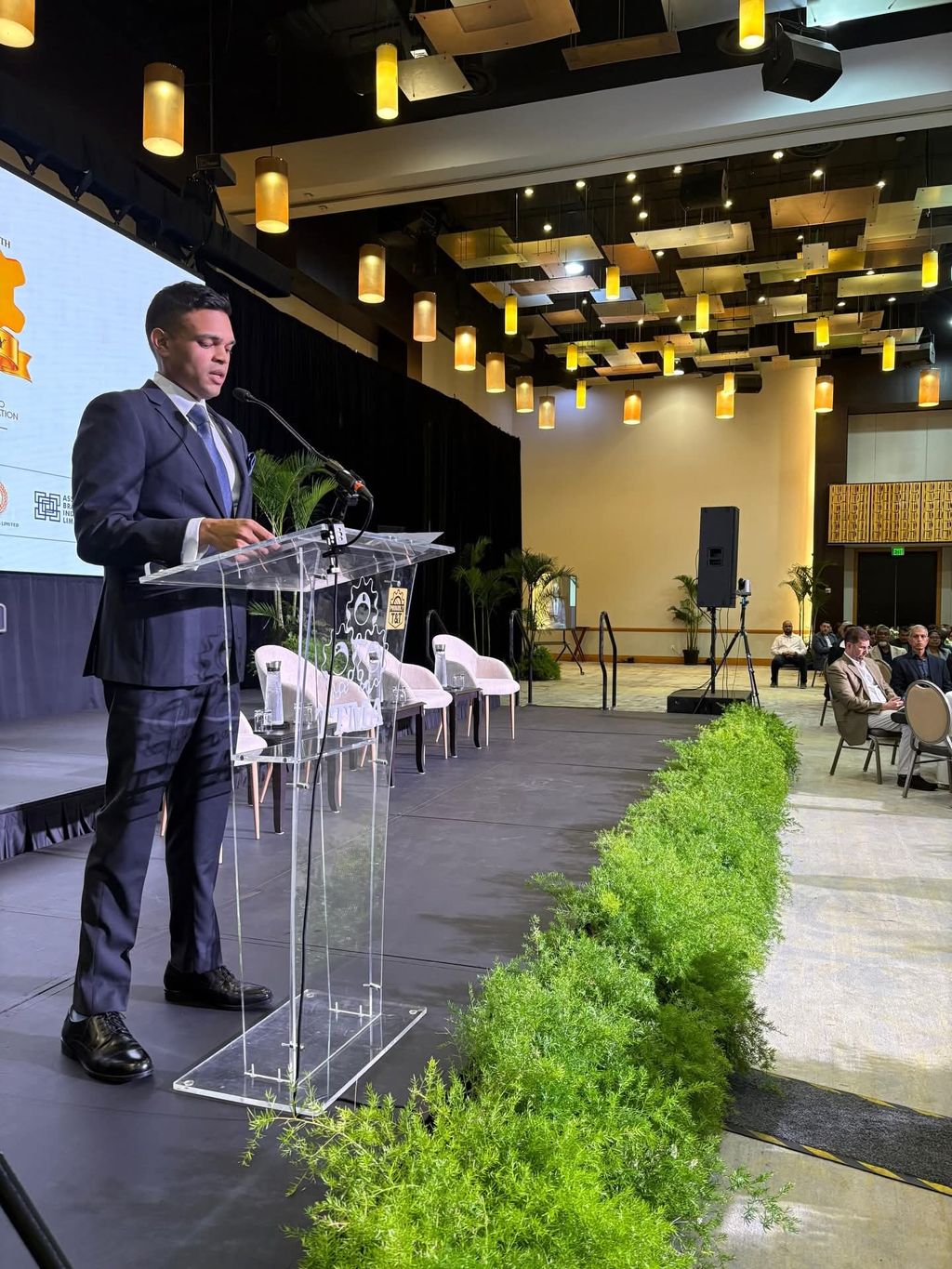
Emile Ramkissoon has been elected president of the Trinidad and Tobago Manufacturers’ Association, stepping into the role at a time of mounting pressure on the country’s non-energy sector and growing calls for decisive policy action.
His election took place today at the Hyatt Regency Trinidad during the TTMA’s 70th annual general meeting and leadership conference.
In a forceful inaugural address, Ramkissoon, an attorney and manufacturing executive, made it clear that his presidency will be defined by advocacy, accountability and results, as he confronted what he described as persistent structural barriers facing manufacturers.
He pointed directly to outstanding VAT refunds and limited access to foreign exchange through the Export-Import Bank as two of the most urgent issues choking business growth, warning that these constraints are affecting cash flow, investment and export expansion.
Ramkissoon also took aim at policy inconsistencies, cautioning that proposals such as 100 per cent container inspections at ports would severely undermine trade facilitation and set the country back decades. He argued that such measures run counter to global best practice and threaten Trinidad and Tobago’s competitiveness within the region.
Framing the TTMA as a “powerhouse” of more than 750 members, he said the organisation remains central to shaping trade policy, even as it operates largely behind the scenes through negotiation and lobbying rather than public confrontation.
“We are policy informers, not policymakers,” he said, while insisting that the association’s advocacy is grounded in data, research and sustained engagement with government.
Ramkissoon underscored the growing importance of the non-energy sector, citing its role in driving economic activity amid volatility in global energy markets. He argued that while manufacturing cannot fully replace energy revenues, it remains critical to foreign exchange generation, job creation and long-term economic resilience.
The new president also highlighted the TTMA’s expanding footprint, pointing to increased trade missions, growing participation in its Trade and Investment Convention, and stronger regional and international linkages as evidence of the sector’s potential.
At the same time, he called for a more enabling business environment, urging improvements in ease of doing business, timely VAT payments, efficient port operations and targeted support for manufacturers and SMEs.
Ramkissoon signalled a more transparent and strategic approach under his leadership, committing to stronger communication with members and evidence-based recommendations to policymakers.
His message to government was direct, work with the sector to unlock growth and diversification.