
Shastri Boodan
Freelance Contributor
Minister of Tertiary Education and Skills Training Prakash Persad is encouraging citizens, particularly young people, to pursue training in what he described as “AI-proof” careers, as the world braces for the growing impact of artificial intelligence on the workforce.
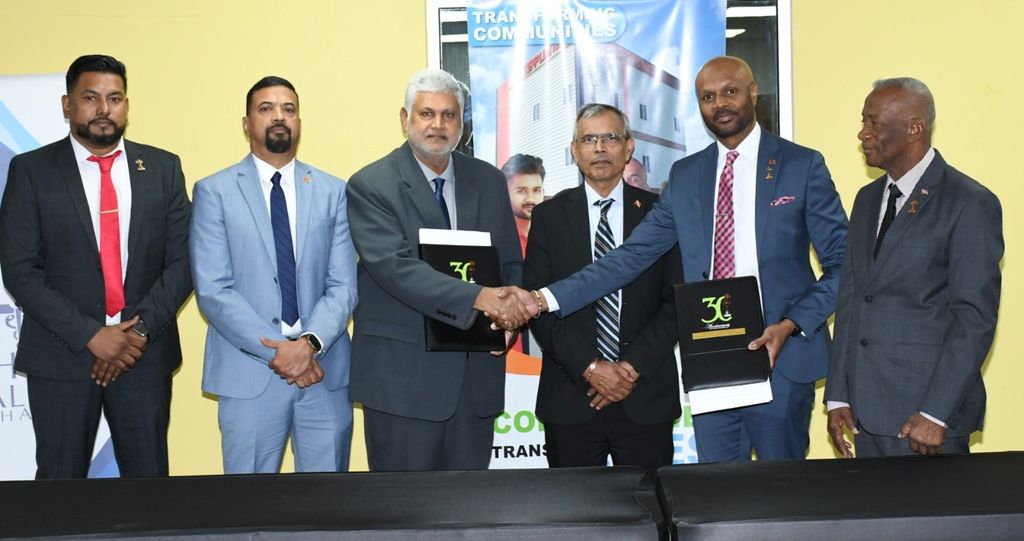
Persad made the call while delivering the feature address at the Youth Training and Employment Partnership Programme (YTEPP) Memorandum of Understanding signing between the North Central Regional Health Authority (NCRHA) and Caribbean Dockyard Engineering Services Limited. The event took place on Wednesday at YTEPP’s Woodford Lodge, Chaguanas headquarters.
Addressing concerns about job displacement due to artificial intelligence, Persad acknowledged that certain roles, particularly middle-level jobs involving routine tasks such as basic research and administrative writing, are increasingly vulnerable to automation.
“Worldwide it shows that some people will lose their jobs,” he said. “Middle-level jobs where AI can take over, for instance writing letters or doing basic research, these are areas that are already being impacted.”
However, the Minister stressed that many careers remain secure, particularly those requiring hands-on technical expertise and human judgement.
“There are some jobs which are what I like to call AI-proof,” Persad stated. “Jobs that require technical skills like plumbers, electricians, maintenance workers, these cannot be replaced. Even professions like doctors may use AI as an assistant, but they will not be replaced.”
He used the example of the COVID-19 pandemic to illustrate his point, noting that while many professionals were able to work remotely, essential technical workers still had to report physically to carry out critical tasks.
“How can you fix a toilet or electrical system from home?” he asked. “These are the kinds of jobs that will always be needed.”
Persad emphasised that global investments in artificial intelligence infrastructure, including data centres, are simultaneously driving demand for skilled trades such as construction workers, electricians and plumbers—fields often undervalued in traditional education systems.
“There are shortages in these areas,” he said. “Those who think these are low-end jobs are mistaken. These are important jobs, and they will survive.”
The Minister used the opportunity to advocate for a cultural shift in how society views Technical and Vocational Education and Training (TVET), arguing that it should be placed on equal footing with traditional academic pathways.
“No profession is higher than the other,” he said. “All roles are important in making the system function effectively.”
He also highlighted the Ministry’s push towards integrating academic education with skills training, noting that both are essential for producing a competent and adaptable workforce.
Among the initiatives outlined were expanded apprenticeship programmes, closer collaboration between industry and educational institutions, and the introduction of micro-credentialing—allowing individuals to gain qualifications in smaller, flexible modules while continuing to work.
Persad said this approach is especially important in addressing the country’s NEET population—young people not in education, employment or training—which currently stands at approximately 15.8 percent.
“We have to meet people where they are,” he said. “Training institutions must accommodate the needs of students and industry, not the other way around.”
Also addressing the ceremony, Bhadase Seetahal-Maraj,Chief Executive Officer of the NCRHA, described the agreement as a critical investment in national development and human capital.
Speaking on behalf of the Authority’s board, he said the partnership with YTEPP represents more than a formal agreement, but a commitment to building opportunities and strengthening capacity within the healthcare system.
“Every education initiative is a national investment in developing human capital, capacity and capability,” he said, noting that decisions made today will shape future career pathways and influence long-term outcomes.
Seetahal-Maraj emphasised that the Memorandum of Understanding will facilitate the delivery of a Patient Care Assistant Level One programme at the Eric Williams Medical Sciences Complex, providing structured, hands-on training for young people.
“This programme will equip them with essential skills in patient care. More than training, it offers exposure, discipline, and an opportunity to contribute meaningfully to the national healthcare system,” he said.
He added that strengthening healthcare goes beyond infrastructure, stressing the need for skilled and compassionate personnel to improve service delivery and patient outcomes.
“Through programmes such as these, we expand our human resource capacity, improve the quality of service delivery, and ultimately enhance the patient care experience,” he said.
Seetahal-Maraj expressed confidence that the initiative would produce a competent workforce and a new generation of skilled workers ready to contribute to national development.
“When we invest in our people, we invest in our country,” he added.