
Senior Reporter
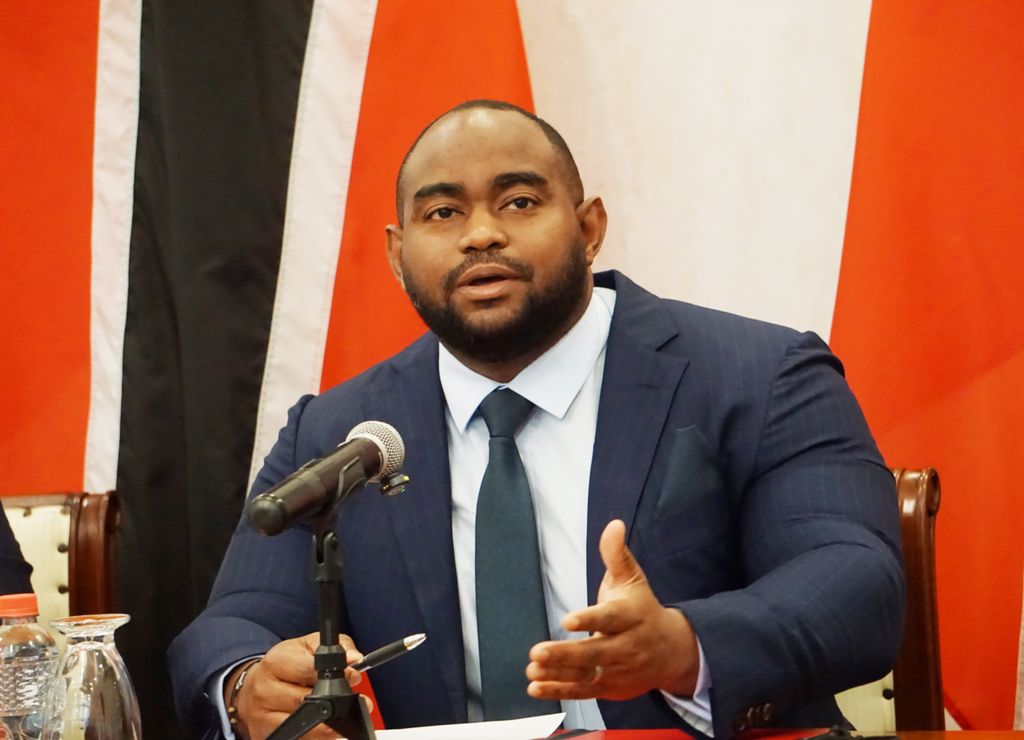
Foreign and Caricom Affairs Minister Sean Sobers has moved to clarify reports regarding the repatriation of Trinidad and Tobago nationals who sought asylum in the United Kingdom, stressing that the returns did not happen suddenly and were not a surprise to the Government.
Sobers explained that deportations have occurred gradually over several years as individual asylum claims were processed and rejected by the UK Home Office.
“The UK has a system that determines whether a claim is bona fide,” Sobers said, noting that investigations can take months or even years depending on complexity.
He rejected suggestions that hundreds of nationals were sent home at once. “It is not that they just pack 700 persons on a plane and send them home yesterday. People would have been repatriated to Trinidad over a period of time since the claims were made.”
Sobers confirmed the timeline spans roughly from 2023 to the present. He added that the high rejection rate—previously reported between 90 and 97 per cent—was already known to the Government and the previous administration and contributed to the UK imposing visa requirements on Trinidad and Tobago nationals in March 2025.
The minister said the visa policy is now under periodic review by British authorities and that Trinidad and Tobago has taken measures to encourage its reconsideration.
Among these is proposed Advance Passenger Information System (APIS) legislation, used successfully in other Caribbean countries, including Saint Kitts and Nevis. Sobers declined to provide further details, citing diplomatic sensitivity.
“The UK is a sovereign nation. They do it in six-month timeframes, and we await the outcome subsequent to us taking certain boxes on our end,” he said.
Addressing fears that some deportees could pose a public-safety risk, Sobers said he has confidence in local law-enforcement agencies. “I believe the efforts and the methodology employed by the Minister of Homeland Security and the Trinidad and Tobago Police Service are sufficient. So I’m not concerned.”
He clarified that while some returnees may be considered “persons of interest,” they do not necessarily have outstanding warrants. “As far as I am aware, I don’t believe anybody with an active warrant would have been able to successfully get on a plane,” Sobers said, noting that international screening systems would likely prevent travel in such cases.
Sobers also confirmed that Trinidad and Tobago is not currently paying for deportations. “At this point in time, it is the UK who bears the cost of the repatriation,” he said. He noted that British officials estimate the full cost of processing an asylum claim—including accommodation, investigation, and removal—at approximately £65,000 per person, a factor behind the visa requirement.
Homeland Security Minister Roger Alexander said authorities are prepared to deal with returning nationals and suggested that individuals linked to criminal activity would not evade justice.
“No one anywhere runs away after committing a crime and thinks they get away,” Alexander told Guardian Media on Monday. He said investigations continue regardless of where suspects travel and that law-enforcement agencies are monitoring returnees.
“Now is the best time for them to return because we are at a point where police continue to monitor and treat with the persons coming back,” he said. Alexander declined to provide details on any apprehensions, citing operational sensitivity.
Regional security expert Dr Garvin Heerah said while repatriation is a sovereign right, the return of large numbers of nationals—particularly those linked to criminal networks—could pose significant risks if not carefully managed.
He urged an intelligence-driven information-sharing mechanism between the UK and Trinidad and Tobago, including advance transmission of criminal histories, risk assessments, and behavioural indicators. Without such preparation, Heerah warned, the country could face renewed gang activity, retaliatory violence, and pressure on law-enforcement resources.
“This situation must be treated not merely as a migration issue, but as a national and regional security priority,” he said, calling for stronger regional coordination through Caricom to harmonise intelligence-sharing and joint response strategies.
Criminologist Dr Randy Seepersad said the impact on local crime will depend heavily on the background of returnees. He noted that criminal history checks are key in asylum decisions and that individuals with documented offences are often denied protection.
“If you’re a known criminal, the Home Office could easily communicate with the police service here, and if you’re a criminal offender, they’ll send you back,” Seepersad explained.
He warned that time abroad could allow individuals to build new criminal connections or acquire skills that could later be used locally. Transnational networks formed overseas, particularly in major markets such as the UK, may also persist upon return.
“If people come back, they will now have the power and the linkages to export illicit substances to the United Kingdom,” he said. Seepersad emphasised that outcomes will vary widely depending on criminal history, length of stay abroad, and the nature of any networks established.