
DAREECE POLO
Senior Reporter
dareece.po[email protected]
The Trinidad and Tobago Police Service (TTPS) says its crime-fighting operations will continue uninterrupted despite the removal of a United States military radar that supported surveillance efforts across the country.
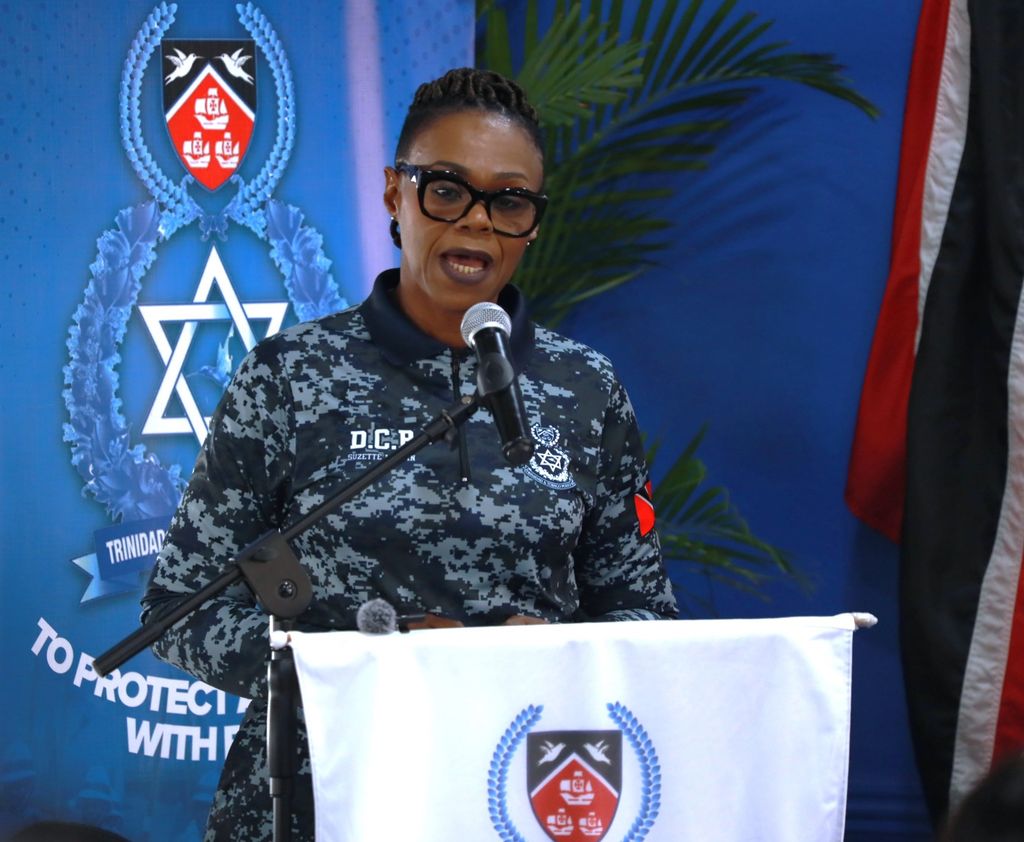
Deputy Commissioner of Police Suzette Martin, who is currently overseeing operations, downplayed the impact of the departure. While acknowledging the system’s past utility, Martin signalled a return to traditional policing.
“While the system had provided useful support in certain operations, including efforts aimed at intercepting illicit activities, the TTPS continues to rely on a range of intelligence-led and collaborative strategies to effectively police our borders and territorial waters.”
“At this time, the TTPS does not anticipate any significant disruption in ongoing operations.”
However, that narrative is being aggressively challenged by national security experts. Commander Norman Dindial, the former director of the National Coastal Surveillance Radar Centre, has levelled a damning indictment against the Government, characterising the entire deployment as a geopolitical charade.
Dindial contended the radar, a US$50 million military-grade air defence tool, was never designed for the domestic “war on drugs” but was instead a pawn in a larger regional game.
“The truth is actually coming out now”, he said. “The radar being there, the radar not being there, (it) never helped the TTPS in any particular drug enforcement exercise. And we call it out as it is. So, we’re seeing through the farce. So, they were using the police service to give credence and justification for having that radar in Trinidad and Tobago.”
Dindial, the interim leader of the National Transformation Alliance, also suggested that the radar was, in fact, used in the US operation in Venezuela that led to the capture of deposed President Nicolas Maduro on January 3. He suspected it would now be redeployed to the Middle East.
Moreover, he raised concerns about the independence of the TTPS as he accused Police Commissioner Allister Guevarro of “falsely justifying” Government policy.
“We (the National Transformation Alliance) definitely have concerns when an independent body, as the police service, is supposed to remain independent and be able to conduct the operations in that way. And if you have political involvement in any form or fashion, it is political corruption in the policing of Trinidad and Tobago,” he said.
“When you have a Commissioner of Police here using his position to justify its political policy, of course, where the politics in Trinidad and Tobago right now is supporting the US government and supporting US military hardware on our soil and falsely justifying it, there’s a lot of concern because you have now undermined the independence of the police service and a service that is supposed to have the confidence of the public,” he added.
Echoing Dindial’s sentiments, former police commissioner Gary Griffith warned of a “frightening” shift in the posture of the current top cop. Griffith suggested the leadership is now indistinguishable from the Government’s communications department.
“What I see is a police commissioner who is ready and able to become the public relations officer for the Government, which is very, very frightening,” Griffith said.
“This is not indicative of the Government directly being involved and interfering with the running of the police service. This shows a police commissioner who is willing and able to say every single thing that the Government says, and he’s going to agree whether they are right or wrong.”
Meanwhile, Patriotic Front leader Mickela Panday questioned the circumstances surrounding the radar’s removal, citing a lack of transparency.
“We were told it would remain for the foreseeable future. We were told it was working. We were told it was helping in the fight against crime. Today, that same radar is being dismantled and removed, quietly and without any clear public explanation.”
“From initial denials, to later acknowledgements, to now its sudden removal, this entire episode has been marked by inconsistency and a troubling lack of transparency. National security is not a public relations exercise. It requires clarity, credibility and accountability. And beyond this radar, the larger question remains: where is the comprehensive plan to deal with crime?”
Opposition Leader Pennelope Beckles was even more blunt in her assessment of the Government’s shifting explanations during a People’s National Movement political meeting in La Horquetta on Monday night.
“If you are not careful, these people will convince you that a dog is an elephant because they lie so comfortably and they forget”.
Speculation over the radar’s possible replacement intensified last Wednesday after Defence Minister Wayne Sturge said the Government was working with the United States to source a new system, citing high operational costs.
At the end of November, the Prime Minister sought to allay public concern over the radar installation, telling a newspaper that she had requested it.
Less than two weeks later, in December, the TTPS credited the system with assisting in a major drug seizure at the Caroni Swamp, where marijuana valued at $171 million was intercepted.
During the same period, Homeland Security Minister Roger Alexander described the radar as a potential asset in national security operations, including the search for kidnapped Monos Island couple Derek and Claribel Tardieu. He later clarified that he had not suggested the radar was being used to locate the victims, but noted it could assist if equipment linked to a crime were detectable.
Efforts to obtain comments from the Prime Minister, the Ministers of Defence, Homeland Security and Foreign Affairs, as well as Commissioner Guevarro were unsuccessful up to late yesterday evening.