
Tobago Correspondent
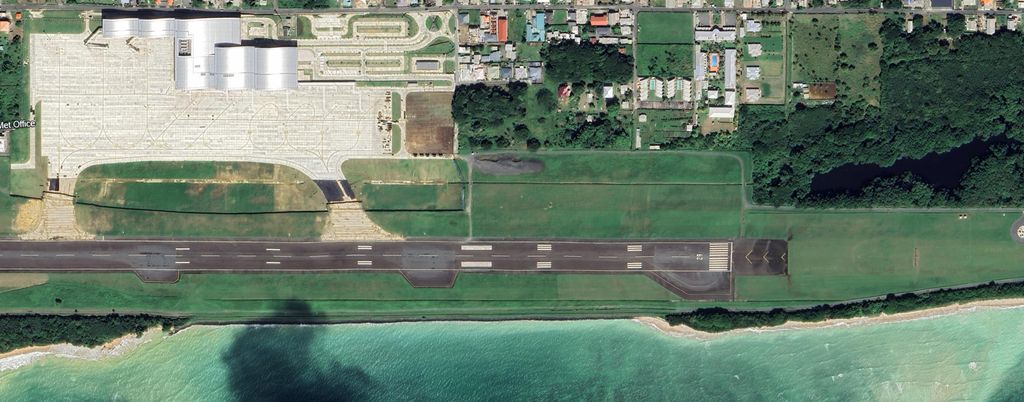
The controversial ground/air task-oriented US military-grade radar at the ANR Robinson International Airport in Crown Point is gone.
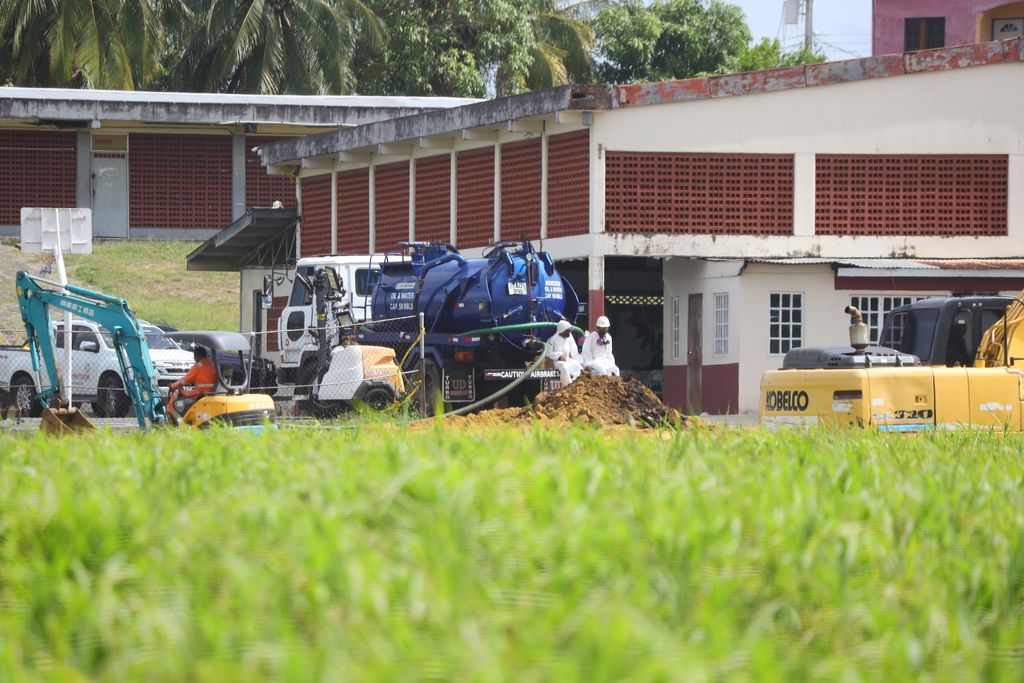
Guardian Media visited a vantage point at Kilgwyn Bay Road yesterday morning, where the towering radar could have previously been seen rotating.
However, the military asset supplied by the US was noticeably missing.
According to sources, the radar has been dismantled and a US military cargo aircraft is expected to arrive on the island soon to take it away.
Its absence comes five days after Chief Secretary Farley Augustine announced that US troops on the island were days away from leaving.
US troops have been in Tobago since November last year, supervising the operation of the radar, which reportedly cost US$3 million a day to run.
Guardian Media confirmed the presence of US military personnel at Grafton Beach Resort last Tuesday, but security officers restricted access to the Black Rock resort saying it was booked “for a specific group.”
Prime Minister Kamla Persad-Bissessar had initially denied the presence of US troops on the island, but later acknowledged they were here to improve surveillance using a radar system. She said the radar would help tackle the scourge of drug and human trafficking, particularly out of Venezuela.
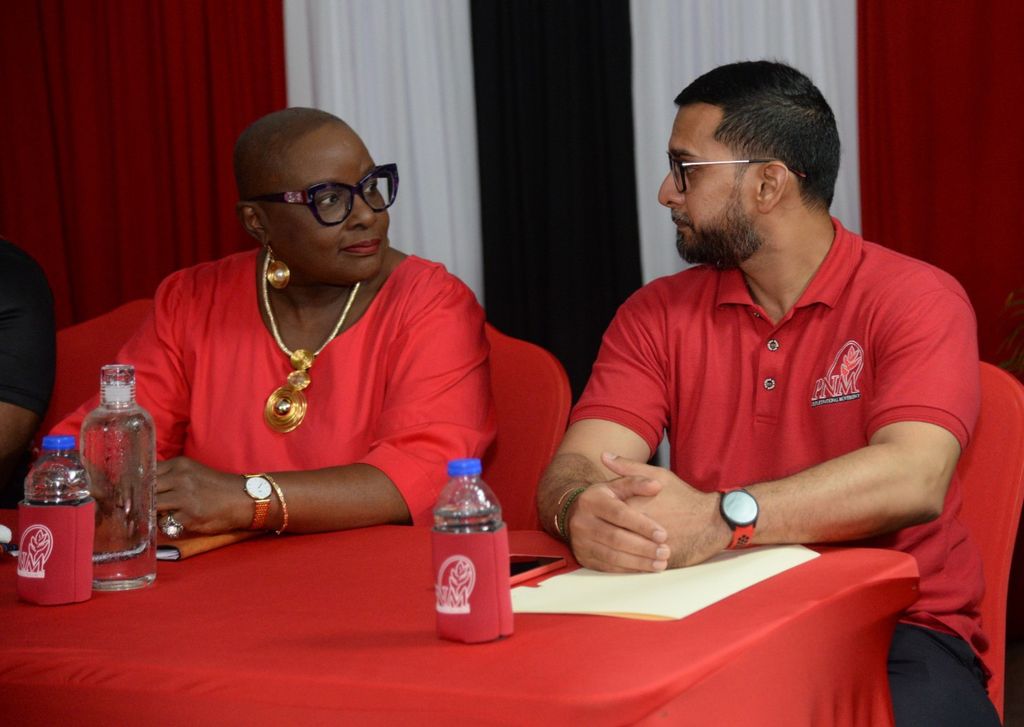
People’s National Movement Tobago Council leader Ancil Dennis, a vociferous critic of the radar, yesterday celebrated its absence.
“Good riddance. We have been very vocal about this issue that this occupation of our island and our country was not gonna augur well for us in terms of our relations with our immediate neighbour and Caricom by extension. This development should tell Tobagonians one thing—that we were lied to,” Dennis said.
“We were told this radar was about crime fighting, it was here to aid in the fight against human trafficking and drug trafficking. It is leaving now, conveniently after the objectives that the foreign military that occupied here had in Venezuela was accomplished.”
Dennis insisted the radar played a role in the US’s removal of former Venezuela President Nicolas Maduro in a military operation in Caracas on January 3.
He said neither Trinidad nor Tobago benefited directly or indirectly from its presence.
“We were lied to when they said the radar assisted in a drug bust in Caroni (swamp). That was obviously a big lie and the majority of citizens saw through that lie. This radar was never about national security.”
Innovative Democratic Alliance (IDA) leader Dr Denise Tsoiafatt-Angus also welcomed the radar’s removal but wondered whether the war on drugs was over.
She said the IDA had raised concerns about its installation as well as possible detrimental health effects on nearby communities.
“But the removal of this radar does not close the matter... The obvious question is did T&T win the war on drugs? Did the entire Caribbean narcotics trade suddenly disappear overnight?” she said.
“It is clear, after blowing up about 19 boats in the sea and removing one man—even one as prominent as Nicolas Maduro—does not magically shut down a multi-billion-dollar global drug industry.”
The IDA leader said the public was duped about the true purpose of the radar.
“This installation appears to have served far more benefit to the US strategic interest than the people of T&T.”
She claimed tourism, the fishing industry and general economy suffered because of crime, the radar and the ongoing State of Emergency.
“The US still advises its citizens to reconsider travel to T&T because of violent crime and kidnapping risks, so clearly the radar was never the solution to the crime problem.”
Meanwhile, Augustine yesterday confirmed Guardian Media’s exclusive report yesterday about the removal of the radar.
He told TV6 News, “Preparations are underway for the equipment and associated personnel to leave the island.”
Augustine said the Office of the Secretary was made aware of the radar’s departure.
“It’s quite in line with the schedule that I was given. From day one, it was clear this was never a permanent fixture but always temporary,” he said.
However, Augustine said critics of the radar were fear-mongering and T&T was never a military target because of hosting the equipment.
He said the time had come for T&T to improve its security infrastructure to ensure Tobago and the country as a whole remain safe.
Tobago Hotel and Tourism Association president Reginald MacLean told Guardian Media he was stunned by the exit of the radar and US personnel.
“I am a little bit astonished it has gone. Really and truly, as far as I am concerned, they should have kept it. I just hope the US would keep assisting us with what we need assistance for.”
Former National Security Minister Gary Griffith yesterday said the exit of the US radar was not a death knell to T&T’s security.
He conceded, however, that T&T needs to invest in modern equipment to bolster its national security apparatus.
“Radars come and radars go. It is not the end of the world. T&T cannot rely primarily on a US radar,” Griffith said.
“We have been involved in so many different things in national security for the last few decades. We also need to understand we have our own radar. What we don’t do is utilise it properly.”
Griffith also said Commissioner of Police Allister Guevarro needs to embrace technology in the battle against criminals.
“This is the same CoP that claims that the US radar was instrumental in finding drugs in the Caroni Swamp. Is he saying now because of the absence of that radar, we cannot find drugs in the Caroni Swamp? I beg to differ,” he said.
“What is required is, instead of that radar, are drones. Drones that can turn night into day, that can be two kilometres in the air and lock onto vessels entering our area of responsibility in our waters, lock onto vehicles and assist in operations. That is the technology we need to embrace.”
Former Defence Force Commander Norman Dindial also said he is not surprised the radar has been removed.
However, he said he believed this was because the US is currently redeploying its military assets to the Middle East to assist in the war against Iran.
He said the conflict, which started February 28, has stretched US resources thin and the radar would be better utilised in the Gulf region than in Crown Point.
“The US is actively repositioning all its military assets, including air defence systems and radars, to the Middle East. So far, the US has spent about US$4 billion in military assets and hardware and the Iranians have taken out all the radar and sensor systems around the Gulf.”
He said the G/ATOR radar, manufactured by Northrop Grumman, is likely to be used to help defend Israel from Iranian attacks.
“We have a $50 million piece of equipment sitting here in Tobago, supposedly to detect drug traffickers and drug ships, which we know it is not built to do.
“This radar is sitting here doing absolutely nothing, so it is strategic for the US to redeploy this asset and use it more effectively for where it is needed.”
Dindial said the radar has “completed its task of that incursion in Venezuela.”
He said the redeployment shows the US is recalibrating its war strategies in the battle against Iran.
The military specialist said the radar takes about 30 minutes to dismantle and 30 minutes to assemble.
“A four-man marine team can set it up and have it operational in less than four hours.”
Radar Timeline
Late November 2025 — THA seeks clarification
The Office of the Chief Secretary of the Tobago House of Assembly publicly sought answers from central government after the radar’s existence was confirmed:
“The Office of the Chief Secretary … is seeking full clarification from the Central Government on the installation of a United States supported radar system at the ANR Robinson International Airport.”
November 25, 2025 - PM defends secrecy on radar
PM defends her reasons for not divulging all the information on the radar.
“Since it is a sensitive national security issue which provides for the protection of our territory and citizens, I did not think it was wise on Wednesday outside the Parliament to publicly broadcast to narco and human traffickers as well as other criminals that we were installing a radar. It would be counterproductive to our citizens’ safety. ... The radar is solely for the monitoring and surveillance of our territory. The radar is not for use in any action in Venezuela.”
November 29, 2025 — PM on lack of prior notification to THA
Prime Minister Kamla Persad-Bissessar explained why THA Chief Secretary Farley Augustine was not informed about the radar before:
“Chief Secretary Farley Augustine is not a member of the National Security Council (NSC), and as such, was not informed beforehand about the arrival and installation of a temporary US military radar system on the island.”
Early December 2025 — PM defends radar secrecy and purpose
PM defended her decision not to reveal details initially, saying disclosure would have compromised national security:
“Since it is a sensitive national security issue … I did not think it was wise … to publicly broadcast … that we were installing a radar. It would be counterproductive to our citizens’ safety.”
She also denied that the presence was a military force aimed at offensive action:
“It is not a military force as such. We are not about to launch any campaign against Venezuela.”
December 11, 2025 — PM on radar’s operational impact
Addressing a public event, the Prime Minister highlighted the radar’s role in law enforcement:
“…it helped police to seize $171 million [worth of marijuana] in an unmanned boat in the Caroni Swamp.”
December 15, 2025 — Foreign Affairs Ministry statement
Foreign Affairs Minister Sean Sobers described radar installation as part of ongoing security cooperation, affirming regional collaboration:
“Joint military training exercises, enhanced surveillance capabilities and the installation of a radar system used in narcotics interdiction.”
Jan 2026 — Farley Augustine on radar installation authority
At a meeting in Tobago, Augustine made clear that if decision making was his alone, he would have rejected the radar and related airport access:
“Yes, I would have (rejected the installation of the radar and US military access)… Because … governance must be about what the people of Tobago want.”
January 8, 2026 — THA Chief Secretary on conditional opposition
Farley Augustine, while clarifying his position, issued a conditional warning about radar misuse:
“If I had information it was used to assist the United States in attacking Venezuela … I would mash up that radar myself.”
February 28, 2026 — PM reveals cost to operate radar
“I don’t know why there was such a big noise because a few people were here from the US military in Tobago with the radar. You know they are paying US$3 million a day for that radar. Not us. They are paying that. Therefore, they kept some of their military personnel there to ensure that the radar would be safe.”
March 13, 2026 — Defence Minister Wayne Sturge on radar replacement
Sturge acknowledged the radar’s role, cost, and the Government’s work on a replacement:
“It is costly, so what we are in the process of working out is a replacement — something that is equally as effective.”
March 15, 2026 — THA confirms US troop departure
Most recent statement from the THA, reiterated by Keigon Denoon on behalf of Farley Augustine:
“The US military would be leaving the island within days.”