
Gail Alexander
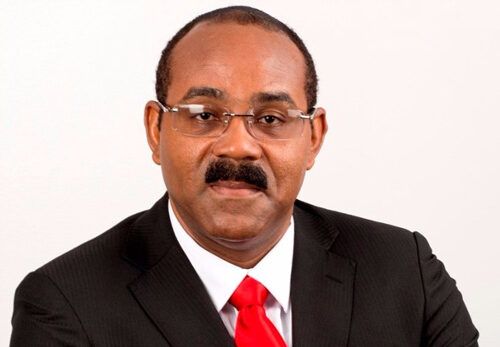
Incoming Commonwealth chairman and Gaston Browne has called for closer cooperation among middle and small nations, saying a stronger alliance is needed as global power structures shift.
The Prime Minister of Antigua and Barbuda made the call in an opinion article published in The Telegraph on Monday. He said the Commonwealth of Nations could serve as the foundation for an alliance of middle powers proposed by Mark Carney, the Prime Minister of Canada.
“In a world of shifting global power structures, there is an obvious need for a coalition of compatible middle and small nations together magnifying their influence globally,” Browne wrote.
“Indeed, if in the world today there were not such a group of like-minded, predominantly English-speaking, free-trade-supporting, rules-based nations, one would need to be created. Fortunately, with the Commonwealth, we already have one. The question now is what we do with it.”
Browne raised the issue after queries from Guardian Media about the recent Americas Counter Cartel Conference, which was attended by four CARICOM states, including Trinidad and Tobago. Trinidad and Tobago and Guyana were later among 12 countries that signed on to the ACC coalition.
Antigua and Barbuda will host the Commonwealth Heads of Government Meeting 2026 from November 1 to 4. Browne will assume the chairmanship of the Commonwealth at that summit.
The meeting will mark the first time a Caribbean small island state has hosted the gathering since 2024. Organisers say the summit will focus on climate resilience and economic innovation.
Officials in Trinidad and Tobago said it is not yet clear who will represent the country at the meeting or whether Prime Minister Kamla Persad-Bissessar will attend.
In the article, Browne said comments by Carney on cooperation among middle powers have taken on new relevance amid developments in the Middle East.
“How should countries that are not one of the world’s superpowers best navigate, prosper, and keep themselves – to paraphrase Carney – ‘at the table, so they’re not on the menu’,” Browne wrote.
He added that countries should not assume the global system will return to its previous form.
“It is dangerously naïve to think there will be a return to the ‘factory settings’ of global structures and mindsets under future US administrations. The geopolitical order is changing, and that change is here to stay.”
Browne also pointed to discussions on closer cooperation between Canada and Australia, led by Prime Minister Anthony Albanese, as well as proposals for deeper trade and movement agreements between Canada, Australia, New Zealand and the United Kingdom.
Reflecting on his country’s upcoming leadership role in the Commonwealth, Browne said small island states have benefitted from the rules-based international system.
“Because, self evidently, we wouldn’t have the capacity to wield power freely in a dog-eat-dog world.”
He said alliances among middle powers could help strengthen that framework and ensure smaller states remain influential in global decision-making.
Browne added that the Commonwealth offers a platform for deeper cooperation.
“This is a moment to bring our nations closer together, to bring down non-tariff barriers such as overlapping standards and customs delays, and strive to create common standards to smooth trade between Commonwealth cousins. All of this is within our power to change.”