Sturge tells Opposition, media temper questions on sensitive security matters
 06 March 2026
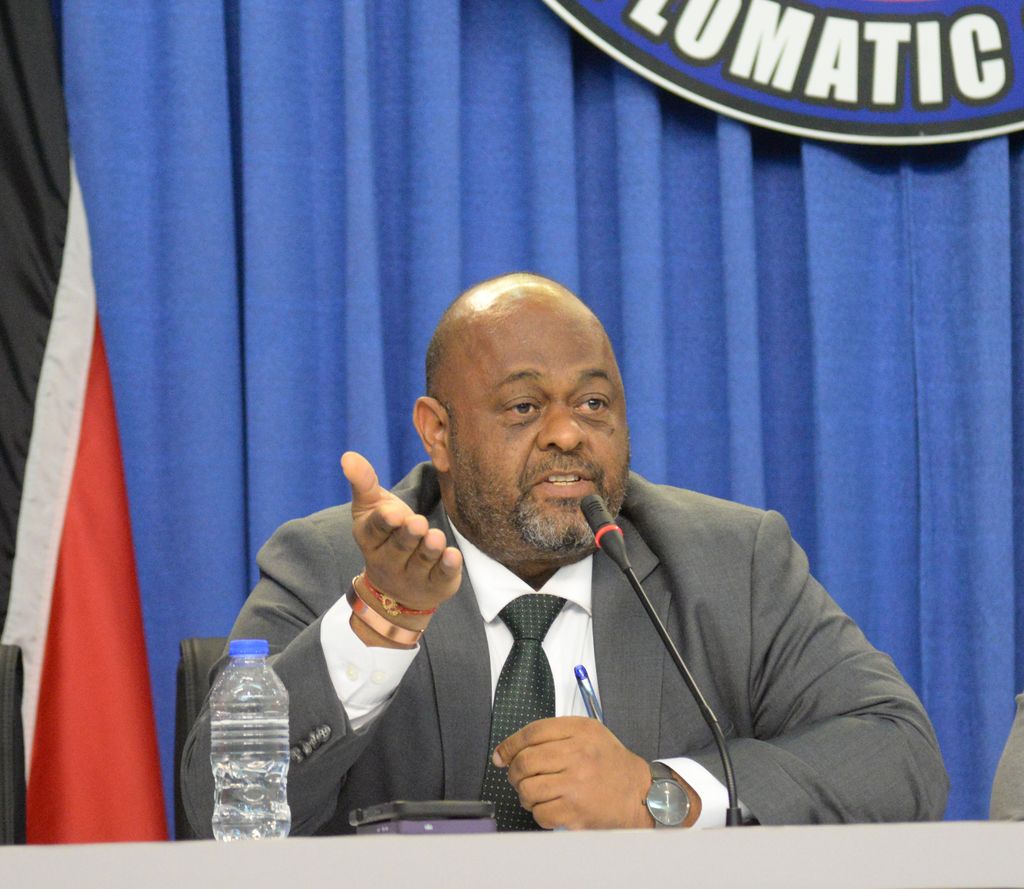

Minister of Defence, Wayne Sturge, says questions touching on the state of military assets, their acquisition, or requests for such assets, particularly where discussed in camera with allies, would not be entertained.
In a statement, Sturge said a campaign of what he called misinformation by the Opposition and sections of the media has centred on highly sensitive national security matters, including Trinidad and Tobago’s cooperation with the United States in combating narco-terrorism and protecting the country from threats issued by the Government of Venezuela.
He said the narrative expanded to suggest that the Government was complicit in taking Trinidad and Tobago into a war with Venezuela, “a war which never happened”.
The release said the Government observed what it described as a coordinated effort over several months in which members of the Opposition and some media outlets questioned matters tied to national security.
According to the statement, many of the questions raised by Opposition members and some experienced journalists involved information that could not be publicly disclosed or compelled to be disclosed.
The Government also criticised the conduct of the Member of Parliament for Arouca-Lopinot, accusing the MP of engaging in a pattern of behaviour designed to cause fear among citizens.
The release said, " when the Government refused to answer questions on the basis that disclosure would be inimical to the public interest, both the Opposition and elements within the media portrayed the refusal as an attempt to withhold information from the public for sinister reasons."
Sturge said that it therefore decided to outline the legal position in Trinidad and Tobago and across the Commonwealth to allow the public to better understand the issue.
The release referenced the judgment of the Judicial Committee of the Privy Council in the 1916 case The Zamora, quoting Lord Parker of Waddington:
“Those who are responsible for the National Security must be the sole judge of what national security requires. It would be obviously undesirable that such matters should be made the subject of evidence in a court of law or otherwise discussed in public”.
He also cited the Council of Civil Service Unions v Minister for the Civil Service, in which the House of Lords found that decisions on whether national security requirements outweigh the duty of fairness rest with the Government, since it alone has access to the necessary information.
It further referenced the decision in Secretary of State for the Home Department v AF, where Lord Bingham found that disclosures should not be made where they would be contrary to the public interest.
Sturge said these judgments align with Section 25 of Trinidad and Tobago’s Freedom of Information Act of Trinidad and Tobago, which prohibits disclosure of information likely to prejudice the country’s defence or the lawful activities of security or intelligence services.
Sturge has called on "both the Opposition and sections of the media to act responsibly and with integrity when raising issues involving sensitive matters of national security."