
AKASH SAMAROO
Lead Editor – Politics
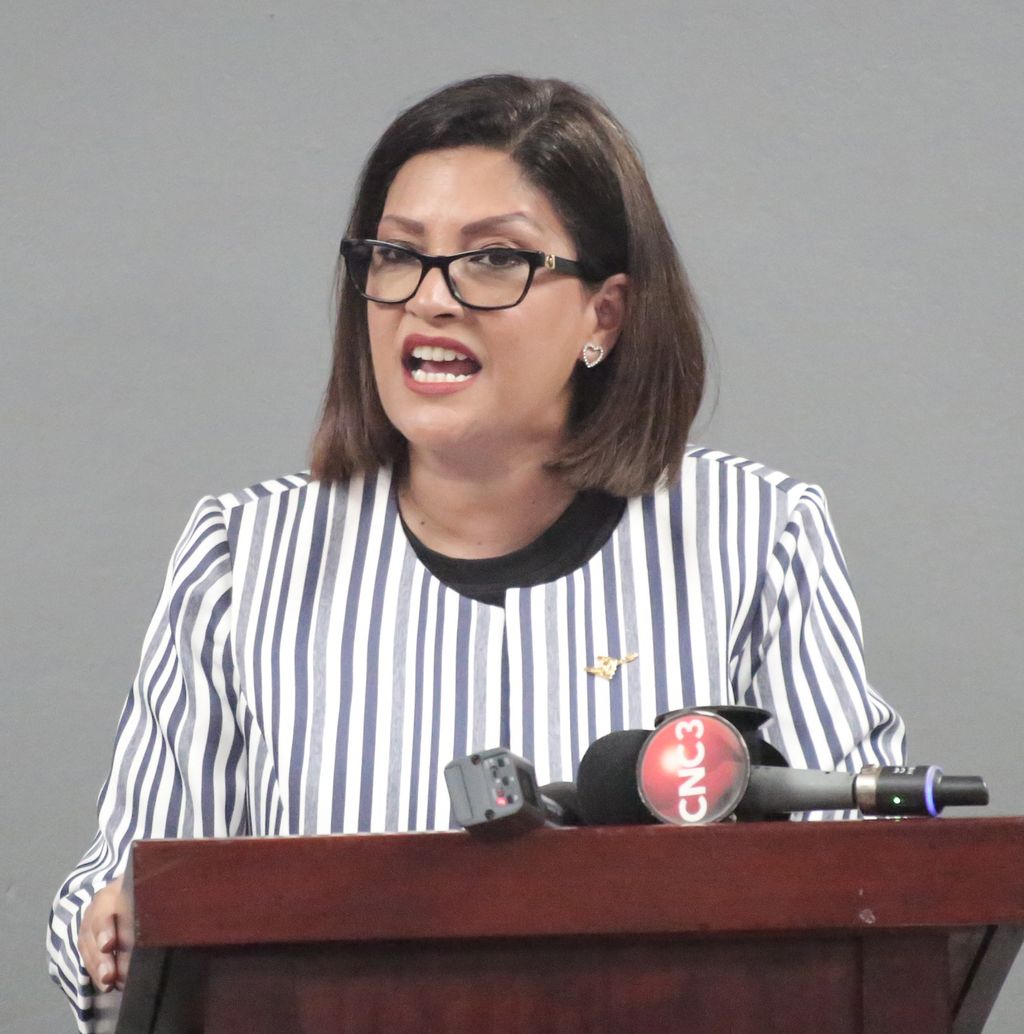
Patriotic Front leader Mickela Panday is warning that Trinidad and Tobago risks weakening constitutional protections if emergency powers are repeatedly used as the primary response to crime.
Panday issued the caution following the Government’s declaration of a new State of Emergency (SoE), arguing that while citizens are understandably fearful of rising violence, emergency powers cannot replace a comprehensive crime strategy.
In a statement on social media, Panday acknowledged that crime has eroded public confidence and left communities anxious.
“Citizens are frustrated, families are worried, communities want relief,” she said. “Criminals must be caught, prosecuted and punished. But emergency powers must target criminals, not weaken constitutional protections for the innocent,” Panday added.
However, Panday stressed that a State of Emergency is merely a temporary legal mechanism rather than a long-term solution to crime.
“A state of emergency is not a crime plan,” she said. “It is not policing reform, it is not intelligence reform, it is not prosecution reform, and it is certainly not a substitute for a long-term strategy.”
Panday argued that nearly a year after the current administration took office, citizens deserve clarity about what permanent structural changes have been made to tackle crime.
The Patriotic Front leader also raised constitutional concerns about several provisions within the Emergency Powers Regulations.
Among the issues highlighted was the potential suspension of the writ of habeas corpus in certain circumstances, meaning detainees may not immediately have access to a judge to challenge their detention.
Panday also pointed to provisions allowing law enforcement officers to enter and search homes without first obtaining a warrant from the courts.
“That means a police officer can enter your home based on suspicion alone, without first going before a judge,” she said.
She further warned that the regulations may criminalise speech deemed prejudicial to public safety, including how citizens express opinions publicly or online.
“These are extraordinary powers, and extraordinary powers demand extraordinary safeguards,” Panday said.
She maintained that protecting constitutional rights should not be interpreted as protecting criminals.
“It protects innocent citizens from the misuse of power,” she said.
According to Panday, strong governance requires transparency and accountability rather than the suspension of judicial oversight.
“Accountability strengthens public confidence. It does not weaken it,” she said.
Panday also questioned what long-term systems will remain in place once the State of Emergency expires.
“If this is the crime strategy, what happens when the state of emergency ends?” she asked. “What permanent systems have been strengthened? What conviction rates have been improved? What networks have been dismantled?”
She argued that sustainable crime reduction requires intelligence-led policing, stronger prosecution and improved border security to disrupt criminal networks.
“Crime will not be solved by repeatedly suspending normal legal safeguards,” Panday said.
“It will be solved by intelligence-led policing, stronger prosecution, securing our borders, and ensuring that cases result in convictions.”
Panday said Trinidad and Tobago must pursue public safety while safeguarding the constitutional rights of its citizens.
“In fact, we must do both, because we cannot build national security by weakening constitutional security,” the Patriotic Front leader posited.
Related News
St Augustine man, 85, reported missing
AG: SoE needed to stop escalating gang violence

Farley apologises to Tobagonians over ferry crisis; weighs compensation to business owners