
Senior Reporter
dareece.po[email protected]
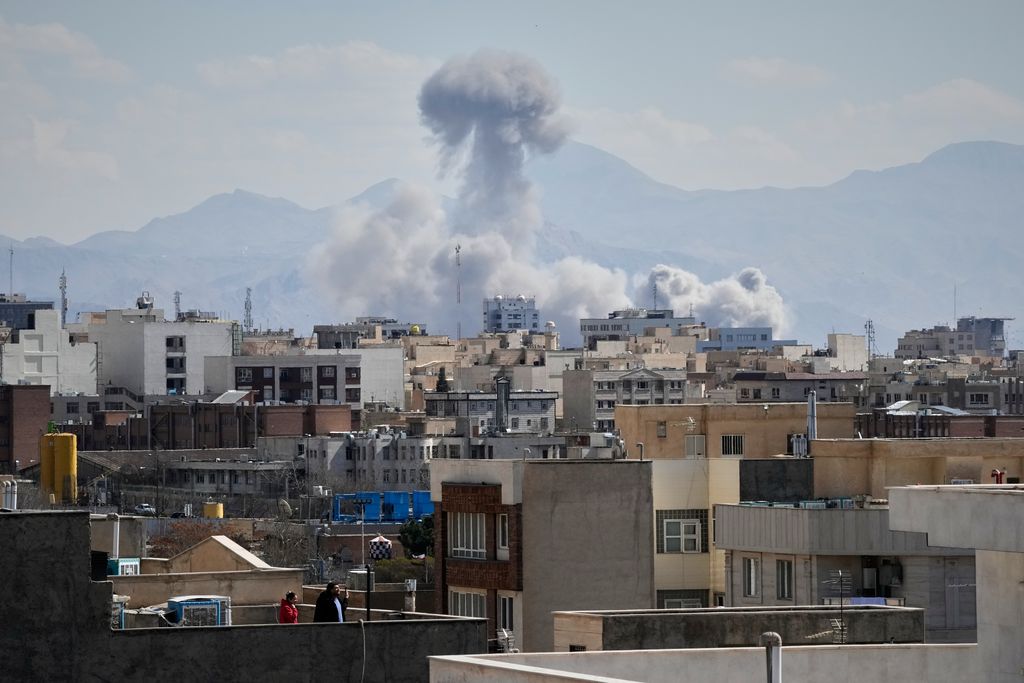
Sleepless nights under the thunder of intercepted missiles have become routine for some Trinidad and Tobago nationals living in the Middle East, as the conflict involving the United States, Israel and Iran intensifies with deadly consequences.
International agencies report that hundreds of people have been killed since the latest escalation began, including women and children caught in strikes on residential areas and near military targets. Hospitals in parts of the region are said to be overwhelmed, with images circulating of injured civilians and damaged neighbourhoods. While the fighting has centred on strategic installations, civilian casualties have deepened global concern and outrage.
For T&T national Fiaz Mahamood, a director at Kuwait Drilling, the war is being measured less in statistics and more in sleepless nights.
“Well, to be honest, I go to sleep like 3, 4 am because when they intercept these bombs, it makes quite a loud bang … So every time it happens, it wakes you up. So there’s not much sleep.”
Kuwait has largely defended itself against Iranian attacks, with most projectiles intercepted before impact. Residents in areas hosting US Army Central say they have heard sirens and explosions.
Despite this, Kuwait has not experienced the level of devastation seen elsewhere in the region. Israel and parts of the Gulf have sustained heavier damage and casualties as exchanges continue.
Mahamood, who lives near Kuwait City, insists that daily life continues and is confident in the country’s security apparatus.
“Security is quite tight. And we are very confident with the Middle East security. I mean, it’s always worrying when there are bombs flying around. But for us, we feel a sense of comfort. We would love to come back to Trinidad because it’s not really a nice thing to experience. But some of us have jobs which require us to be over here.”
He maintains that many of the attacks are concentrated around US military bases and key installations, with interceptions preventing widespread destruction. From his vantage point, he says, the situation appears less dire than portrayed abroad.
“We hope things will get better. It doesn’t look like it will escalate too much.”
More than 200 T&T nationals are believed to be spread across Kuwait, Qatar, the United Arab Emirates and other parts of the region.
Mahamood says they remain connected through WhatsApp groups and have formally registered with the Ministry of Foreign and Caricom Affairs in case evacuation becomes necessary. They have also been in contact with Minister Sean Sobers and officials at the UK consulate.
While those abroad remain cautiously optimistic, the mounting civilian death toll has fuelled backlash here at home over the Government’s early support for the US position.
Devout Muslim and agricultural activist Shiraz Khan yesterday condemned Prime Minister Kamla Persad-Bissessar’s stance.
“I’m very disappointed in our Prime Minister. All of a sudden, you’re supporting that man for what he has done. I find that is pathetic. What sort of human beings do that to children and kids?” Khan said.
“I mean, you see, that has to be really absurd for anybody to support that. I think there are leaders now in office, either they’re going senile, either they’re just pathetic or downright doltish.”
Khan also condemned the silence of Land and Legal Affairs Minister Saddam Hosein and Deputy House Speaker Dr Aiyna Ali.
“I am very concerned that Saddam Hosein and Ms Ali, sister Ali, will stay quiet on something like this because they’re in our office. So, nobody can talk to the prime minister? Is she the same type of bully (Dr Keith) Rowley was to his cabinet?”
Islamic Missionaries Guild president Imtiaz Mohammed also criticised the Government for speaking too quickly.
“That was very disappointing … I think that was very careless of them. If they didn’t have the facts, then they should not have put out any release.”
Both Mohammed and Khan have also renewed calls for engagement with the Prime Minister on the long-standing issue of T&T nationals held in detention camps in Syria. Those nationals had travelled to join ISIS years ago and have been detained since it was decimated in that country.
“It’s high time. There’s always promises and other excuses that, you know, the issue of the logistics, et cetera, were posing a problem, and so on, and so on. But I think that, yes, we as leaders in the Muslim community, we have our concerns. We think that, you know, they should return home,” Mohammed said.
Khan noted that the camps are managed by Kurdish authorities and US forces, and that other countries have repatriated their nationals. He said families are prepared to cooperate with any conditions set by the State for reintegration.
Meanwhile, international relations expert Anthony Gonzales warns that the Government’s increasingly vocal alignment with Washington could expose T&T to diplomatic and economic volatility. He dismissed fears of local “sleeper cell” retaliation and anticipates minimal disruption to Caricom trade, arguing that regional economic ties are largely market driven.
However, he questioned what he described as an impulsive foreign policy approach.
“What are we getting from the United States? We run the risk of not getting the gas when we go attacking Venezuela (verbally). So, I really can’t understand what is determining foreign policy,” Gonzales said.
“You have to be very careful about foreign policy. Everything you say has some kind of impact. It affects somebody … So, you have to be very careful.”
Efforts to contact Prime Minister Persad-Bissessar and Sobers were unsuccessful.