
Senior Reporter
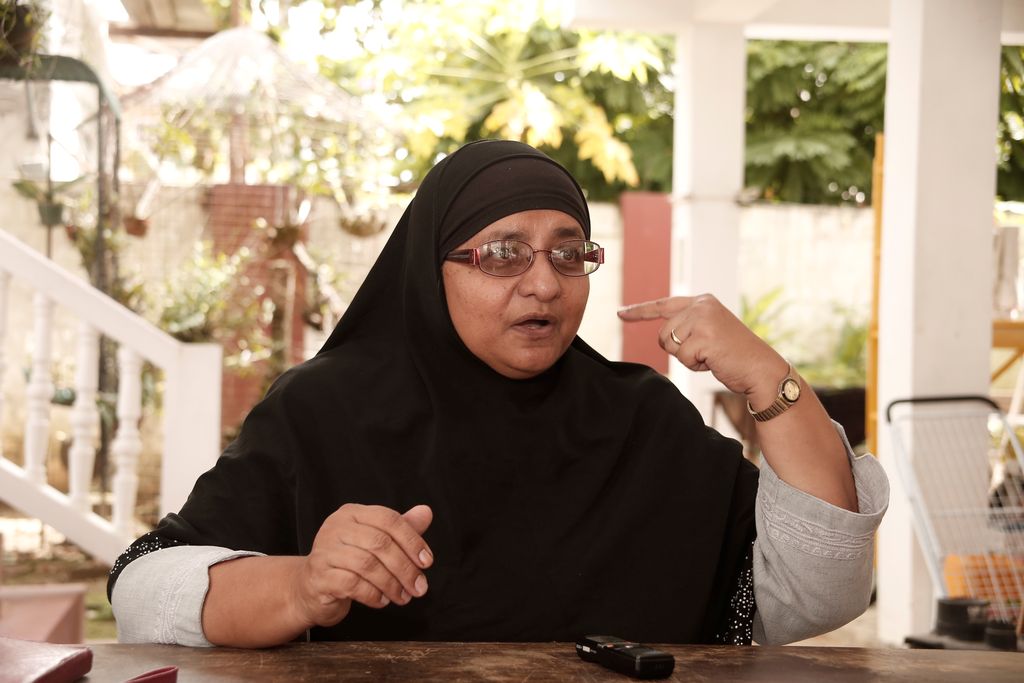
Activist Nafeesa Mohammed is calling on Prime Minister Kamla Persad-Bissessar to meet with leaders of the Muslim community ahead of her upcoming meeting with Donald Trump, following the Government’s withdrawal of support for Israel in its conflict with Iran.
Initially, the Government had signalled support for both the US and Israel over Saturday’s attack on Iran, while condemning Iran’s retaliatory strikes on US bases in neighbouring countries. The reversal has prompted questions about whether the change was influenced by concerns over Muslim voter support.
Mohammed, in a WhatsApp statement, urged the Prime Minister to consult the Muslim clergy on issues affecting the community. She highlighted that there are two Muslims in government, Saddam Hosein and Dr Aiyna Ali, whom she called on to facilitate such a meeting.
“Now is the time for our Prime Minister to consult with the leadership of our Muslim community to solicit views on issues that are affecting us. Last night’s flip-flopping from the Ministry of Foreign and Caricom Affairs and today’s newspaper headlines are causing discomfort to many,” she said.
Although Muslims make up about 10 per cent of the population, Mohammed stressed the political significance of their vote in key marginal constituencies, including Barataria/San Juan, St Joseph, San Fernando West, Moruga/Tableland, and Chaguanas East.
A former diplomat, speaking on condition of anonymity, said the Government’s shift reflects a desire to maintain ties with the US but questioned the benefits for Trinidad and Tobago.
“If Kamla supports the United States and gets $10 billion, fine—but the Government isn’t thinking strategically,” the diplomat said, warning that the country could face isolation and future challenges.
Peter Wickham, director of Caribbean Development Research Services, warned that close alignment with Trump could pose long-term political risks. “Trump won’t be there forever. When he’s gone, these positions may very well come back to haunt her,” he said, though he noted the region distinguishes between citizen sentiment and government positions, potentially mitigating immediate backlash.
Political analyst Derek Ramsamooj said the effects of the Government’s position may be gradual. “You would have some social fallout, not necessarily immediately, but in the coming weeks and months,” he noted, adding that food and energy prices are expected to rise due to the Iranian conflict.
Former Foreign Affairs Minister Dr Amery Browne criticised the Government on Facebook, saying its stance does not reflect the will of the people. “We are NOT a nation of warmongers, but we are currently burdened with a lawless, unintelligent, disconnected, and callous UNC regime,” he wrote.
Efforts by Guardian Media to reach the Prime Minister were unsuccessful. Sean Sobers, when contacted, said he was in a meeting and did not respond before press time.
Lt Commander Norman Dindial, political leader of the National Transformation Alliance, said the Government’s rapid support for the US is akin to “class teacher pet syndrome,” pandering to foreign powers.
Patriotic Front leader Mickela Panday emphasized the economic risks of the conflict. She warned that any escalation affecting the Strait of Hormuz—a key route for nearly one-fifth of global oil and gas shipments—could spike energy prices, impacting grocery bills, electricity costs, and the cost of living. Panday called for a clear foreign policy and a financial plan to protect citizens from global instability.
Related News
EMA meets upstream oil and gas operators on CEC process
UN: Child trafficking by gangs putting Haiti’s future at risk
Private schools upset Palmiste residents