Biche residents speak about life without crime: No problems in this community
 28 February 2026

Elizabeth Gonzales
Senior Reporter
elizabeth.gonza[email protected]
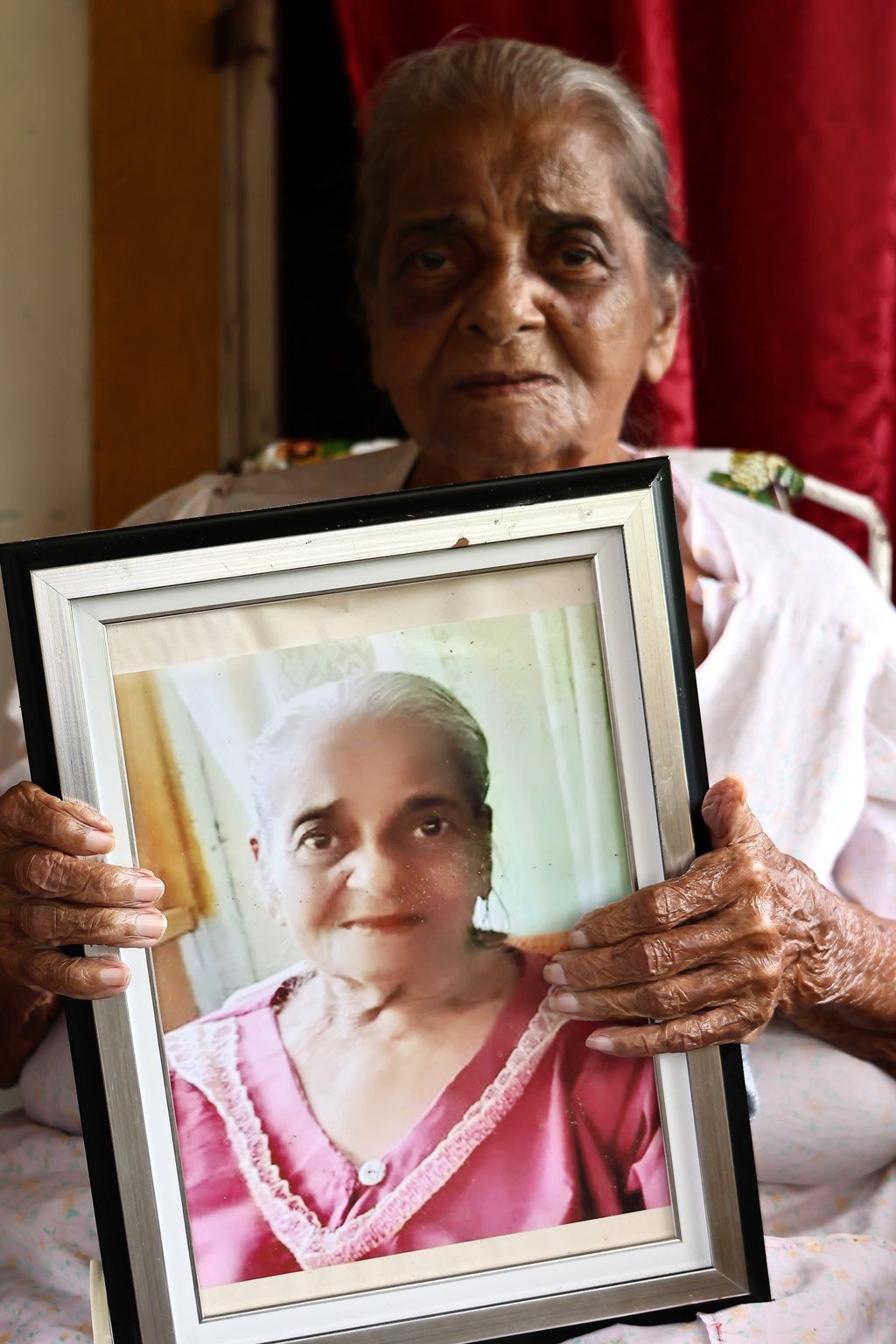
Shafina Khan, now 89, arrived in Biche in 1960 from San Juan.
There was no electricity.
“In the night, I have a lamp,” she recalled.
The roads were dirt.
“When I came here, the road was just so.”
Khan said she and her now deceased husband cut bush by hand, planted crops and sold what they grew.
“I get a piece of land, and I make my living out of it,” she told the Sunday Guardian last week.
“It was hard, but we make out… make a garden, and we sell, and we live.”
Her husband died 40 years ago.
Asked if she misses him, she paused. “Miss him?” Then she added: “What I go (sic) miss him for, he was miserable.”
She raised six children, and just like many of the young people in the community, most of her children moved away.
Asked if she would relive her life the same way, she did not hesitate to say she would do it again, the way she did.
Had she ever been robbed?
“No.”
Threatened?
“No.”
Victim of a crime in any form?
“Nobody ever threatened me.”
If someone takes fruit from her yard, she does not call it theft.
“If they take two oranges… I give them like a gift.”
In 66 years, she said she has never lived in fear, nor has she been a victim of crime.
It’s an unusual statement from one of the country’s oldest citizens, especially given T&T’s crime statistics, and one coming from a community which has carried a stigma of being a marijuana cultivating community.
When the issue of marijuana cultivation was raised, residents’ body language shifted.
It was described as something that exists historically and presently, but not as chaos.
Owen Paul described the marijuana cultivation period as “once upon a time.”
“Drugs don’t go on in Biche. Nothing like drugs in Biche again. Yes, it may have one or two might take a little smoke, but nothing like drugs in Biche again…I don’t work anywhere. I plant garden to survive. The only issue we have is to date we have no pipe-borne water. We depend on the rain.
“I already live my full life here…it’s the younger ones I feel sorry for them the way things going in this country.”
Michael Pierre, who is the ACP for Northern Division—which includes Biche—described Biche as geographically isolated.
“Biche are really kind of an isolated location. It’s located between Rio Claro, Manzanilla to the east, Rio Claro to the south, (Sangre) Grande to the north. So it’s an isolated community where there is not much activity. The most you would have gotten in that area basically used to be marijuana production. But there has been little to no crime in Biche over the many years.”
Shrinking community
The Biche Police Station sits on a hill overlooking the village.
Below it, there is a small supermarket and an ATM.
Across the street, a wooden bar operates from the ground floor of a two-storey concrete building.
At the heart of the community stands Our Lady of Lourdes RC Church, walking distance from Biche Secondary School and the Biche Presbyterian Primary School.
The entrance road into the community is worn away, but once inside, many side streets are paved and wide.
Large concrete houses sit behind tidy yards.
Vegetation grows thick and green.
It’s a community that has held its beauty even with development over the years. Some roadside signs are faded. Overgrown bush lines sections of the road. But it is not neglected.
Along Biche/Ortoire Road on Wednesday, a socially displaced man approached the Sunday Guardian with a wide smile.
For a moment, it felt like curiosity from an unfamiliar vehicle in a small village. But he was simply asking for $5. He walked away empty-handed, mumbling insults under his breath.
According to the 2011 Population and Housing Census Community Register published by the Central Statistical Office, Biche had a population of 2,770 people living in 814 households at the time of the last national census. The official register also recorded 796 buildings, 812 dwelling units, 53 business places and one institution within the community.
Yet inside the village, the tone is different. The community’s oldest resident has never experienced crime in more than six decades living there.
Other villagers speak less about violence and more about survival — no pipe-borne water, youth unemployment, struggling farmers, reliance on rain and garden crops.
The last village-level figures were published 15 years ago, and while updated data has not yet been released, residents say their young people are leaving, and more strangers are quietly moving in.
Jobs wanted
If there is frustration in Biche, it is not primarily about marijuana cultivation or violence.
For farmers, it is about economics.
Dlndlal Seepersad, 65, has farmed most of his life.
“We don’t see no problem in this community,” he said flatly.
But when the topic shifted to employment, his tone sharpened.
“Even the youths and them, they don’t have no job.”
Without jobs, people hustle. “The fastest employment people are getting is going to the market and hustling.”
He described the imbalance between farmers and retailers. “If you sell a pound plant for $3 wholesale, you go pay $7 retail…There’s no room for a small man in this country.”
He pointed to a deeper vulnerability for the agriculture community.↔ Continues on page 10
“Right now 99.9 per cent of the things in the grocery are imported.”
“If we have a disaster, that is only one week ration.”
He did not speak about crime as a concern. He spoke about food security as a threat. He worries more about imports than bullets.
“People need finance… everything is money.”
During its political campaign last year, the United National Congress Government spoke on two initiatives that could positively impact the Biche community- the expansion of agricultural financing for small farmers and the development of a regulated cannabis industry under licensing frameworks.
While the document does not name Biche specifically, the cannabis policy intersects directly with communities historically linked to cultivation.
Separately, the 2026 Budget Statement lists continued rehabilitation of pools in several communities, including Biche.
The 2026 Budget also references expansion of court services in Rio Claro and Sangre Grande, the service hubs residents travel to for medical appointments and other state services.
Public archives show that Biche has appeared in serious crime reporting over the past 15 years. (see table)
Between 2009 and 2023, eight homicide victims across seven incidents were documented in or directly tied to the Biche district.
In the past decade alone (2014–2024), four murders have been publicly reported in or near the village.
By comparison, nearby Sangre Grande — a larger service hub roughly 20 to 25 minutes away — has recorded more frequent murder reports in recent years, including clustered killings within single months. Biche’s incidents, while serious, appear spaced across years rather than concentrated.
Official records show that Biche has been linked to murders and major marijuana eradication exercises over the past 15 years.
In 2019, $4.95 million worth of marijuana was destroyed in an eradication exercise. The amount of $7.65 million worth of marijuana was eradicated in two documented exercises alone.
Subsequent anti-crime operations between 2021 and 2024 referenced firearms, ammunition and marijuana seizures in or near the community.
Year Location Incident Description Victims
2009 Charuma Village Man shot dead at his home 1
2010 Cunapo Main Road Young couple killed 2
2012 Charuma Village Murder reported 1
2017 Pato Trace Charred remains discovered; 1
two men later charged
2019 Biche District State witness killed days 1
after leaving police safe house
2020 Charuma Village Woman killed in drive-by shooting 1
2023 Cushe Village Man found dead near home; 1
brother later charged