
Lead Editor - Newsgathering
ryan.ba[email protected]
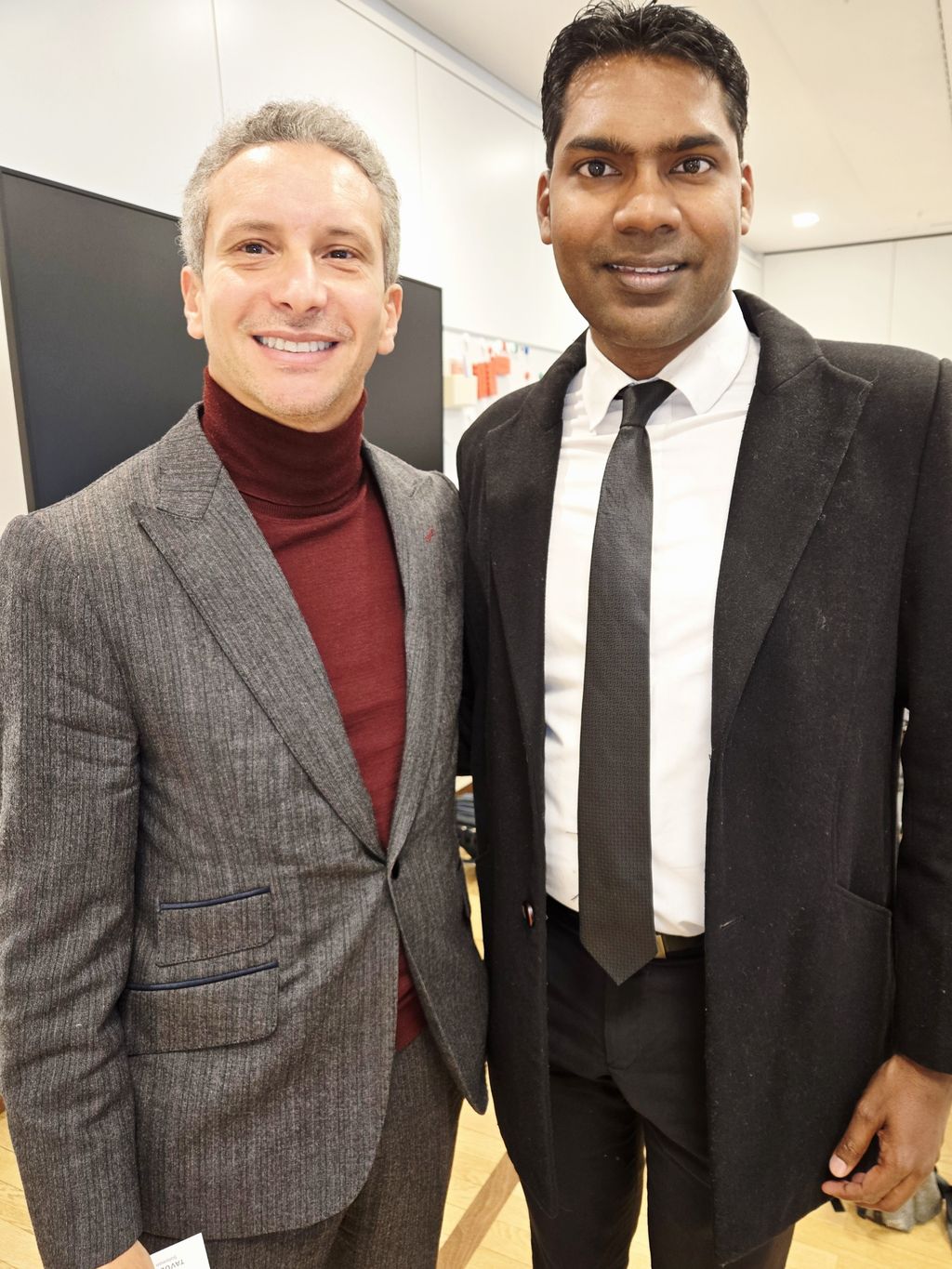
Climate Envoy of the President of the UN General Assembly, Professor Kamal Amakrane, says adaptation must take place at a local level if the world is to make serious progress in tackling the challenges of climate change. His statement, though not connected, came the same week the Environmental Protection Agency in the United States planned to repeal its own findings that greenhouse gases like carbon dioxide and methane are heating the earth and that warming threatens public health and welfare. The Trump administration’s decision strikes at the heart of the climate fight.
Amakrane was speaking to a group of international journalists in Berlin, Germany, at the Climate Peace Security Nexus. The Moroccan said, “It is quite regrettable that we are not where the population wants us to be. Global citizens at large expect a set of ambitions, and regrettably, we’re not there.”
Amakrane, who has worked with the UN for 25 years, warned that bureaucracy is hampering the climate process. “We should not be the victim of bureaucracy, and I have been a bureaucrat. They are good at the process. They think the process is the end, but in fact, the process is not the end. The people are the end, but if we don’t bring the dignity and reality to the process, the solution will not endure,” he stated.
When pressed on whether the annual UN Conference of the Parties (COP) is working, Amakrane, who also leads the Global Centre for Climate Mobility, admitted it needs reforming. He said, “My take is we need to have a set of champions coming together and pushing a set of issues rather than having this packet that is going to solve everything at once. They must look at the different issues and create champions who are going to push the agenda. Bring them together. But, trying to solve all of the issues and trying to use one against the other—because this is what negotiators do—there are a lot of tradeoffs.”
On issues such as sea level rise, deforestation and financing, he called for more solutions-oriented dialogue. He added that through such a process, “You could advance and not be the hostage of consensus, because consensus is sometimes the minimum common denominator, which brings the ambition down, and that’s because you’re forced to get an answer. Will it work? I don’t know, but I can tell you what we have today does not work.”
Amakrane has echoed similar sentiments from those within the climate sphere. At the midway point of COP29 in Baku, Azerbaijan, in 2024, former Executive Secretary of the United Nations Framework Convention on Climate Change (UNFCCC) Christiana Figueres, former UN Secretary-General Ban Ki-moon, and Swedish scientist Johan Rockström, penned a joint letter calling for a reformation of the COP process, saying it was no longer fit for purpose. It’s a point Caricom Climate Envoy, Dr James Fletcher, agreed with in an interview with Guardian Media at COP30 in Belem, Brazil, last year. Then, Fletcher said too much negotiating time was being wasted on arguing over a comma in the text while people around the world were facing real climate challenges.
Amakrane furthered his case for a community approach to adaptation by saying that far too many people are being affected by the effects of climate change without the ability to know the link. He stated, “As global citizens, we are not all at the same level of education. A lot of people are witnessing climate impacts, but they have not put the wording on it, so they have solutions to have started the journey of adjusting, but they have not put the technical wording on it, and as such, there is a disconnect.”
He pointed to Niger as an example, referencing a poll that suggested only six per cent of the population understand that it is climate change affecting their country.
He went further in adding, “This is where the communities can empower their leaders and their representatives to take a stand, because in the absence of that sense of literacy and education, sometimes you don’t want to go and sign on failure, you just sign for progress or the status quo.”
“In the absence of social cohesion, no one will carry forward any adaptation agenda, because in the end it’s not the politicians who implement, it’s the people who implement, and if you don’t have that social cohesion at that level, who is going to carry that forward?”
He argued that while the UNFCCC may negotiate the terms of the climate fight, it is ultimately the people who have to move it forward. “We have achieved that sense of maturity when it comes to conflict resolution. We have not achieved that sense of maturity yet in negotiating and discussing the climate crisis,” the former UN peacemaker said.
Amakrane also addressed the ongoing struggle for some nations to access climate finance to work on adaptation and mitigation projects.
He highlighted small communities on islands in the Pacific and the Caribbean which are adversely affected by climate disasters, but don’t have the avenues to access funding to get their lives back on track. He stated, “Instead of going through micro-insurance, which is something you have heard and I have seen before, no, we must put the credit, and we support the community. The idea here is not to tell you that this is the solution; it is to tell you we have to challenge the status quo, and we need to provide different ways to empower people.”
Amakrane said for those living on the frontlines of the climate crisis, such as fishermen on the coastlines whose livelihoods are being affected, it is important that communities work together with governments. He stated, “That is a long-term exercise that requires a behavioural change of government and of citizens. This is not just moving houses from one point to another or building sheltered homes, which is a fixed exercise.”
He cited data that states that 95 per cent of the people will have to leave the places they call home as a result of climate shocks in their own countries.
As governments debate text and timelines, Amakrane’s message is that the climate fight will not be won in negotiating rooms alone. It will be determined in fishing villages, farming communities and informal settlements where people are already adjusting, often without naming what they are confronting. For small island states in the Caribbean and Pacific, that reality is not theoretical. It is measured in lost coastlines, damaged crops and disrupted lives. Reforming COP, unlocking finance and cutting bureaucracy may shape the framework, but he insisted the foundation must be social cohesion and local ownership.