Venezuela’s new amnesty law has a chilly response from opposition and detainees’ families
 20 February 2026
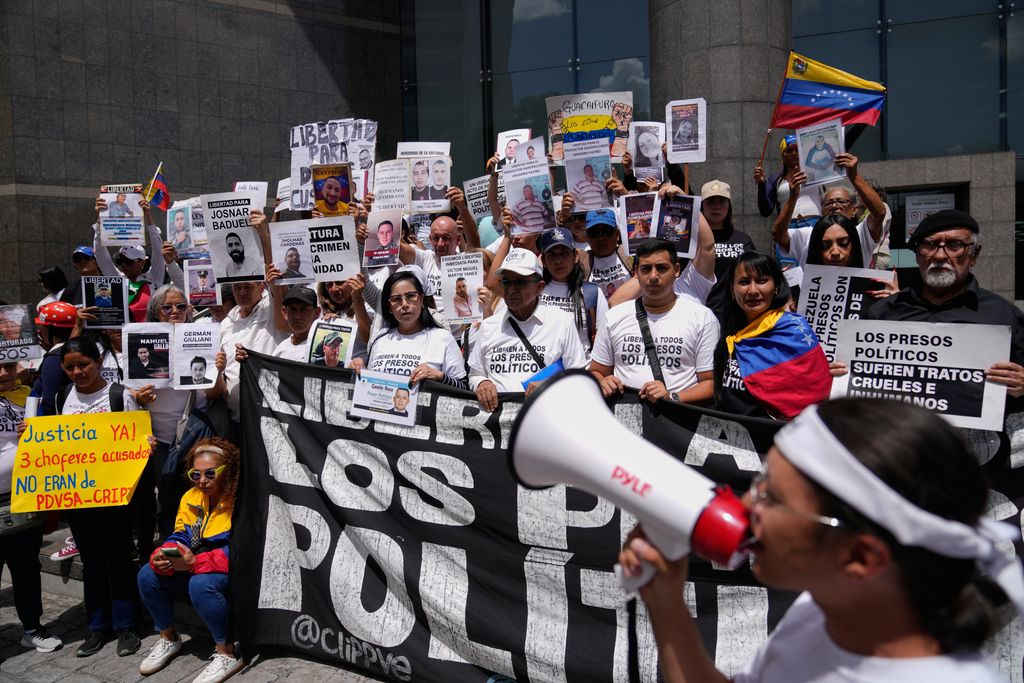

Members of Venezuela ’s opposition, prisoners’ rights groups and relatives of people long detained for political reasons gave a lukewarm reception Friday to an amnesty measure expected to free hundreds of activists and human rights defenders.
Some viewed the law as a small but significant victory for the thousands targeted during the ruling party’s 27-year tenure. Others considered it a mockery of the pain of families and people behind bars — particularly members of the military, who were excluded from the measure.
Venezuela’s acting President Delcy Rodríguez on Thursday signed the amnesty measure into law, signalling a major shift in policy following last month’s stunning U.S. military raid in the capital, Caracas, to capture then-President Nicolás Maduro.
Scepticism over handling of requests
Venezuelan authorities for decades denied holding any political prisoners. But Rodríguez said during the signing ceremony that the law showed leaders were “letting go of a little intolerance and opening new avenues for politics in Venezuela.”
Venezuela-based prisoners’ rights group Foro Penal estimates that more than 600 people are in custody for political reasons.
Under the new law, trial courts must approve each amnesty request within 15 days. However, the requirement for judicial oversight has fueled skepticism about how applications will be handled.
“The law benefits a significant group of people, but the essence of the problem Venezuela is experiencing regarding political persecution remains,” Alfredo Romero, president of Foro Penal, told reporters Friday. “The same judges and prosecutors who have unjustly or arbitrarily accused people are the same judges whom the law itself designates to interpret the law in order to grant benefits.”
Romero underscored that the new law is not a prerequisite for the government to free prisoners, like it has done since Jan. 8, when Rodríguez’s government announced it would release “a significant number.” Foro Penal has counted 448 releases since then.
The bill’s purpose is to grant people “a general and full amnesty for crimes or offenses committed” during specific periods since 1999 that were marked by politically driven conflicts in Venezuela, including “acts of politically motivated violence” in the context of the 2024 presidential election. The aftermath of that election led to protests and the arrest of more than 2,000 people, including minors.
Some could be left out
The amnesty excludes those convicted of human rights violations, war crimes, murder, drug trafficking or corruption. It also denies relief to people “who are being prosecuted or may be prosecuted or convicted for promoting, instigating, soliciting, invoking, favoring, facilitating, financing, or participating in armed or forceful actions against” Venezuela “by foreign states, corporations or individuals.”
That could leave out members of the opposition who have supported U.S. President Donald Trump’s policy toward Venezuela, including Nobel Peace Prize laureate María Corina Machado.
Relatives of those detained have called on the Trump administration, specifically its top diplomat in Venezuela, Laura Dogu, to pressure Venezuela’s government for their release. Others, like Claudia Morillo, the wife of a prisoner, have appealed directly to the humanity of Venezuelan officials.
Morillo’s husband, Jhon Hader Betancurt, is serving a 30-year sentence for treason and rebellion after being photographed shaking hands with an opposition leader in 2019. Although Foro Penal classifies him as a “political prisoner,” Morillo noted that he remains ineligible for amnesty because authorities labelled his case one of military rebellion even though he is a civilian.
“Put your hand on your heart,” she urged officials. “If we are truly talking about reconciliation, act truthfully and justly.”
The law also allows people living in exile to seek amnesty through a lawyer, removing the requirement to return to Venezuela to file in person. Once someone abroad has filed a request for amnesty, the law shields them from arrest when they return to the country for their scheduled court rulings.
Magalli Meda, Machado’s 2024 campaign manager, took to social media to reject the law. Meda has been in exile since May, when she and other Machado staffers left the Argentine diplomatic compound in Caracas, where they had sheltered for more than a year to avoid arrest.
“Who can be free in Venezuela under these terms of ‘amnesty’?” she wrote on X. “They are trying to whitewash their image. They want us to forget their crimes and act with impunity forever. They want a country of slaves and accomplices, and they intend to expel anyone who isn’t one of them.” —CARACAS, Venezuela (AP)
_______
Story by REGINA GARCIA CANO | Associated Press