
Israeli government moves to change rules around land registration in the West Bank, making it easier for Israeli Jews to buy property in the illegally occupied territory, are raising alarm among Palestinians, fearful that the new rules will establish defacto Israeli annexation.
The Israeli cabinet announced the decisions on Sunday. In addition to allowing Jews to buy property in the West Bank – a Palestinian territory that Israel has occupied since 1967 in defiance of international law – the Israeli government has also ordered that land registries in the West Bank be opened up to the public.
That means that it will be easier for Israelis looking to take territory in the West Bank to find out who the owner of the land is, opening them up to harassment and pressure.
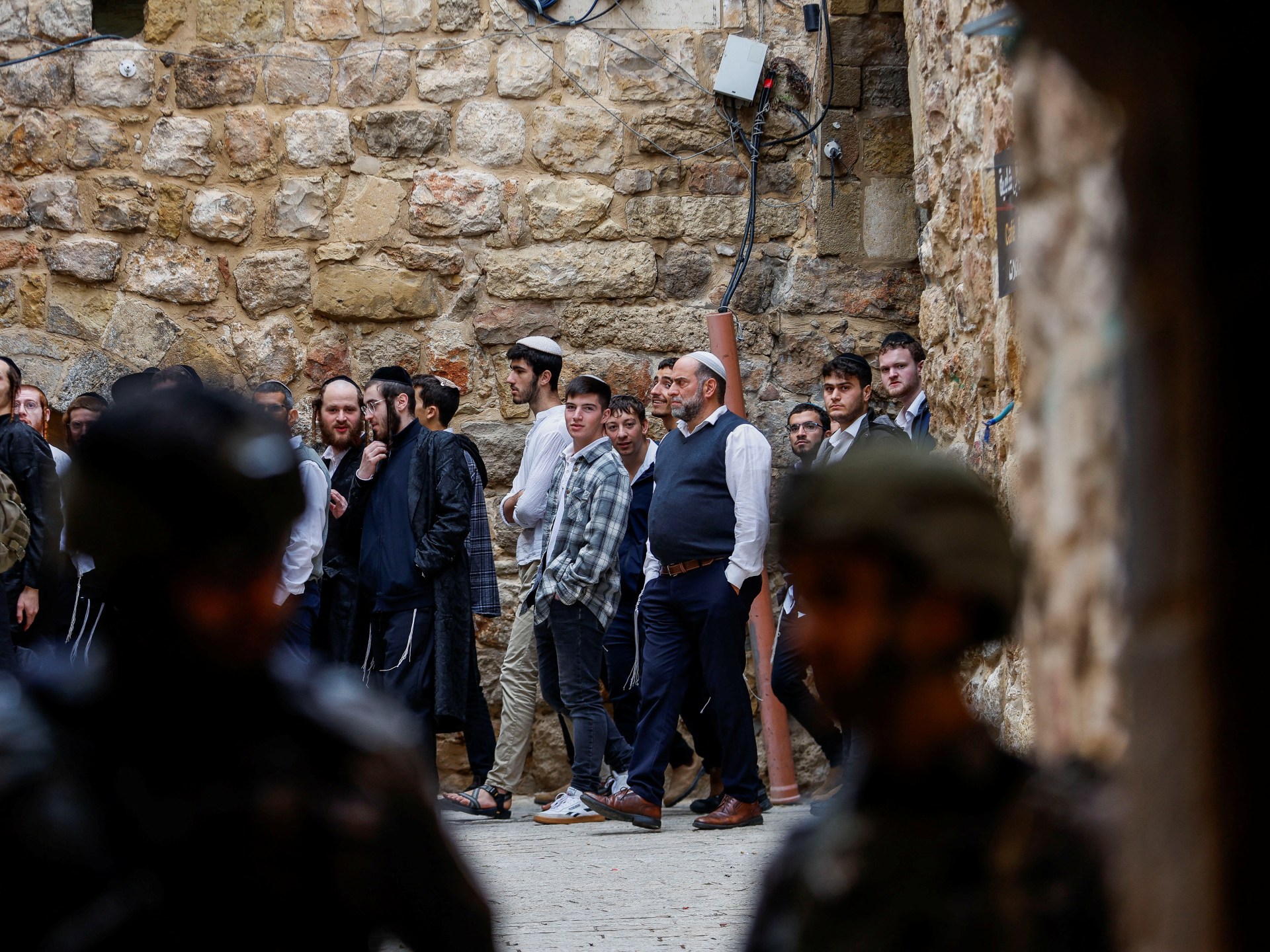
The cabinet also decreed that authority over building permits for illegal Jewish settlements in Hebron, and the Ibrahimi Mosque compound, would pass to Israel from the Palestinian Hebron municipality.
Moataz Abu Sneina has seen Israel’s efforts to seize Palestinian land first hand. He is the director of the Ibrahimi Mosque in Hebron, a Palestinian national symbol and an important Islamic holy site due to its connection to the Prophet Ibrahim, also known as Abraham.
Abu Sneina said that the latest Israeli decisions reflect a clear intention to increase Israeli control over Hebron’s Old City, and the Ibrahimi Mosque compound.
“What is happening today is the most serious development since 1967,” Abu Sneina said. “We view it with grave concern for the Old City and the Ibrahimi Mosque, which is the symbol and beating heart of Hebron, and the shrine of the patriarchs and prophets.”
Advertisement
The Ibrahimi Mosque site is also revered by Jews, who refer to it as the Tomb of the Patriarchs.
An Israeli Jewish settler killed 29 Palestinians after opening fire on Muslims praying at the mosque in 1994. Shortly afterwards, Israeli authorities divided the site into Jewish and Muslim prayer areas, and far-right Israeli settlers continue to strengthen their control over areas of Hebron.
Despite only numbering a few hundred, the settlers have taken over large areas of the city centre, protected by the Israeli military.
Abu Sneina explained that Israel has repeatedly attempted to strengthen its foothold inside Hebron and the mosque, and that the latest government moves are a continuation of Israeli policy that has only increased since the October 2023 start of Israel’s genocidal war on Gaza.
“This has taken the form of increased settler incursions, restrictions on worshippers, control over entry and exit, and bans on the call to prayer – all part of a systematic policy aimed at complete control over the holy site,” Abu Sneina said.
“[Israel] continues to violate all agreements, foremost the Hebron Protocol, closing most entrances to the mosque and leaving only one fully controlled access point,” he added. “This paves the way for a new division or an even harsher reality than the temporal and spatial division imposed since the 1994 massacre.”
Taking over Hebron
Mohannad al-Jaabari, the director of the Hebron Rehabilitation Committee, a Palestinian organisation focused on the restoration of Hebron’s Old City, said that the Israeli government was already increasing its presence on the ground, in an effort to take control of the city.
He pointed to the confiscation of shops belonging to the Hebron Municipality in the Old City, the construction of dozens of illegal settlement units, and the reconfiguration of water pipes by connecting them to an Israeli water company’s network, creating what he described as “a massive apartheid system”.
Al-Jaabari warned that the ultimate goal is to establish a Jewish quarter linking settlements to the Ibrahimi Mosque by emptying Palestinian neighbourhoods of their residents.
“All Hebron institutions are preparing for a difficult phase,” he said. “We are bracing for a fierce attack on Palestinian institutions, foremost the Rehabilitation Committee.”
The Israeli government’s latest decisions open the door for what has happened in Hebron to happen elsewhere, with Israeli settlers establishing a presence in other Palestinian cities, forcing locals out, experts say.
Advertisement
Nabil Faraj, a Palestinian journalist and political analyst, called the Israeli government’s moves “dangerous” and added that they “have driven the final nail into the coffin of the peace process”.
He explained that Israel is reengineering the geographic landscape of the West Bank, expanding infrastructure to serve settlements, and seeking to strip the Palestinian Authority of administrative and security control.
The Hebron model
Palestinians in Bethlehem are now worried that they will get a taste of what Hebron has already experienced.
One of the Israeli cabinet’s decisions on Sunday stipulated that the Bilal bin Rabah Mosque in the city, known to Jews as Rachel’s Tomb, would be placed under Israeli administration for cleaning and maintenance, after previously being under the jurisdiction of the Bethlehem municipality. The mosque’s cemetery has also been affected.
“It will affect the living and the dead,” said Bassam Abu Srour, who lives in Bethlehem’s Aida refugee camp. “Annexing the area would prevent burials and visits to the Islamic cemetery. This is extremely serious and completely unacceptable to us.”
In Bethlehem, Hebron, and the rest of the West Bank, Palestinians feel powerless to stop what they view as a creeping annexation.
Mamdouh al-Natsheh, a shop owner in Hebron, said he now has a growing sense that what is unfolding is an attempt to impose a permanent reality.
“The city is being taken from its people step by step,” he said. “Daily restrictions are turning it into a fixed policy that suffocates every detail of life.”
He added that the deepest impact is on children and young people, growing up in a city that is “divided and constantly monitored”, stripping them of a natural sense of the future.
“I fear the day will come when we are told this area has been officially annexed, and that our presence depends on permits,” al-Natsheh said. “In Hebron, a house is not just walls – it is history and identity. Any annexation means the loss of security and stability.”
Related News
Epstein email reveals plan to access Libya’s frozen state assets
Palestinian citizens of Israel demand government do more to stop crime
Gravely ill pro-Palestine activist ends hunger, thirst strike in UK prison