
Senior Reporter
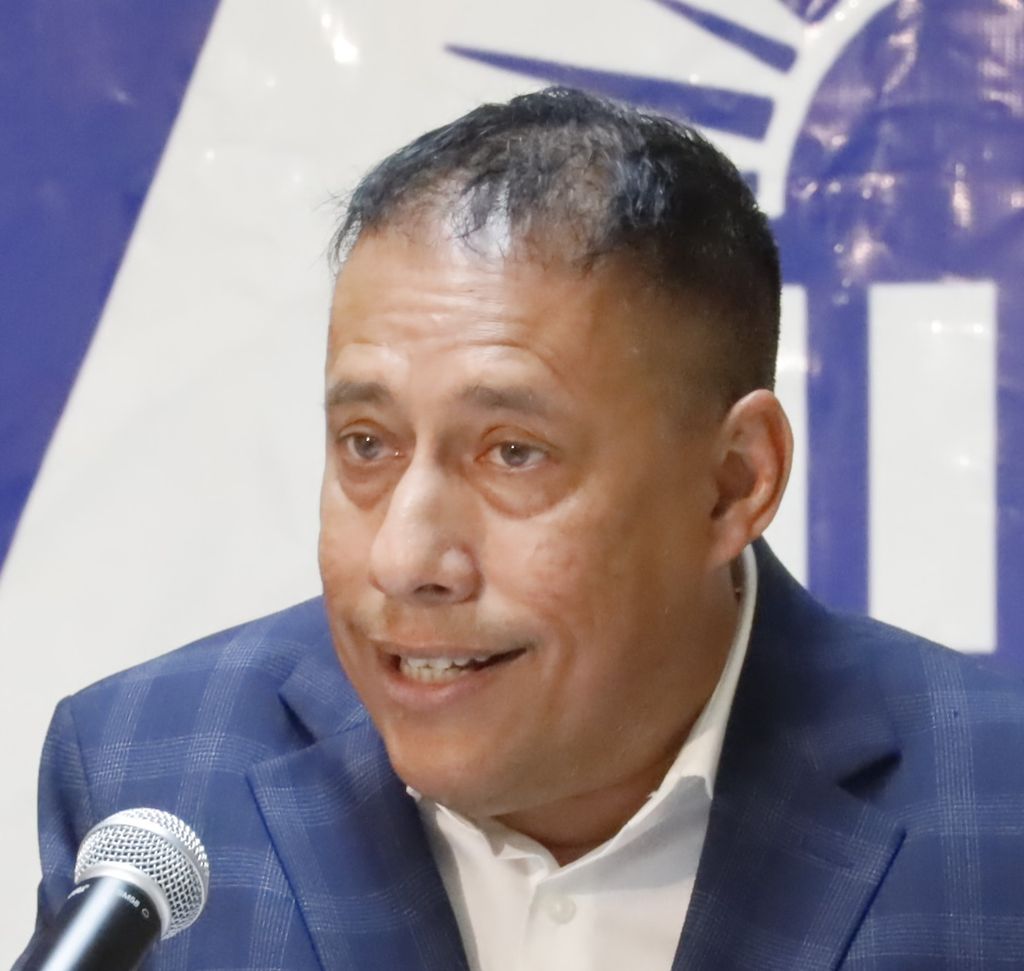
Former Police Commissioner Gary Griffith is no longer pulling his punches regarding the performance of current Commissioner of Police (CoP) Allister Guevarro, whom he has described as “desperate,” “petty” and “comical.”
This latest escalation comes as underlying tensions between them heat up, over the non-use of body cameras that the T&T Police Service (TTPS) acquired during his tenure.
Taking to social media as he blasted Guevarro, who broke his silence regarding the acquisition and use of body cameras by the TTPS on Monday, Griffith said, “Because of his apparent fear and ignorance of technology, he does not understand that when you make a comment, it can be easily verified by any member of the public via online research, in a similar manner to his claim that a radar designed to target and intercept missiles could have detected illegal drugs in a swamp.”
In an audio message on Tuesday, Guevarro challenged Griffith to account for contracts for 1,200 body cams which he (Guevarro) said left the TTPS millions of dollars in debt and without cameras to use. He said the first batch of 750 cameras were no longer operational after the TTPS terminated the contract and the second batch of 250 cameras was acquired without a management platform, which meant officers could turn them off and delete footage. As such, he said the devices were deemed unsuitable for operational deployment.
Picking apart Guevarro’s claims that he (Griffith) left the TTPS in debt to the tune of millions of dollars after his tenure, and had improperly acquired 1,000 body cameras, Griffith defended the decisions he made when occupied the position from August 2018 to August 2021.
Griffith insisted 1,200 body cameras were procured at an approximate cost of TT$3,000 each.
This, he said, was in comparison “to the approval to purchase an additional 3,000 body cameras at a cost of TT$8,000 per camera by a commissioner after me, which was over $15 million more in comparison.”
He added, “They (cameras procured during Griffith’s tenure) were fully operational, fit for frontline policing, and actively used by officers.”
Regarding Guevarro’s contract claim, Griffith challenged Guevarro to back up his statements that “the majority of these cameras can no longer be used because the TTPS terminated the contract.”
He said Guevarro failed to explain why it was terminated and, if so, why after five years, no new contract was awarded to anyone to continue using the cameras.
Griffith also questioned why the hierarchy of the TTPS was “moving so slowly that it takes over five years to establish a contract to use body cameras that were already in their possession.”
He claimed the devices had been supplied by three established providers, inclusive of TSTT.
On the point that police officers could switch off the devices and delete footage at their whim, which he labelled as “ridiculous,” Griffith urged the public to go online and research it for themselves.
“You will see that almost 100% of body cameras used by police officers in North America and Europe can be switched on and off; therefore, his excuse is pathetic and misleading.”
Proving that he was no longer playing nice, Griffith further criticised Guevarro as he insisted, “To show how desperate he is to make cheap excuses not to use body cameras, these same 1,200 cameras were being used by the TTPS under my watch.
“An officer would sign for the camera on commencement of duty and return it at the end of their patrol, roadblock, or operation. It was then checked to verify that the duration of the patrol equated with the length of the video recording. If there was a variance and the officer could not justify why it was turned off, they could be immediately suspended, as there was a departmental order making their use mandatory. Therefore, his comment that the body camera can be turned off is irrelevant.”
And on the issue of the quality of the devices, he denied this, again encouraging the public to do their online research.
Accusing Guevarro of misleading the populace, he said, “This CoP seems desperate to find any excuse possible not to use body cameras, and the media and the public should ask why.”
Wading into the public’s ire at Guevarro over his handling of the fatal police shooting of Joshua Samaroo on January 20 in St Augustine, Griffith said, “While some might understand the desperation under mass negative public review, his words, spoken and unspoken, suggest he is attempting to blame others for his failure to address the public’s concern.”