
Senior Reporter
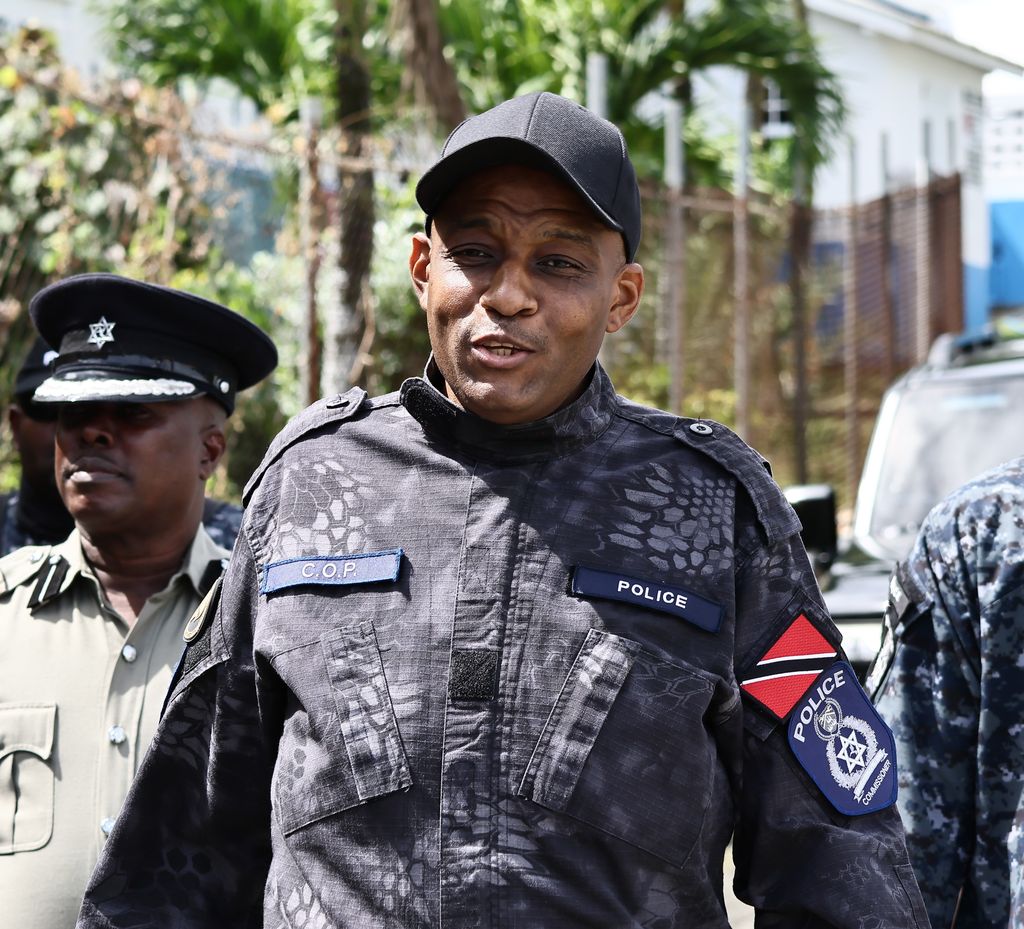
Commissioner of Police Allister Guevarro has come to the defence of officers amid what he describes as “blatant mistruths” being circulated about their alleged refusal to wear body cameras, as well as claims that he has failed to enforce the relevant regulations within the Trinidad and Tobago Police Service (TTPS).
Responding to assertions by former police commissioner Gary Griffith that he (Griffith) procured 1,200 body cameras for the TTPS during his tenure between August 2018 and August 2021, Guevarro challenged Griffith to account for contracts which he said left the TTPS “millions of dollars in debt.”
In an audio message circulated yesterday, Guevarro said, “The reality is that there were three body-worn camera procurements.”
He explained that the first involved the acquisition of 750 cameras from a local company, which were distributed across policing divisions but are no longer operational after the TTPS terminated the contract.
According to Guevarro, that procurement was made under an improperly executed contract signed by a TTPS employee, rather than the accounting officer at the time.
“Maybe if the accounting officer had done his job, properly examined the contract and signed it, then the TTPS would not be in its current position of being millions of dollars in debt,” Guevarro said.
He said vendors have since been contacting the TTPS almost weekly seeking payment.
Guevarro said the second procurement involved 250 cameras acquired during Griffith’s tenure, but without a management platform.
“This meant any officer could turn the camera on, turn it off and delete footage themselves,” he said.
He added that the devices were deemed unsuitable for operational deployment and were subsequently repurposed for training at the Police Academy.
As a result, Guevarro said, approximately 1,000 cameras for which taxpayers are still paying cannot be used operationally. He said this left the TTPS with 180 cameras acquired from an international supplier. While these devices are functional, they lack a central storage system, requiring footage to be manually extracted from each device on a daily basis.
Guevarro said officers can face disciplinary action for failing to use these 180 cameras when issued.
Acknowledging limited resources within the service, he said, “We do not have much, but we are using what we do have.”
Addressing the procurement of a proper camera management system that was intended to accompany the acquisition of 3,000 devices, Guevarro said the process was discontinued due to contractual difficulties.
“It is not like the TTPS can just walk into a store and purchase body-worn cameras,” he said.
“Public procurement is meticulous and time-consuming. While it is my desire to have every officer issued with a device to promote accountability to the public, we must also be mindful of the overall financial situation and Office of Procurement Regulation requirements.”
Guevarro said the procurement process has since been restarted and updates will be provided.
Insisting that the TTPS was left “in debt and tied into contracts that even future commissioners will still have to pay,” he said the service remains committed to modernisation and accountability, but in a responsible manner.
In an interview last week, Guevarro also noted that while the cameras are owned by the TTPS, he does not have administrative control over the system.
“Yes, I’m the owner. I’m the user. But somebody else is controlling it,” he said.
He added that the usable cameras are distributed daily on a rotational basis to officers from various operational units across policing divisions, including the Traffic and Highway Patrol.
Related News
Two girls earn President’s Medals as 105 scholarships awarded

Man gunned down near Besson Street Police Station

TTPS says ZOSOs documents circulating fake