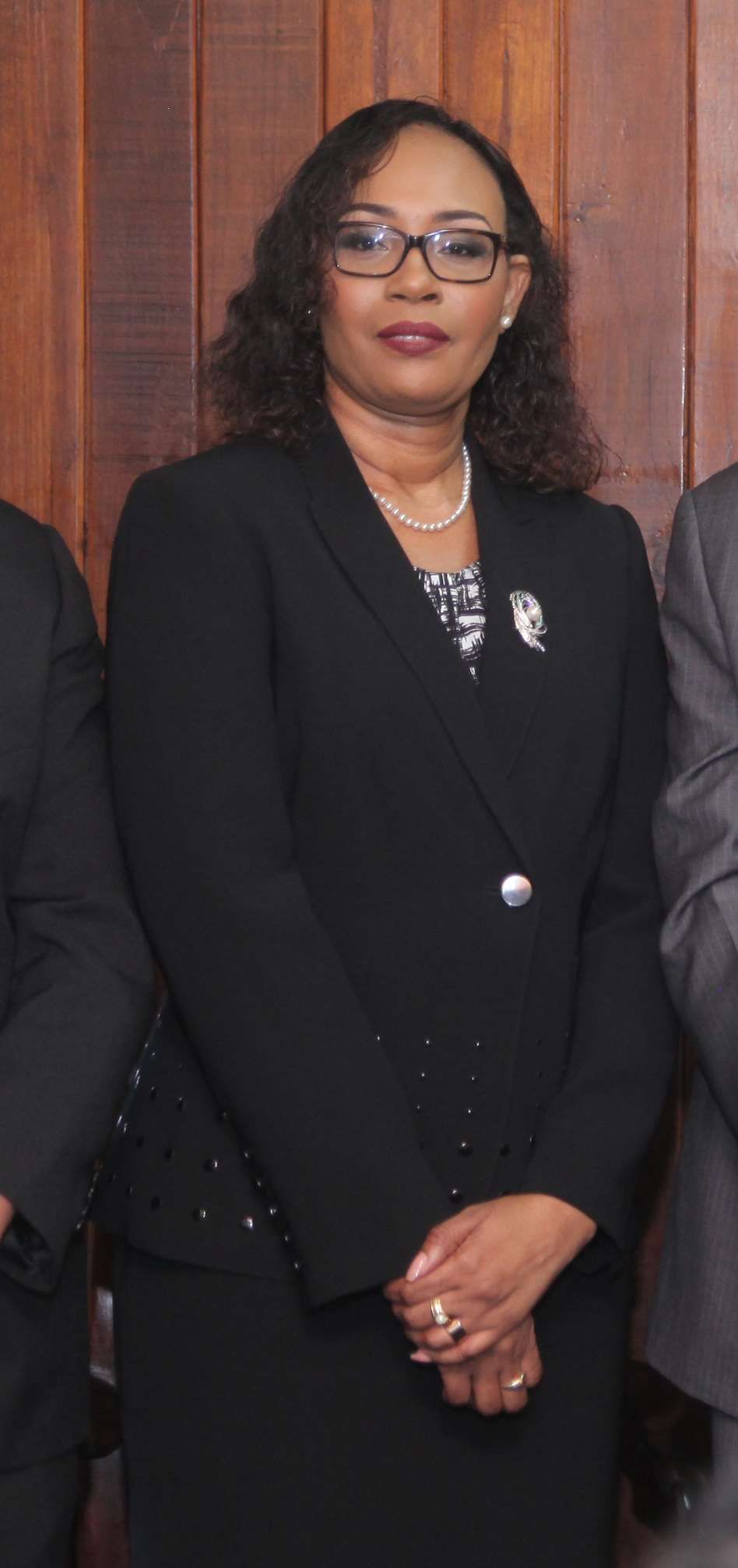

The Judicial and Legal Service Commission (JLSC) says it will take no further steps in relation to a complaint made against former chief magistrate and current High Court Judge Marcia Ayers-Caesar.
The decision was announced yesterday in a brief press release issued by the Service Commissions Department.
It said, “The Judicial and Legal Service Commission, after receiving legal advice and careful consideration, has decided to not pursue any further steps regarding Madam Justice Marcia Ayers-Caesar.”
Guardian Media understands that the release was in relation to a complaint alleging that Ayers-Caesar misled the JLSC on pending cases she left unfinished when she sought to take a promotion in 2017.
The complaint was reportedly left pending as Ayers-Caesar successfully pursued litigation over being pressured to resign by former JLSC chairman and chief justice Ivor Archie and then-members of the JLSC.
In April 2017, Ayers-Caesar was appointed a High Court Judge. Two weeks later, she resigned from the post amid public criticism over almost 50 cases she had left unfinished when she took up the promotion.
Ayers-Caesar then filed the lawsuit in which she claimed she was pressured by Archie and the JLSC into resigning under the threat that her appointment would be revoked.
Archie and the JLSC denied any wrongdoing and claimed that Ayers-Caesar’s failure to disclose the full extent of her unfinished caseload was sufficiently serious to warrant a disciplinary inquiry.
Archie had claimed that he had suggested she resign and return as a magistrate to complete the cases but maintained he did not pressure or threaten her. He also claimed neither he nor the JLSC had the power to take the action attributed to them by Ayers-Caesar. They contended that Ayers-Caesar accepted responsibility and freely tendered her resignation with the intention, at that time, to return as a magistrate to complete the part-heard cases.
Ayers-Caesar’s lawsuit was eventually dismissed by High Court Judge David Harris leading to the challenge before the Court of Appeal.
Appellate Judges Allan Mendonca, Nolan Bereaux, and Alice Yorke-Soo Hon all wrote separate but consistent judgments in which they criticised the JLSC, which was chaired by Archie, for improperly and illegally pressuring Ayers-Caesar to resign.
In late March, last year, the Privy Council, led by UK Supreme Court President Lord Robert Reed, agreed with the local Appeal Court that Ayers-Caesar was improperly forced to resign. However, the British Law Lords ruled that she could have been properly subjected to a probe under Section 137 of the Constitution.
Under this segment of the Constitution, judges can only be removed for misbehaviour or their inability to perform the functions of the office due to infirmity of the mind or body.
In such instances, a tribunal is appointed by the President on the advice of the Prime Minister in the case of the Chief Justice and the JLSC for judges. The tribunal investigates and then recommends whether the Privy Council should consider if the judge should be removed.
Ayers-Caesar was allowed to resume as a judge following the final appeal.—Derek Achong
In October, last year, Archie retired and Justice Ronnie Boodoosingh was appointed to succeed him. Boodoosingh currently chairs the JLSC as part of his role as Chief Justice.