
Senior Reporter
shane.su[email protected]
The Trinibad soundscape is often defined by edgy, raunchy and at times outright violent lyrics. However, two music industry stakeholders are trying to change the face of the genre, as they urge some artistes to choose between their musical careers and street life.
Speaking with Guardian Media on Wednesday, singer and songwriter Sadiki De Leon said there is a need for artistes to take their entertainment careers seriously in order to reach their full potential.
He, however, stressed that this can only happen if they are willing to leave criminality behind.
De Leon, who has worked with several Trinibad acts over the years, lamented that while the genre has evolved to amass significant following and commercial success, artistes oftentimes did not directly benefit from their own popularity due to legal problems or threats to their lives over perceived gang allegiances.
The latter, he said, causes artistes to miss opportunities to expand their presence and even perform as freely as they should, as it limits their ability to perform in different communities out of safety concerns.
Referring to one artiste who is currently in prison, De Leon said that in such a situation, artistes had nothing to gain.
“In prison, you’re not making any money from your music unless you have certain arrangements in place digitally.
“Due to the crime happening, even when they come out of prison, they can’t make money because they can’t just go anywhere and perform.
“So what we want to remind people is we want to separate the badness from the music. It’s either you’re an artiste, or you’re a gunman.”
De Leon says the growth and development of the artform can allow for artistes to profit from their work not only from streaming services and live performances, but also potentially from endorsements and advertising campaigns.
He, however, acknowledged that this could be a challenge as large companies would be reluctant to partner with an artiste who has been implicated in a crime.
Despite this, he is confident that once artistes focus on their craft and expand their music beyond “gunman songs,” there is potential for them to achieve mainstream acclaim.
When asked if he thought there would be challenges for artistes to sever ties with friends who were involved in gangs, De Leon responded, “At the end of the day, it’s your choice.”
“There was a certain community leader who supported my musical career and never once put a gun in my hand; regardless of what you offer, the choice is theirs at the end of the day.”
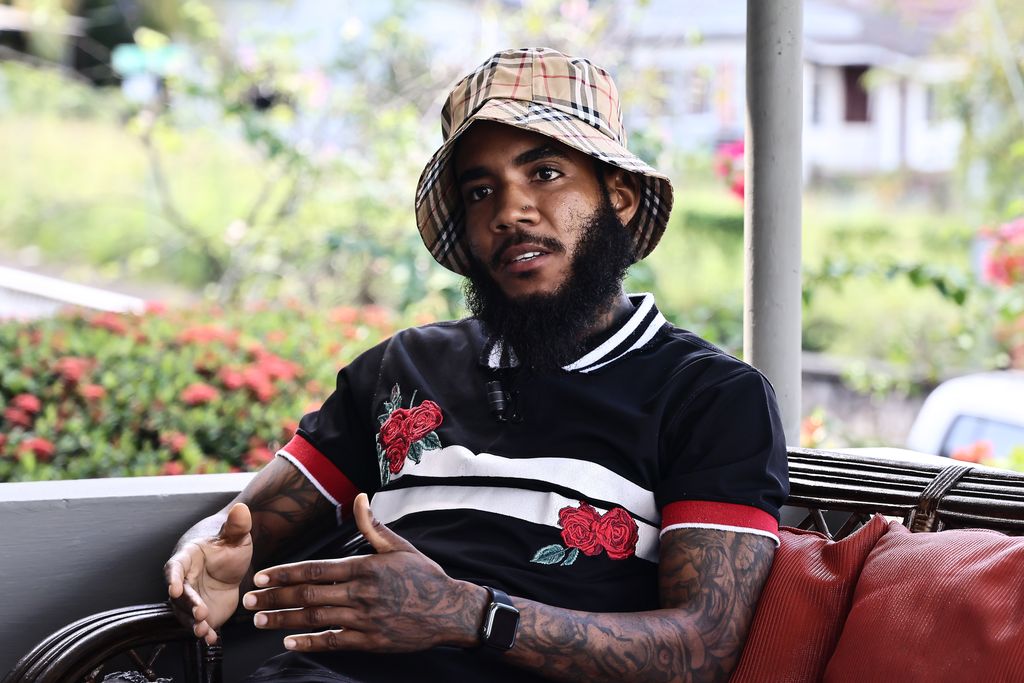
Guardian Media also spoke to music producer Khalif Greaves, also known by his industry moniker KG, at his Arima home on Wednesday, who agreed that there was a need for an end to violence within the Trinibad genre.
Greaves, who has worked alongside Trinibad artistes as a videographer for music videos and even interviewing some artistes on his YouTube podcast, Talks with KG, acknowledged the difficulty some artistes may face in focusing entirely on music, especially if they continue to live in a neighbourhood where gang activities are prevalent.
He, however, urged artistes to find their own calling and make a decision without following their peers.
“If we want to grow this thing and really develop this thing into something worthwhile, we need people who will not choose a side and that they want to work with everybody.
“I think it comes down to who you are, do you want to be a gang member or do you want to be someone of success and dignity?”
Greaves said the potential for Trinibad went beyond songs about violence and death, noting that positive music was needed to expand the catalogue of artistes to sing about their own personal journeys, struggles and the community around them.
He, however, lamented that positive music may not be as appealing as songs with violent or suggestive themes, pointing to a larger problem not necessarily with the genre but in the type of media that the public consumes.
“When you try to create good content for people, they pass it straight, but when you create bacchanal content they dive into it immediately, so I think the public as a whole needs to change their mindset and once that happens everything else will change around it.
“I dislike the narrative that Trinibad is the problem, since I was growing up Trinidad has had problems. I have never lived in this country and felt safe, so Trinibad has always reflected what was going on for a long time in this country.
“I want to see the people in their own mindset make a change, but support the artistes who are trying to create a new, more positive narrative.”